MARINE ENGINE STARTING + DEEP-CYCLE POWER
Start the Outboard. Support the Onboard Loads.
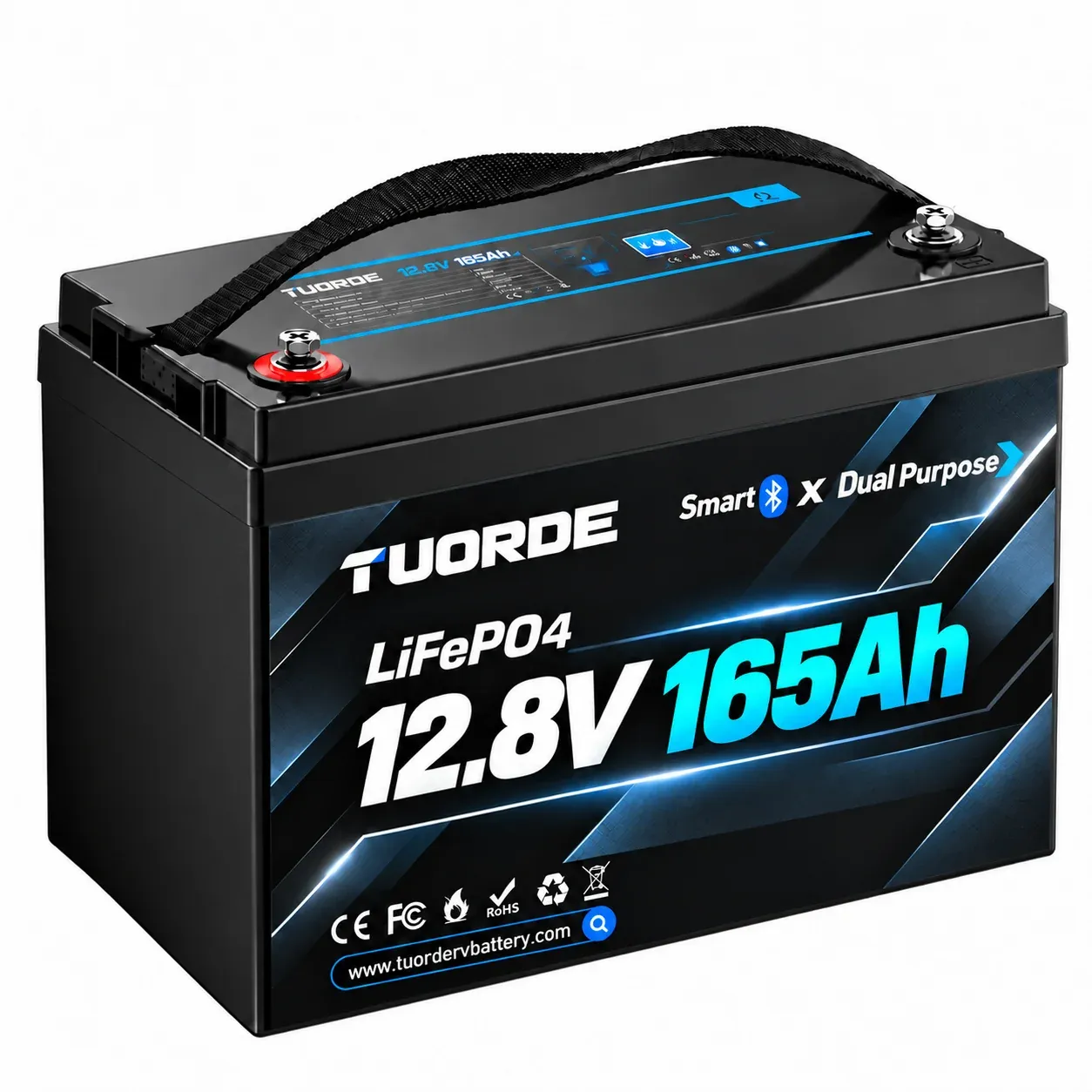
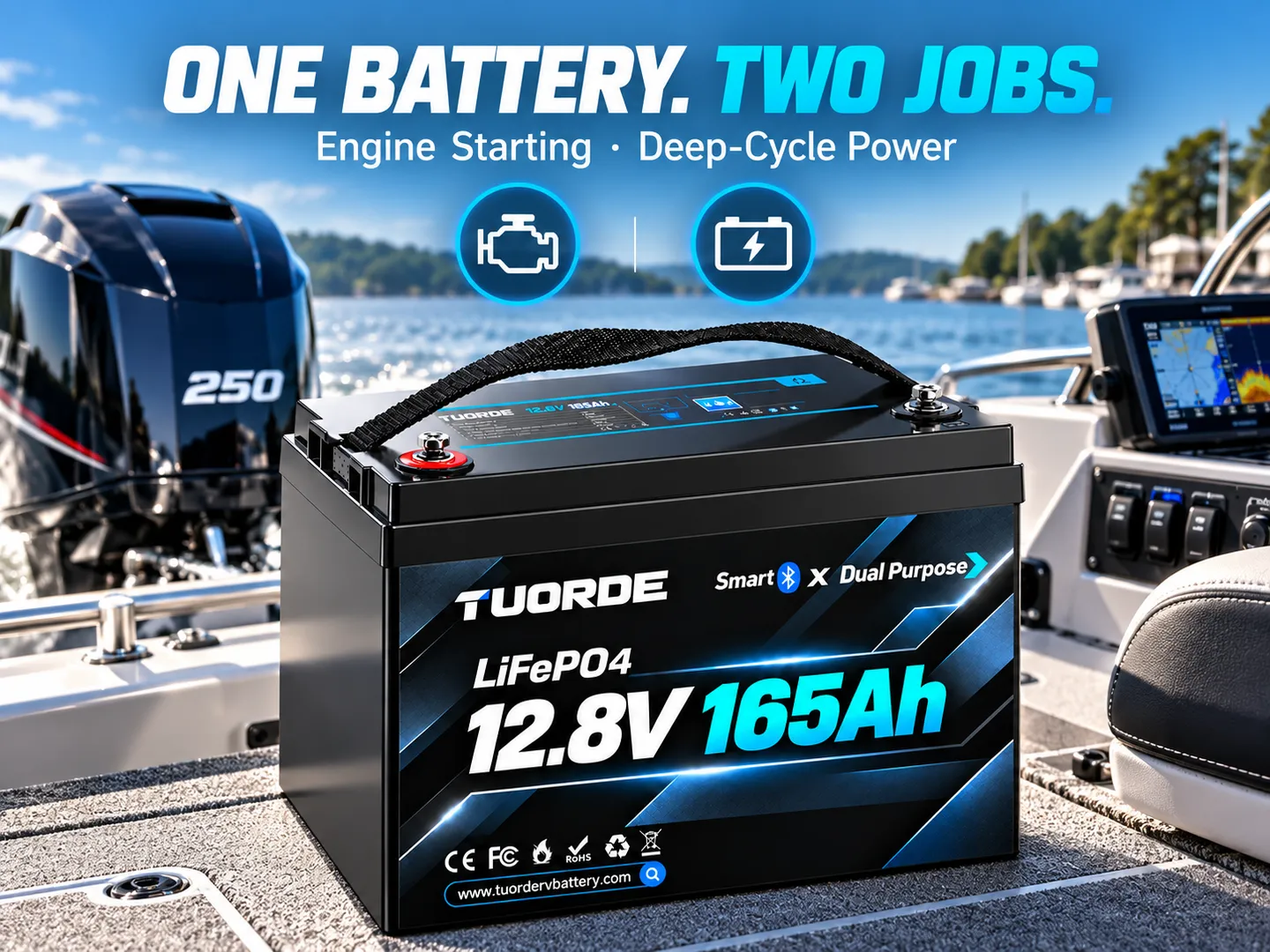
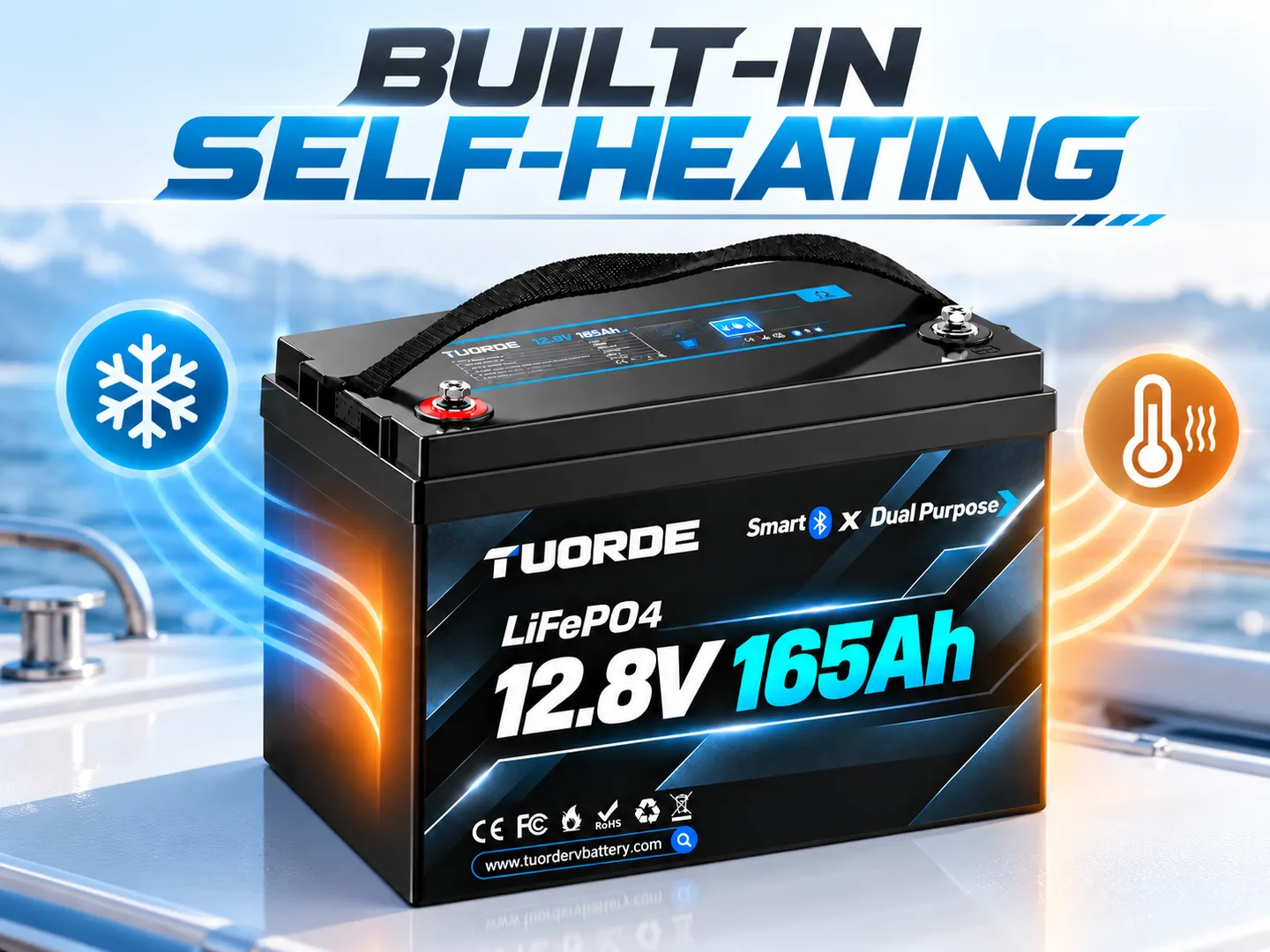
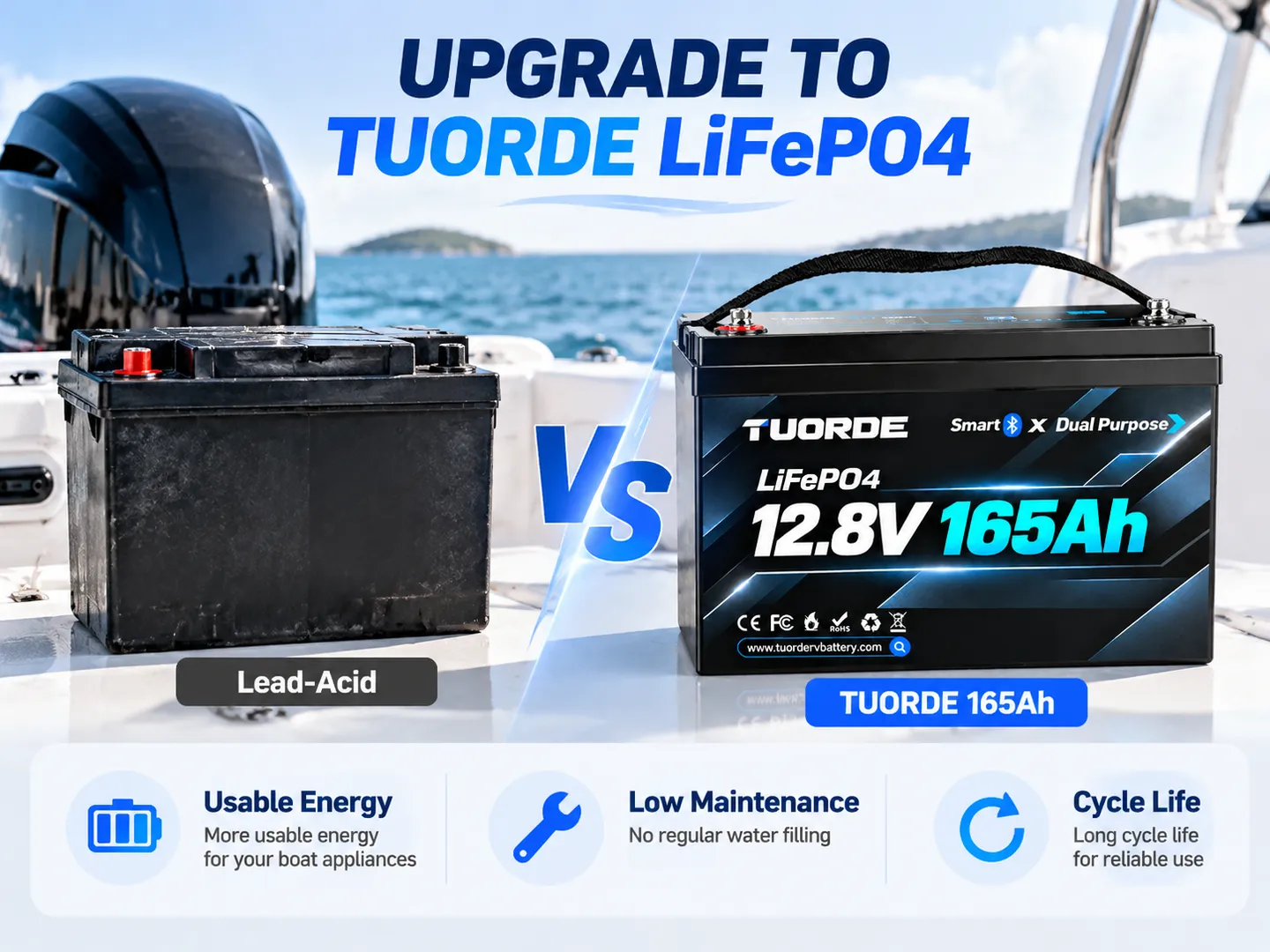
TUORDE’s 12V 165Ah dual-purpose marine battery brings engine starting and deep-cycle energy into one Group 31-size LiFePO4 platform. Bluetooth monitoring, a restart-reserve function and automatic self-heating support a coordinated boat power system rather than a capacity-only battery replacement.
Designed for marine equipment distributors, boat-system integrators and private-label brands. Confirm the exact engine, regulator and charging arrangement before selecting this configuration.
Request a Marine Battery QuoteReview Starting & System Specifications ↓
Two Jobs Require Two Different Electrical Checks
Engine starting
Match cranking demand, minimum ECU voltage and permitted lithium charging behavior to the actual outboard. The starting-current reference is 1,200A at −10°C. This temperature-specific figure must not be treated as a verified −18°C CCA rating or compared directly with a different test standard.
Onboard deep-cycle use
Size electronics, pumps, lighting and compatible motor loads against the continuous BMS limit and their combined surge profile. A cranking rating is not a continuous-current allowance. Nominal energy does not guarantee a full day on the water.
Compatibility gate: do not install on an unregulated charging system. Yamaha, Mercury and MerCruiser applications require separate written approval for the exact engine and regulator; no general brand-wide compatibility is claimed.
Keep Restart Reserve Separate From Everyday Loads
The reserve function limits ordinary discharge at a configured SOC threshold to help retain starting energy. Confirm how the supplied BMS enters reserve, how starting is enabled and how recovery works. It cannot guarantee a successful restart under every temperature, engine condition or state of charge.
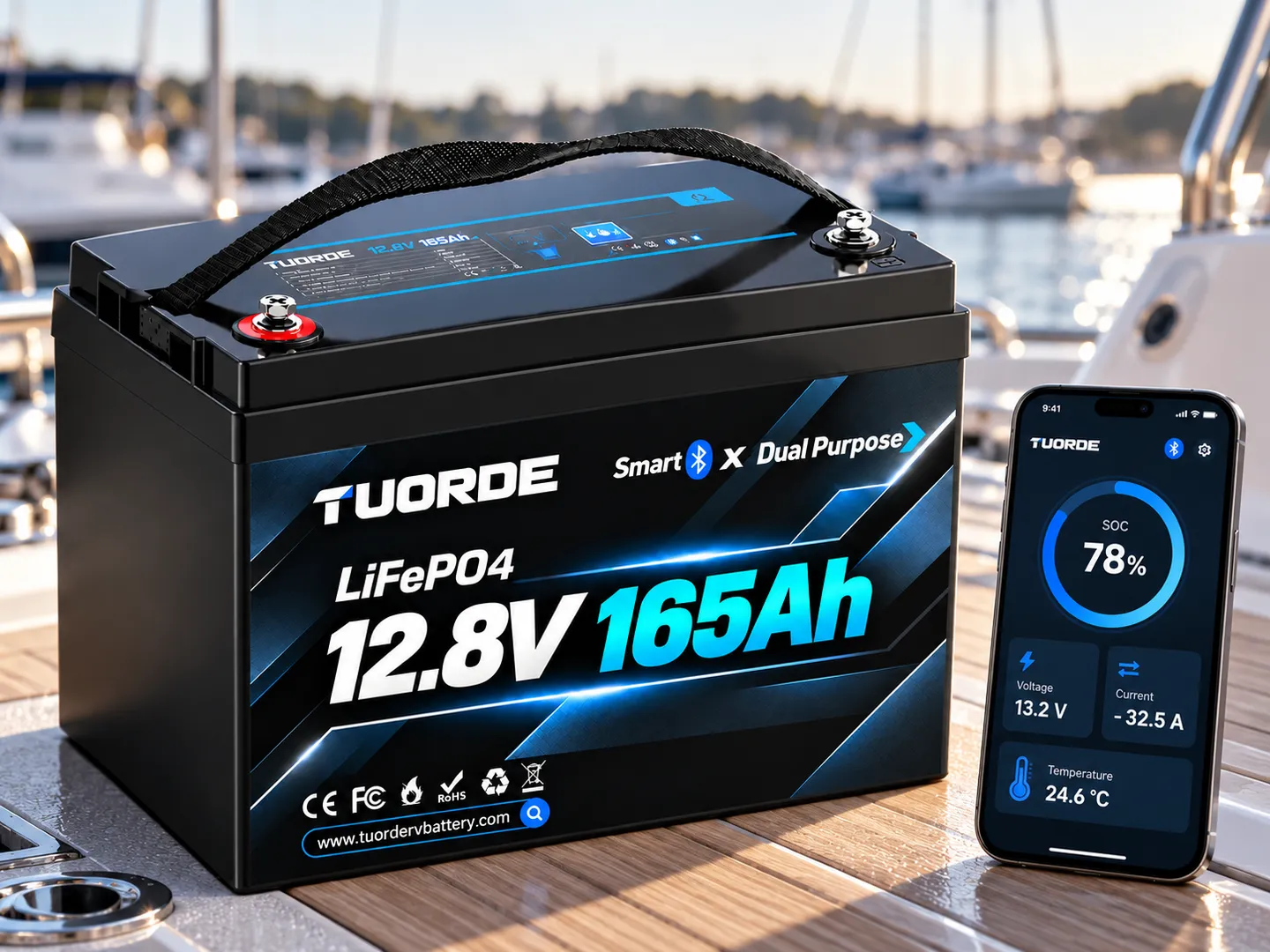
Bluetooth provides local battery visibility through a matched app. Confirm available SOC, voltage, current, temperature, reserve controls and firmware-update support for the ordered version. Bluetooth does not imply 4G connectivity, remote internet access or AI diagnostics.
165Ah Marine Electrical & Mechanical Specifications
| Parameter | Configuration / Integration Reference |
|---|
| Chemistry / nominal voltage | LiFePO4 / 12.8V |
|---|
| Rated capacity / nominal energy | 165Ah / 2,112Wh (2.112kWh) |
|---|
| Starting-current reference | 1,200A at −10°C; source labels this CCA |
|---|
| Marine / hot cranking references | 1,300A MCA at 0°C / 1,500A HCA |
|---|
| BMS / continuous discharge | 150A / 150A |
|---|
| Nominal continuous DC output | 1,920W |
|---|
| Continuous charging limit | 150A |
|---|
| Outboard alternator charging reference | 165A; requires approved integration; not the general continuous-charge limit |
|---|
| Recommended charging current | 33A |
|---|
| Charging method / voltage | CC/CV / 14.4V ± 0.2V |
|---|
| Restart reserve | 15% SOC reference; confirm firmware behavior and recovery procedure |
|---|
| Monitoring / heating | Bluetooth 5.0 / automatic self-heating |
|---|
| Heater activation / stop reference | −20°C to 5°C / 10°C |
|---|
| Minimum charging current for heating | 15A |
|---|
| Approximate warm-up reference | 40–70 minutes from −10°C; 80–120 minutes from −20°C |
|---|
| Ambient charging range with heating | −20°C to 50°C; cells must warm before charging |
|---|
| Discharge / storage temperature | −20°C to 60°C / −10°C to 50°C |
|---|
| Charge cutoff / recovery | Below 0°C / at or above 5°C |
|---|
| Low-temperature discharge cutoff | Below −20°C |
|---|
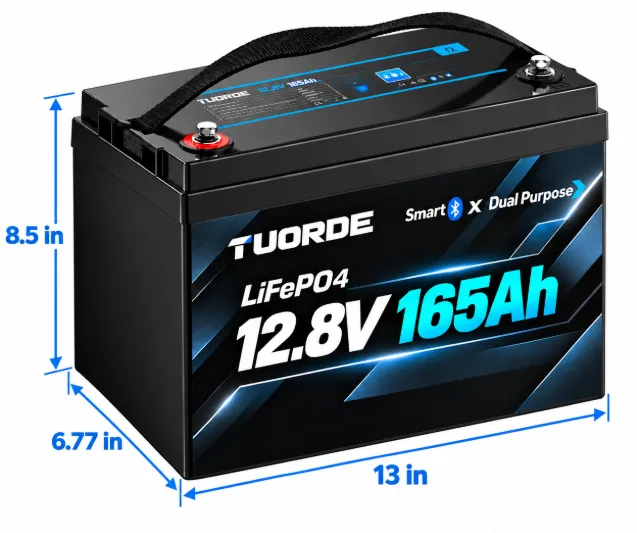
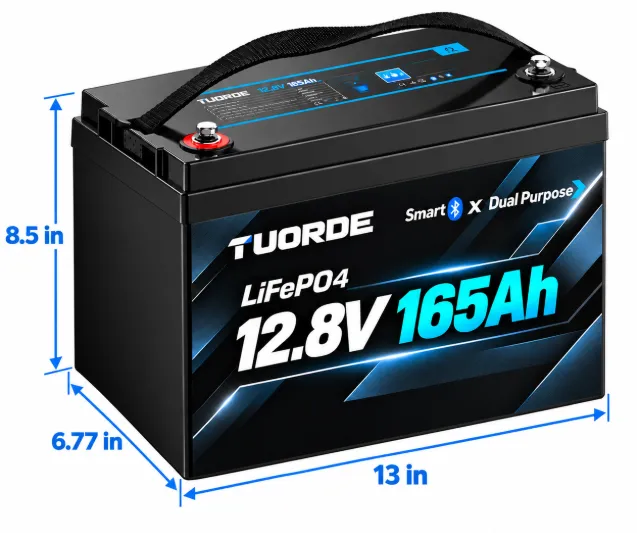
| Dimensions (L × W × H) | 13 × 6.77 × 8.5in; approximately 330 × 172 × 216mm |
|---|
| Size reference / weight | Group 31 / approximately 33.49lb (15.19kg) |
|---|
| Terminals / case / ingress protection | M8 bolts / ABS / IP67 |
|---|
| Internal resistance | ≤40mΩ |
|---|
| Dual-purpose bank limit | Up to 4 in parallel; 1 in series (12V-class bank) |
|---|
| Energy-storage bank limit | Up to 4 in parallel and 4 in series; separate approved system design |
|---|
| Reference durability | ≥5,000 cranking events; 4,000+ deep cycles stated separately; confirm test conditions |
|---|
Procurement must use the final TUORDE datasheet, mechanical drawing and acceptance specification. Starting figures require confirmed test method, temperature and duration. Cranking-event counts and deep-cycle counts are different tests, not interchangeable lifetime guarantees. Compliance documents, warranty, accessories and supply terms are model-specific and must be confirmed in the quotation.
Plan the Marine Installation Before Changing Chemistry
- Charging: confirm regulator behavior and BMS-disconnect handling with the engine supplier. The alternator-specific reference does not override the general continuous charging limit. Use a suitable interface where required; disable lead-acid equalization and desulfation.
- Cold conditions: the heater warms cells before charging is permitted. Heating stop and charge-protection recovery are separate thresholds. Confirm the final firmware sequence; available charging power and weather affect warm-up time.
- Bank arrangement: dual-purpose use remains a 12V-class parallel bank. Series expansion applies only to a separately approved energy-storage system. Do not treat a series-connected bank as approved for engine starting.
- Mechanical protection: verify tray fit, polarity, terminal covers, cable reach, secure mounting and independent circuit protection. IP67 is an enclosure rating, not permission for permanent underwater installation.
For a dedicated motor-power configuration rather than engine starting, compare the 100Ah Plus deep-cycle trolling motor battery. Browse other 12V lead-acid replacement options when the installation requires a different case or capacity.
Send the Engine Details With Your Battery Inquiry
Include engine make, model and year; required starting rating and test standard; alternator output; onboard load profile; tray dimensions; minimum temperature; destination market and estimated quantity. TUORDE can review the requested branding, labels, packaging and control configuration as part of the project quotation.
Discuss Your 165Ah Marine Battery Project
For branded supply, review TUORDE OEM & Private Label capabilities and confirm the marine-specific scope with our team.
Marine Dual-Purpose Battery Questions
How is this different from the 165Ah RV battery?
This is a separate starting-and-deep-cycle configuration. Capacity alone does not establish engine-starting capability; do not substitute an RV deep-cycle model on that basis.
Does the reserve guarantee an engine restart?
No. Reserve management helps retain energy, but starting still depends on battery condition, temperature, engine demand and correct integration.
Can I connect batteries in series for marine starting?
No series starting configuration is specified here. The dual-purpose arrangement is parallel-only within a 12V-class system, using approved matched batteries.
Can I use the existing outboard charging connection?
Only after checking the engine’s lithium-battery requirements, regulator and protection behavior. Provide the exact engine and charging-system details for review.