

RV & Leisure House Power
Match overnight loads, inverter demands, alternator / solar / shore charging and the battery compartment. Group-size labels alone cannot confirm a fit.
Explore RV OEM & private label details
Review an RV battery programTUORDE • B2B BATTERY DEVELOPMENT
Turn your application requirements into a defined LiFePO4 battery program.
Choose a private label platform, adapt a defined specification, or develop an application-led configuration. Connect capacity, BMS behavior, charging compatibility, mechanical fit and sample acceptance before confirming production.
For battery brands, distributors, vehicle manufacturers, upfitters and system integrators. Project scope, available options and delivery terms are confirmed through engineering review.
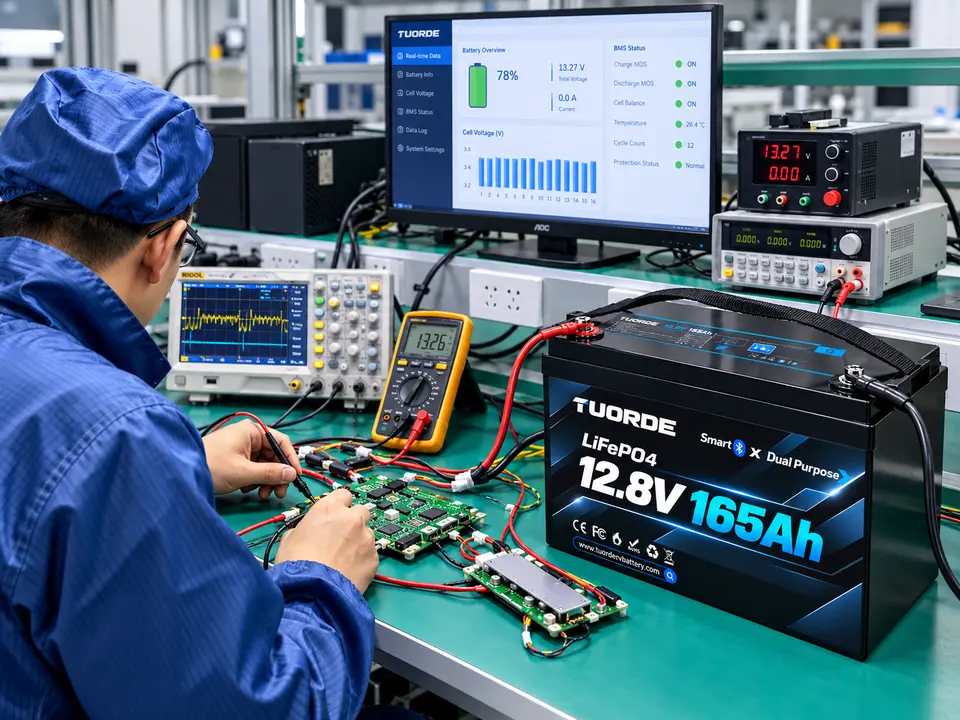
01 • CHOOSE YOUR COOPERATION ROUTE
Start with the amount of engineering change, rather than choosing OEM or ODM by name alone. These working definitions help establish a clear quotation and validation scope.
| Route | Best starting situation | What needs to be defined | Decision before proceeding |
|---|---|---|---|
| Private label / existing platform | You have a sales channel and an existing platform may meet the application. | Brand artwork, label and packaging scope; target market; quantities; unchanged electrical and mechanical requirements. | Confirm the exact platform and document revision. Branding does not remove application compatibility checks. |
| OEM / specification-led | You already have a battery specification, drawing or integration requirement. | Voltage, energy, continuous and peak current with duration, enclosure, interface, acceptance criteria and responsibility boundaries. | Review gaps between your specification and the proposed configuration; agree which changes require new samples. |
| ODM / application-led | You know the equipment and use case but need help defining the battery. | Loads, duty cycle, charging sources, space, environment, communication needs and commercial targets. | Agree a feasibility result and specification baseline before tooling, sample development or volume commitments. |
Tooling, design ownership, firmware access, exclusivity and documentation rights are agreed in the project scope. They are not implied by the route name.
02 • START WITH THE APPLICATION
Match overnight loads, inverter demands, alternator / solar / shore charging and the battery compartment. Group-size labels alone cannot confirm a fit.
Explore RV OEM & private label details
Review an RV battery programSeparate engine starting requirements from parking loads, then assess the combined duty cycle, vehicle charging system and operating conditions.
Explore truck battery solutions
Review a truck battery programDefine house loads, charger / alternator interfaces, installation environment and protection. House power, engine starting and propulsion are different requirements.
Review marine house-power replacement
Request marine feasibility reviewDefine daily energy, autonomy, seasonal solar yield, inverter peaks and backup charging. Determine the system architecture before choosing a battery bank.
Explore lead-acid replacement planning
Request off-grid feasibility reviewMarine and off-grid projects require an application-specific assessment. An RV reference platform does not establish suitability, ingress protection, propulsion capability or market certification for another application.
03 • DEFINE THE ENGINEERING BRIEF
Two batteries with the same Ah can behave differently under an inverter surge, in a cold installation or on an incompatible charger. Supply operating conditions alongside the headline capacity.
| Decision | Information to provide | What the review should resolve |
|---|---|---|
| Voltage & architecture | Nominal system voltage, operating voltage window, single battery or proposed bank. | Compatible architecture and approved series / parallel limits for the exact configuration. Do not assume batteries can be connected in any arrangement. |
| Usable energy & autonomy | Each load in W, hours per day, duty cycle, inverter efficiency, reserve target and recharge opportunities. | Required usable Wh, expected operating window and recharge balance. Ah follows from voltage and the agreed energy assumptions. |
| Continuous & peak power | Maximum concurrent load, startup current / power, duration and frequency. | Cell, BMS, terminal, cable and protection requirements; starting duty assessed separately from deep-cycle loads. |
| Mechanical fit | Dimensioned compartment drawing, mounting, terminal orientation, cable bend radius, weight limit and service access. | Envelope drawing, terminal / connector proposal and installation clearance; group designation alone is insufficient. |
| Temperature & environment | Charging and storage temperatures, vibration, moisture exposure, enclosure location and ventilation constraints. | Permitted operating limits, protection behavior and whether heating or a different enclosure is required. |
| Monitoring & communication | Bluetooth / display needs, host equipment, protocol document and required signals. | Exact feature availability, CAN / RS485 mapping, electrical interface and integration test plan. |
| Market & business scope | Destination country, requested documents, sample quantity, annual forecast, launch target and branding files. | Documentation gap review, quotation assumptions, sample scope and delivery plan. |
Lighting: 30 W × 5 h = 150 Wh; refrigeration: 45 W average × 12 h = 540 Wh; DC electronics: 40 W × 4 h = 160 Wh; AC load: 300 W × 1 h ÷ 0.90 assumed inverter efficiency = 333 Wh.
Estimated battery-side use: 1,183 Wh. Adding an illustrative 20% energy allowance gives about 1,420 Wh. A nominal 12.8 V 100 Ah battery stores 1,280 Wh before the usable operating window and other limits are considered, so it would not meet this example on nominal energy alone.
A 200 Ah reference offers more nominal energy, but the final choice still depends on approved discharge limits, peak current, temperature, physical fit and available charging. If the charger cannot replace daily use, increasing capacity only delays the shortfall. These are planning assumptions, not a runtime guarantee.
04 • DEFINE THE CHANGE SCOPE
Review voltage and capacity, current limits, protective thresholds, recovery behavior and balancing requirements. Heating, series / parallel operation and other options must be confirmed for the selected configuration.
Review enclosure format, mounting, terminals, connectors and harness interfaces. A revised enclosure or current path may require mechanical, thermal and electrical validation.
Review SOC / runtime display, Bluetooth monitoring, abnormal drain alerts, battery-health information and guided troubleshooting. Confirm supported functions, alert logic and communication mapping for the selected model and firmware.
Define logo and label artwork, packaging, manuals, model identification and destination-market information. Approve artwork against the released specification before production.
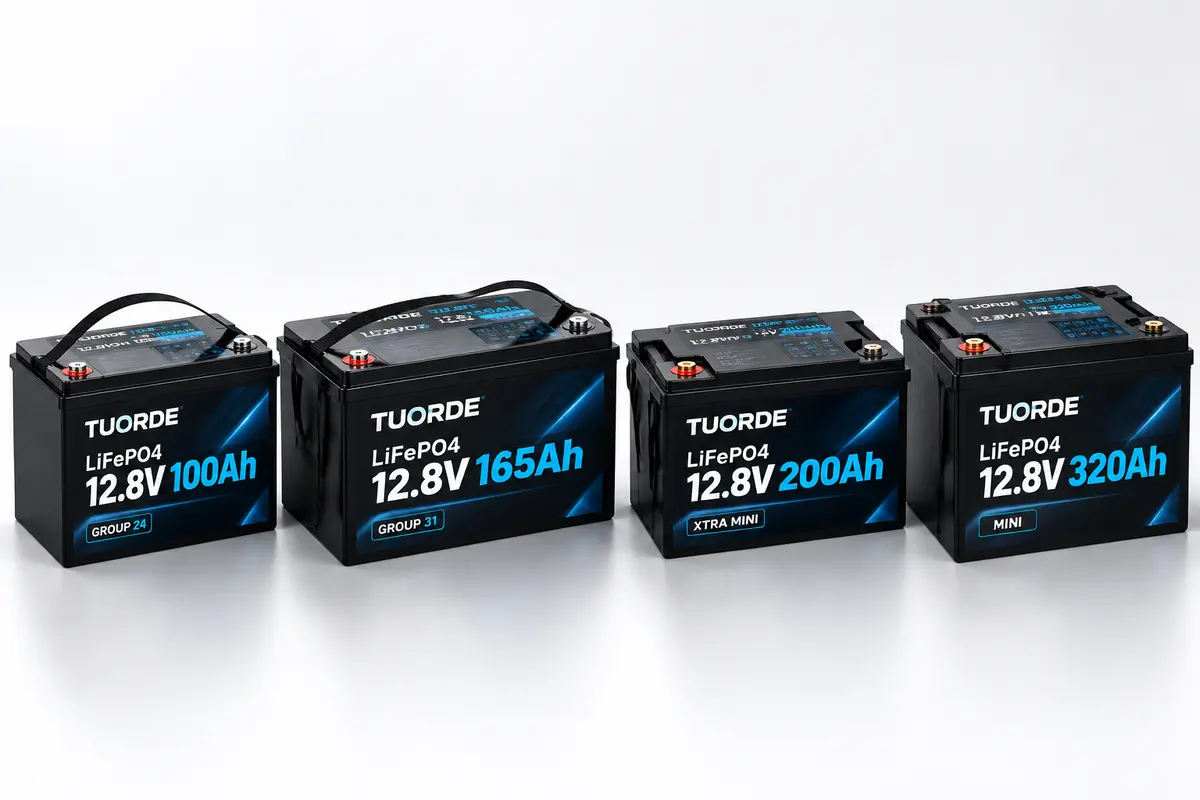
05 • COMPARE STARTING PLATFORMS
Choose a battery by application, energy demand, electrical limits and installation fit rather than capacity alone. Compare T-RV100-G24, T-RV200-H8 and T-RV280-MINI using their current model-specific documents; OEM variants and options require configuration-specific review. For truck projects, compare the ST range against the vehicle’s starting, parking-load and charging requirements.
| Reference | Nominal energy | When to consider it | When to review a different configuration |
|---|---|---|---|
| T-RV100-G24 Discuss this platform · 12.8 V / 100 Ah | 1.28 kWh | A compact RV house-power starting point when the calculated energy budget fits. | More daily energy, higher sustained / peak load, different compartment geometry or optional features. |
| T-RV200-H8 Discuss this platform · 12.8 V / 200 Ah | 2.56 kWh | A larger energy budget with space for the approved enclosure. | If current capability, recharge time, cable limits or clearance cannot meet the application. |
| T-RV280-MINI Discuss this platform · 12.8 V / 280 Ah | 3.584 kWh | A higher nominal-energy RV reference where the released dimensions and loading permit. | If sustained inverter demand, thermal conditions or installation geometry require another design. |
| ST125 Discuss this platform · 25.6 V / 125 Ah | 3.20 kWh | A truck starting / parking project with an assessed load and starting profile. | Choose among ST125 / ST150 / ST230 only after reviewing starting duty, overnight energy, charging and fit. |
| ST150 Discuss this platform · 25.6 V / 150 Ah | 3.84 kWh | A truck project needing a different energy budget within the reviewed system. | More Ah does not automatically establish starting capability or vehicle compatibility. |
| ST230 Discuss this platform · 25.6 V / 230 Ah | 5.888 kWh | A higher nominal-energy truck reference, subject to vehicle-specific review. | Review recharge capacity, installation and protection as well as parked runtime. |
Nominal energy = nominal voltage × rated Ah. It is not guaranteed usable energy. Continuous / surge current, cycle life, dimensions, heating, communication options and certification are defined by the approved specification and applicable records.
06 • CHECK THE COMPLETE SYSTEM
A battery change can expose limitations in the old charging and protection system. Provide equipment model numbers, settings and wiring information before confirming compatibility.
| Existing equipment | May remain when… | Adjust, replace or add equipment when… |
|---|---|---|
| Shore charger / converter | Its documented voltage profile, charge current and operating modes meet the selected battery specification. | Settings need changing, or a fixed incompatible profile / equalization mode cannot be disabled. A “lithium” label alone is not a compatibility result. |
| Alternator charging | Vehicle architecture, alternator limits and charge control are suitable for the agreed configuration. | Current limiting, voltage conversion or isolation is required. Assess a suitable DC-DC charger rather than assuming direct alternator connection is acceptable. |
| Solar controller | PV limits and configurable battery settings meet the system and battery requirements. | The controller cannot support the required profile, current or protection behavior; cold-charge handling also needs coordination. |
| Inverter & DC loads | Continuous and startup demands fit the battery, BMS, cabling, fusing and allowed voltage window. | Startup trips, voltage cutoffs or current demands exceed the approved limits. A larger Ah rating alone may not fix the issue. |
| Cables, fuses & isolation | Ratings, routing, terminal connections and fault protection meet the revised design. | The revised current or available fault energy requires different conductors, fuses, busbars, isolation or mounting. |
| Displays & host communication | The interface and required signals match an agreed protocol and tested equipment combination. | CAN / RS485 names match but mapping, connector pinout, termination or firmware behavior differs. |
A BMS protects within its defined limits; it does not replace correctly selected system wiring, external fault protection or integration validation. Use the approved installation documents for the exact battery.
RV compatibility guide · Detailed RV lead-acid conversion guide
Connect the battery specification with the existing charger, load profile and installation. Use the replacement guide to prepare an RV, marine house-power or off-grid project brief.
Explore Lead-Acid Replacement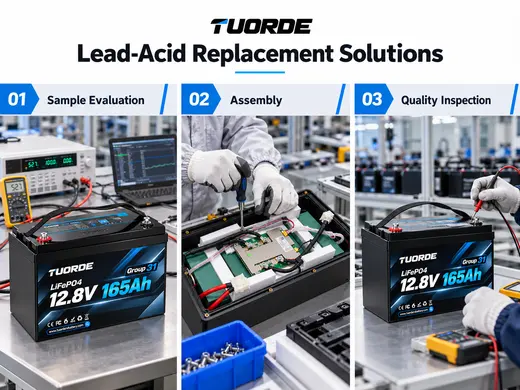
07 • MOVE FROM BRIEF TO PRODUCTION
| Stage | Customer input | Review output / gate |
|---|---|---|
| 1. Requirements submission | Application, load list, charging details, drawings, market, quantity forecast and launch target. | Project brief and missing-information list; decide whether an existing platform or custom development is appropriate. |
| 2. Engineering assessment | Clarifications and equipment / protocol documents. | Feasibility findings, proposed specification, change scope, quotation assumptions and an agreed sample / validation plan. |
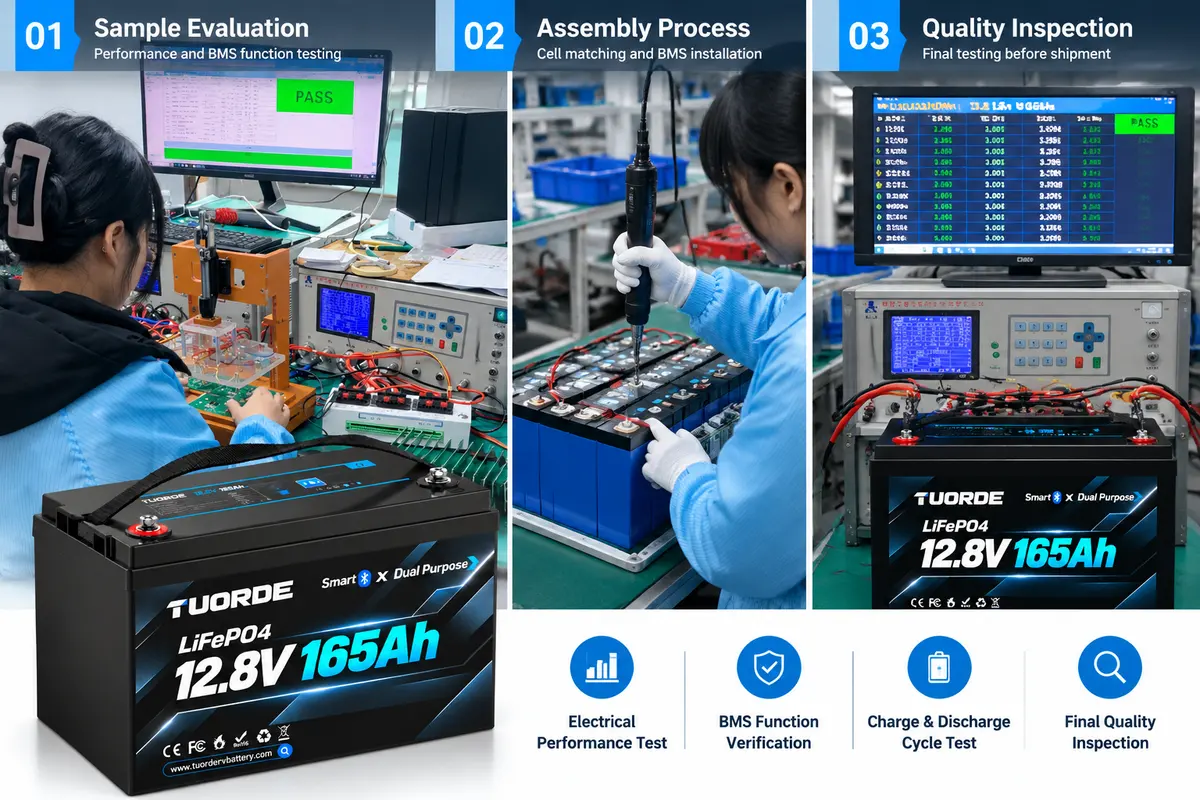
| 3. Sample validation | Installation access or representative equipment, agreed duty cycles and acceptance thresholds. | Sample evaluation records covering fit, charge / discharge, peak demand, temperatures, protection and communication as applicable. Resolve gaps before release. |
| 4. Configuration approval | Sample feedback, artwork, documentation and acceptance of revisions. | Approved configuration and revision, drawings / interfaces, artwork, test acceptance criteria and order-specific commercial terms. Changes trigger an agreed revalidation review. |
| 5. Production & delivery | Confirmed purchase scope, approved specification and delivery requirements. | Agreed production inspection / release records, identification / traceability information, packing documentation and after-sales escalation route. |
Sample cost, development cost, MOQ, tooling, lead time, warranty and delivery terms depend on the selected platform and change scope. Confirm them in the project quotation and order documents.
08 • REQUEST RELEVANT EVIDENCE
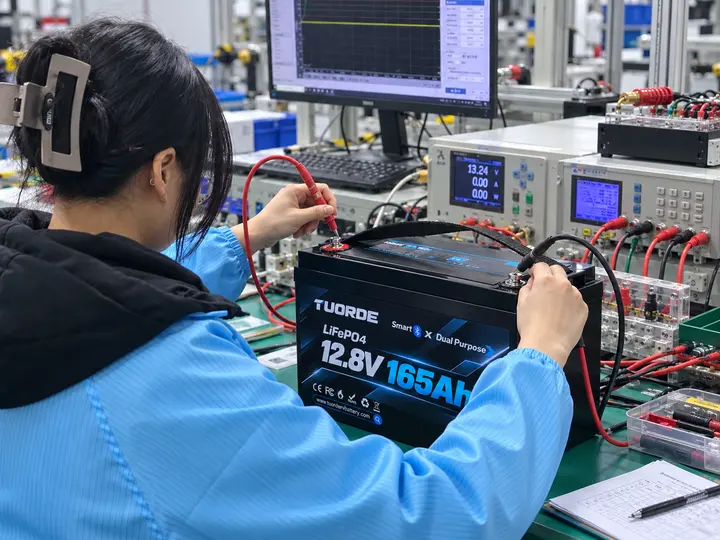
Ask for evidence that answers your project’s questions. A generic photo, demonstration screen or certificate for another configuration cannot establish the performance of your selected battery.
Request available charge / discharge results with current, temperature, voltage limits and test duration. For starting or inverter peaks, specify the waveform / duration, starting conditions and recovery behavior you need assessed.
Request applicable App recordings, alarm / recovery demonstrations and communication mapping. Confirm battery model, BMS / firmware revision, connected equipment and test conditions.
Request the current datasheet, dimensional drawing, installation / charging guidance, and available transport or compliance documents for the intended model and destination. Document scope and applicability need confirmation.
Public case studies and installation videos will be added when TUORDE has approved, relevant material to share. Until then, request available records or agree a project-specific validation plan; no customer results are implied here.
Explore five source-documented engineering cases: M2000 mining truck, T44 electric truck, MT100 motorcycle, X300 snow groomer and Z245 wheel loader. Each case separates the design scope, reported system figures and project-specific results.
Explore Battery Engineering Case Studies →
These are custom traction-battery projects; their ratings and results do not apply to every standard RV or truck starting battery.
09 • PROJECT QUESTIONS
Private label generally starts with an existing platform and a defined branding scope. OEM starts from specified requirements; ODM starts from the application and develops the requirements with engineering input. The actual deliverables, changes and responsibilities are agreed in the project brief.
Request a platform review first. Confirm electrical requirements, enclosure fit, available branding options, market documentation and quantities. A logo change does not make a platform suitable for every application.
Calculate battery-side daily Wh and reserve, then review continuous and peak current, the permitted usable window, charging opportunities and installation space. Compare the exact model specifications instead of selecting by Ah alone.
Only after checking its model, settings, charge profile and current against the selected battery requirements. Some configurable equipment may remain; a fixed unsuitable charger may require replacement. Alternator systems may require DC-DC charging after review.
These functions can form part of the configuration review. Supply host equipment and protocol requirements. Confirm model-specific availability, supported data, firmware behavior and a communication validation plan; interfaces are not universally interchangeable.
No universal assumption should be made. Heating, temperature limits and permitted bank arrangements must be stated in the approved model specification. Review charging below the permitted temperature and the complete system protection strategy.
They depend on the existing platform, electrical / mechanical changes, tooling, branding, documentation and validation scope. Send your sample needs, annual forecast and launch target for an order-specific proposal.
They can be considered as engineering starting points. Marine house power, starting and propulsion have different demands. Off-grid storage needs an architecture, energy and charging assessment. Suitability and market documentation require project-specific confirmation.
Request a document list for the exact model, revision and destination. Review report scope and test conditions. Any missing evidence, additional testing or third-party assessment should be identified in the validation plan and quotation.
Approve the configuration and revision, electrical limits, drawing and interfaces, branding, acceptance criteria and required documents. Confirm commercial terms, delivery plan and support responsibilities in the order. Material changes should be reviewed for revalidation.
10 • START WITH A USEFUL BRIEF
Send the information you have. Mark unknown items as “to be confirmed” so the first review can identify the remaining decisions.
The project form opens with the OEM project type. The prefilled brief opens WhatsApp with editable project fields; you choose when to send it.