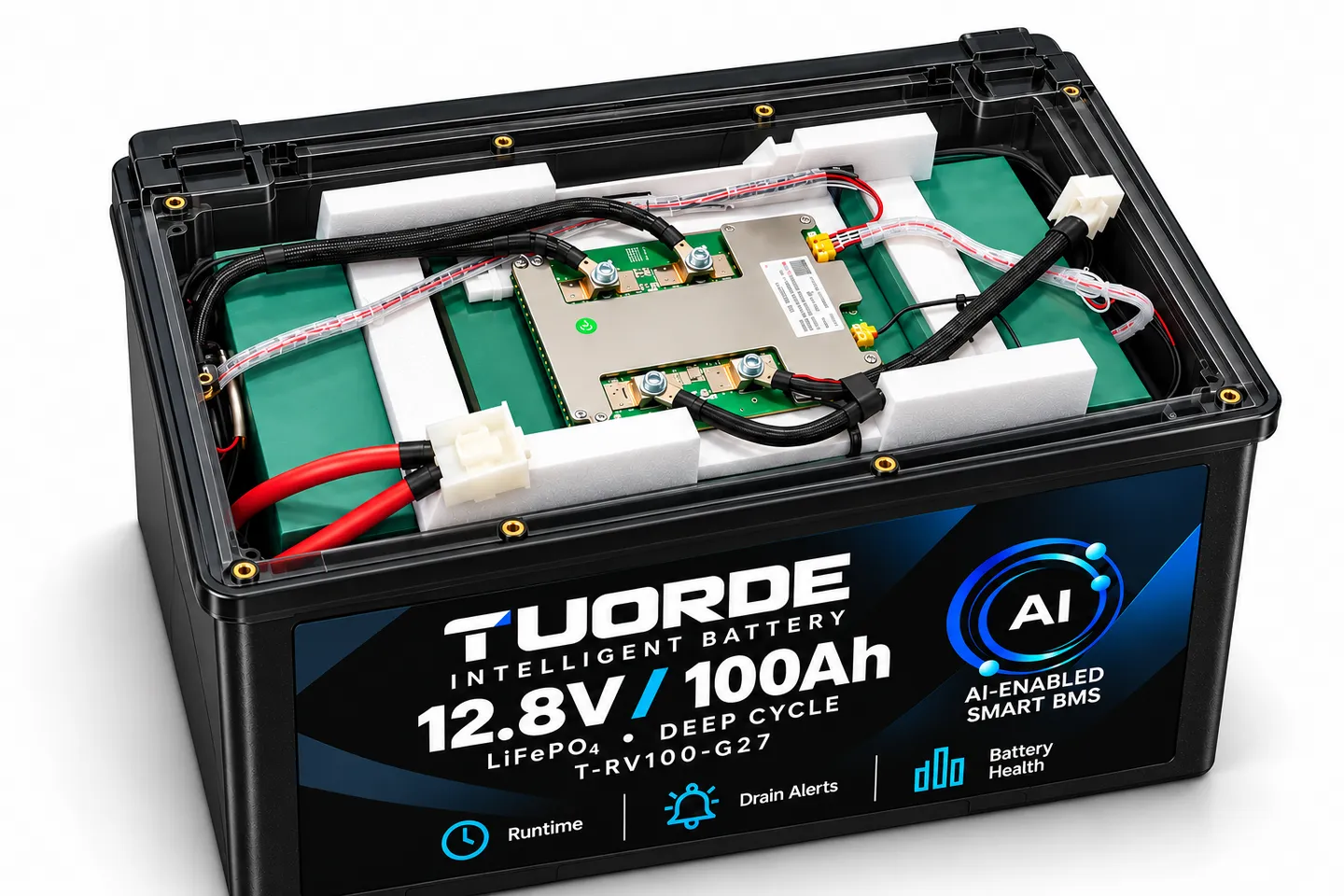
T-RV100-G27 · RV HOUSE-BATTERY POWER
100Ah House Power, Planned Around Your RV Battery Bay
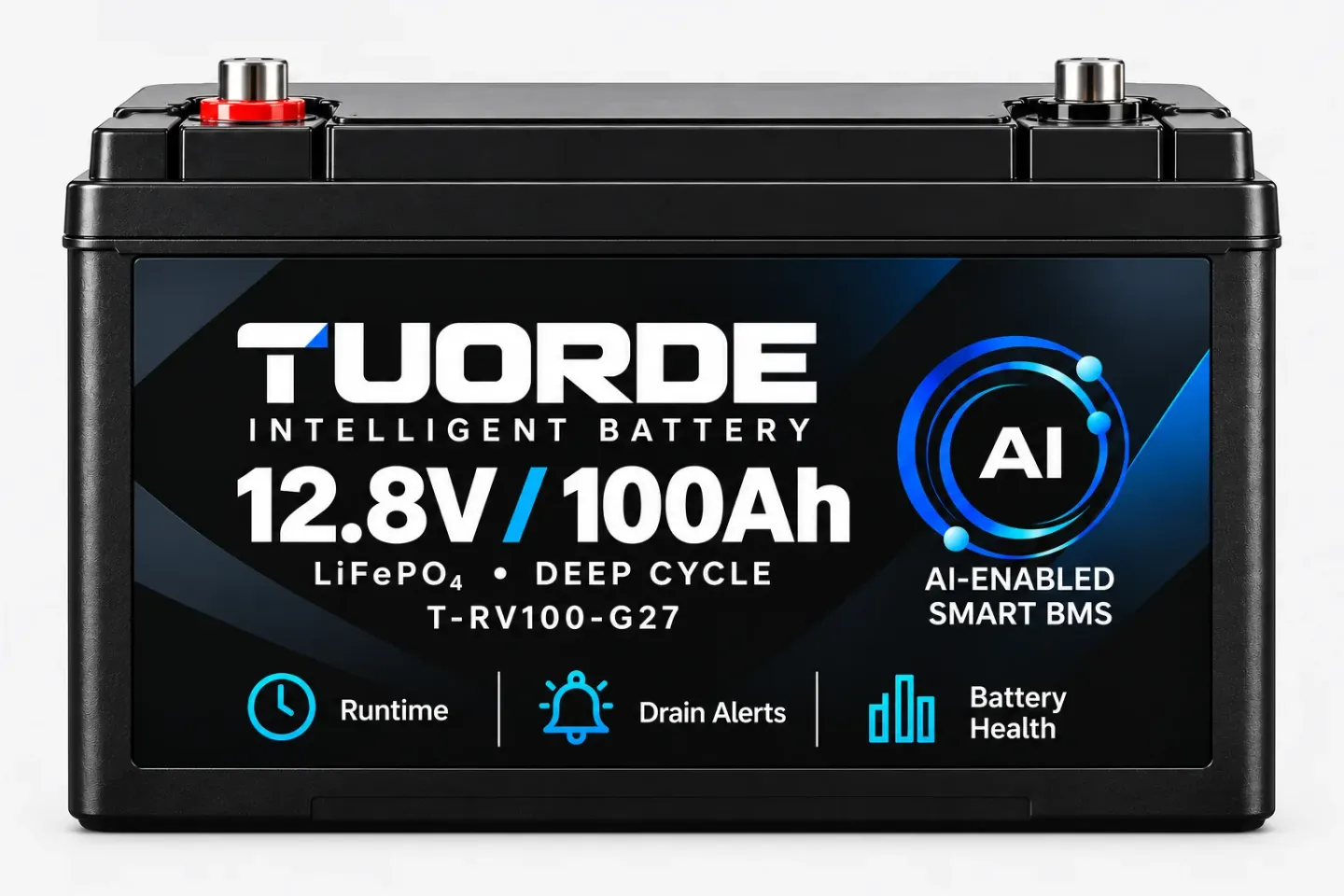
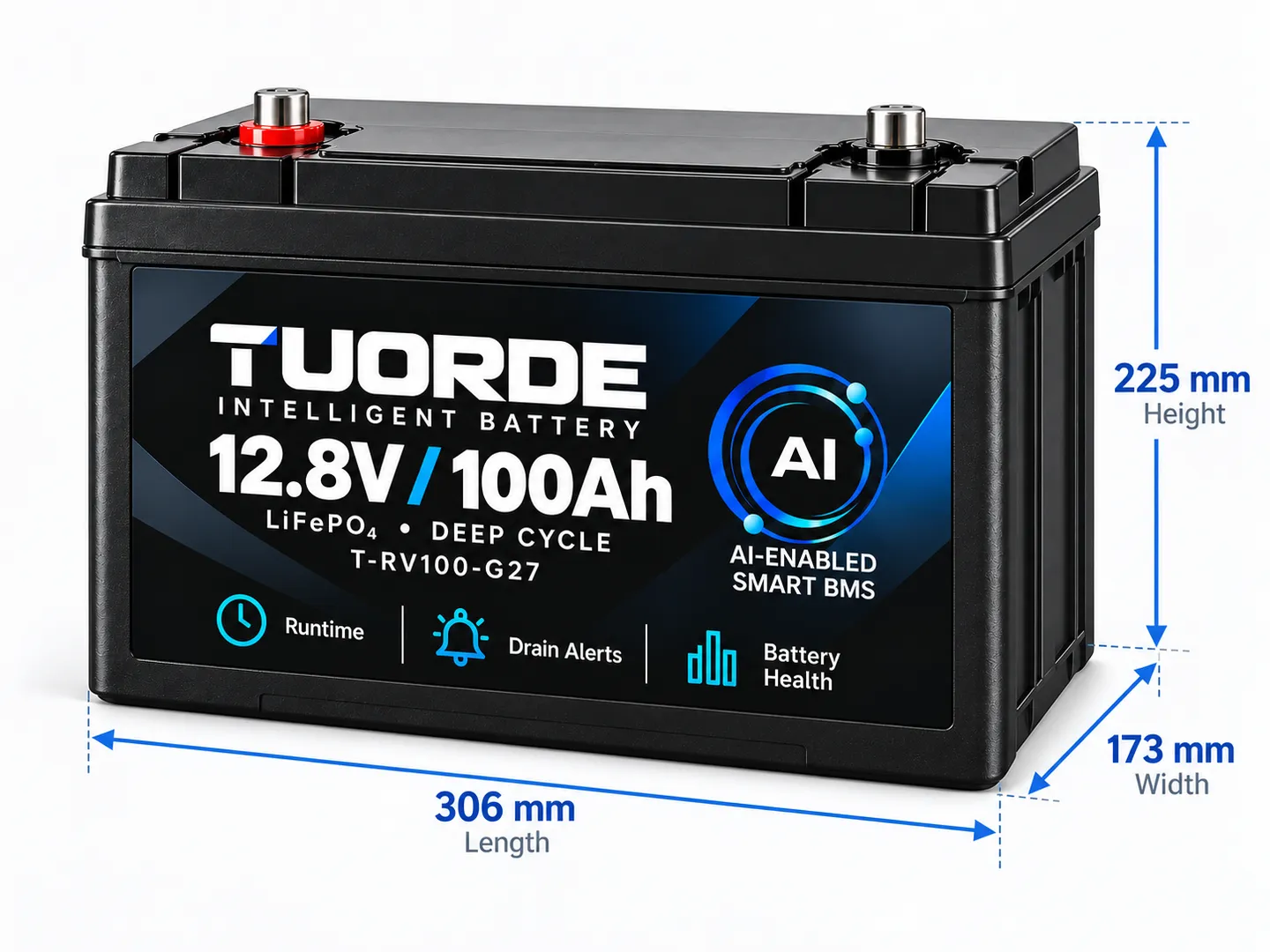
The TUORDE T-RV100-G27 is a 12.8V 100Ah LiFePO4 RV house battery for travel trailer and Class B house-power projects. It combines a 1.28kWh nominal energy configuration with a 306 × 173 × 225 mm target enclosure and P100 CORE BMS design. Start with the available battery bay, then match your loads, charging equipment and monitoring requirements.
Confirm the selected configuration, electrical limits and installation requirements before ordering. G27 is a platform reference, not a validated drop-in fit claim.
MODEL BRIEF / CORE-STD-P100
T-RV100-G27 Configuration & Engineering Targets
Supplied planning data. Request the latest approved drawing and electrical datasheet for release specifications.| Parameter | Configuration / validation status |
|---|
| Model / configuration | T-RV100-G27 / T-RV100-G27-CORE-STD-P100 |
|---|
| Chemistry / cell format | LiFePO4 / prismatic cells; cell supplier not finalized |
|---|
| Nominal voltage / rated capacity | 12.8V / 100Ah — proposed configuration |
|---|
| Nominal energy | 1,280Wh / 1.28kWh — 12.8V × 100Ah; not measured usable energy |
|---|
| Enclosure reference | G27 / Group 27 target platform; physical compatibility requires validation |
|---|
| Target dimensions (L × W × H) | 306 × 173 × 225 mm — subject to approved mechanical drawing |
|---|
| BMS design | P100 / CORE configuration |
|---|
| Discharge design targets | 100A continuous / 200A peak; final ratings and peak duration require validation |
|---|
| Self-heating | No self-heating in the supplied configuration |
|---|
| Terminal options | M8 / M10 / SAE / dual — configurable; confirm the selected arrangement |
|---|
| Series / parallel target | 4S / 4P target only; validate each configuration with the selected BMS |
|---|
| Weight / charging limits | Weight pending packaging study; maximum charge current and charge settings to be confirmed |
|---|
| Compliance planning | UN38.3 / FCC; UL optional. Applicable scope and document availability require confirmation; certification attainment is not confirmed. |
|---|
Make the Battery Bay, Load and Charger Work Together
01 / Tray & Terminal Fit
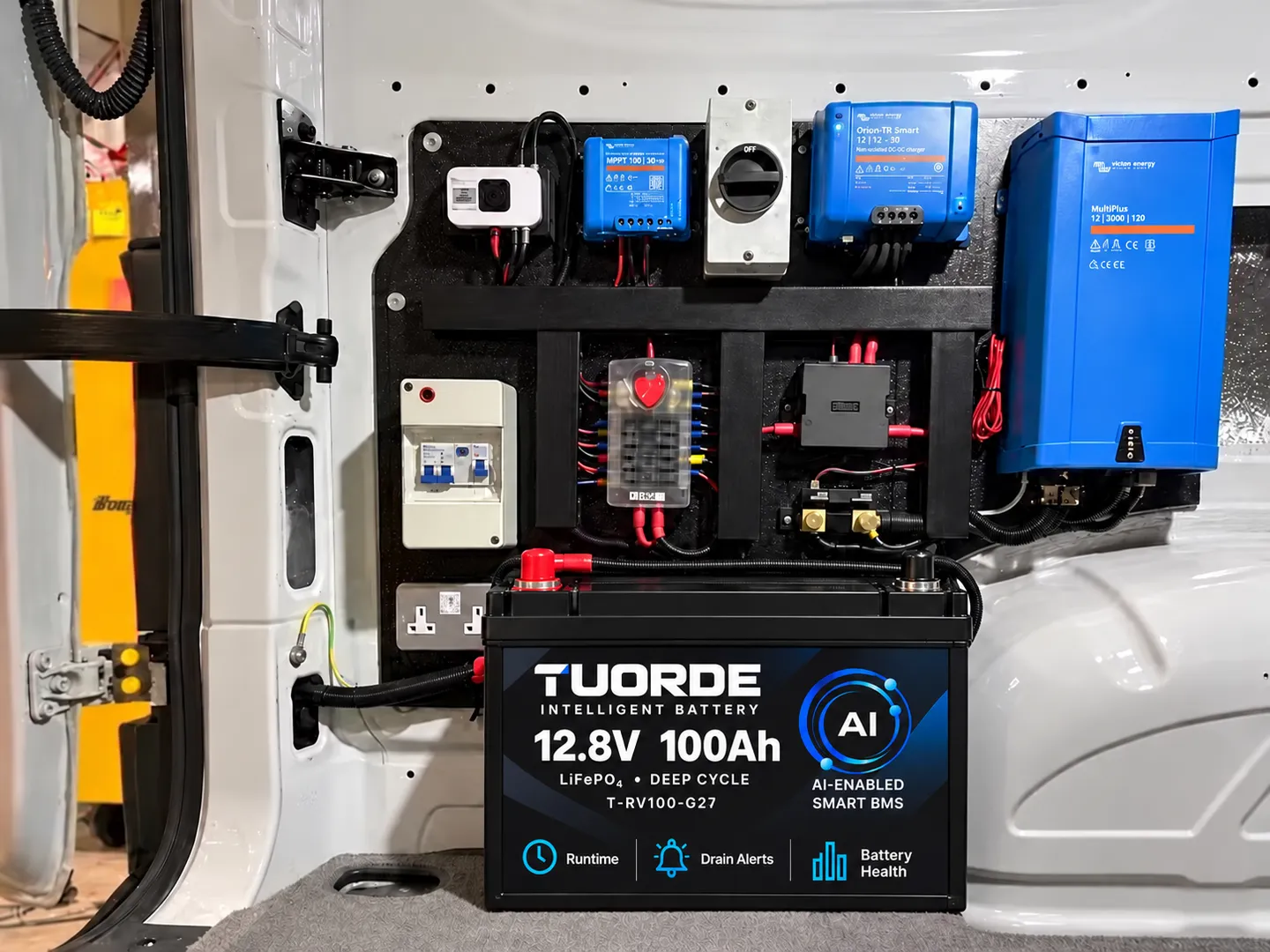
Measure usable space, hold-down points and lid clearance. Confirm polarity, connector choice and cable bends; an enclosure dimension alone does not establish replacement compatibility.
02 / House-Load Demand
Assess lighting, pumps, ventilation and other simultaneous loads. Compare inverter surge with the final BMS ratings and approved peak duration. This is a house-power platform, not an engine-starting battery.
03 / Charging & Cold Weather
Review the converter, solar controller and alternator/DC-DC charger for LiFePO4 settings. This configuration has no self-heating; confirm charge-temperature protection and the approved charging limits.
Plan the enclosure with the Group 27 fit guide and battery size comparison. Use the RV compatibility guide for the electrical review.
Specify Protection, Connectivity and Battery Insights Separately
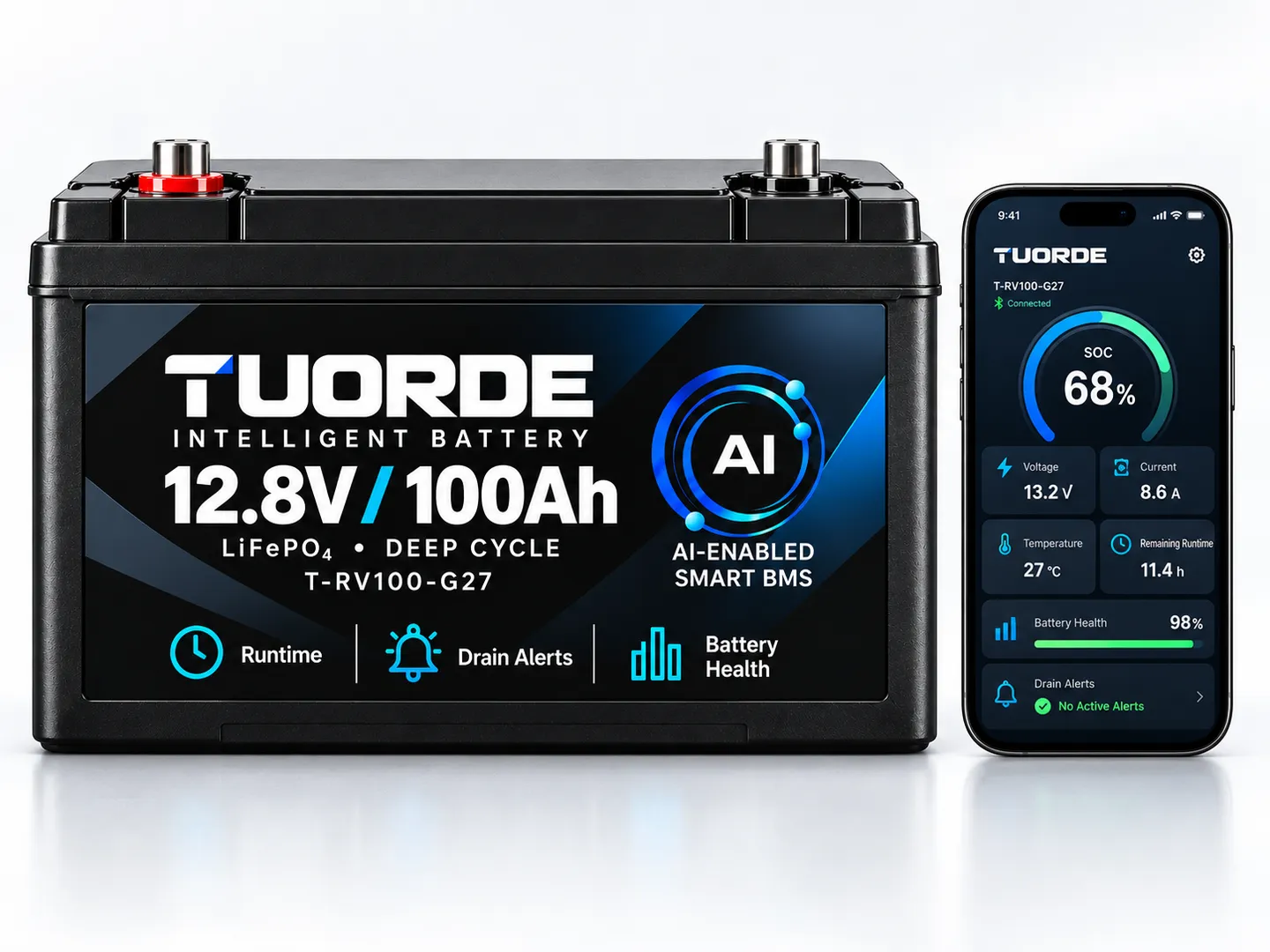
Define voltage, current and temperature protection settings for the approved P100 build. For connected RV systems, request a separate review of Bluetooth app access, CAN or RS485 protocols and connected equipment.
Selected configurations may support runtime prediction, abnormal drain alerts, battery-health insights and One-Tap Smart Troubleshooting. Availability on T-RV100-G27 depends on BMS hardware, firmware, software and integration; these functions are not established as standard in CORE-STD-P100. Guided diagnostics do not perform automatic battery repair.
Explore Smart BMS & AI RV Battery Technology before defining your monitoring specification.
Build a G27 Configuration for Your RV Battery Line
For RV manufacturers, battery distributors and private-label brands, use one agreed configuration code to connect the enclosure, terminals, BMS requirements and brand presentation.
Define Your Configuration
- Battery bay drawing and terminal orientation
- Continuous loads, surge demand and charging equipment
- Communication interfaces and monitoring options
- Private-label artwork, packaging and documentation
Agree the Validation Scope
- Mechanical and packaging review, including final weight
- BMS limits, peak duration and application checks
- Target-market compliance and available test documentation
- Evaluation samples, pricing, MOQ and lead time
Review OEM & Private Label Solutions and the technical resources before requesting a model-specific sample plan.
T-RV100-G27 Buyer Questions
Is this a confirmed drop-in Group 27 replacement?
Not yet. G27 identifies the proposed enclosure platform. The 306 × 173 × 225 mm target dimensions, tray retention, terminals, cable reach and clearance must be checked against an approved model drawing before confirming physical compatibility.
How much runtime does the 100Ah configuration provide?
The nominal energy calculation is 12.8V × 100Ah = 1,280Wh. Runtime depends on usable energy, load, inverter losses, temperature and battery settings. This calculation is not a measured runtime or usable-capacity claim.
Are Bluetooth, CAN and AI monitoring included as standard?
These functions must be specified and confirmed for the selected BMS hardware, firmware and software. The supplied CORE-STD-P100 configuration does not establish Bluetooth, CAN, RS485, runtime prediction or battery-health functions as standard features.
Can this configuration charge in freezing conditions?
The supplied configuration has no self-heating. Confirm the approved charging temperature range and low-temperature charging protection before cold-weather use. Do not assume that cold-temperature discharge capability permits charging below the approved limit.
What should an OEM buyer confirm before ordering?
Request the current mechanical drawing, electrical limits, terminal arrangement, BMS configuration, charging requirements, compliance-document scope and sample validation plan. Pricing, MOQ and lead time are confirmed for the agreed configuration.