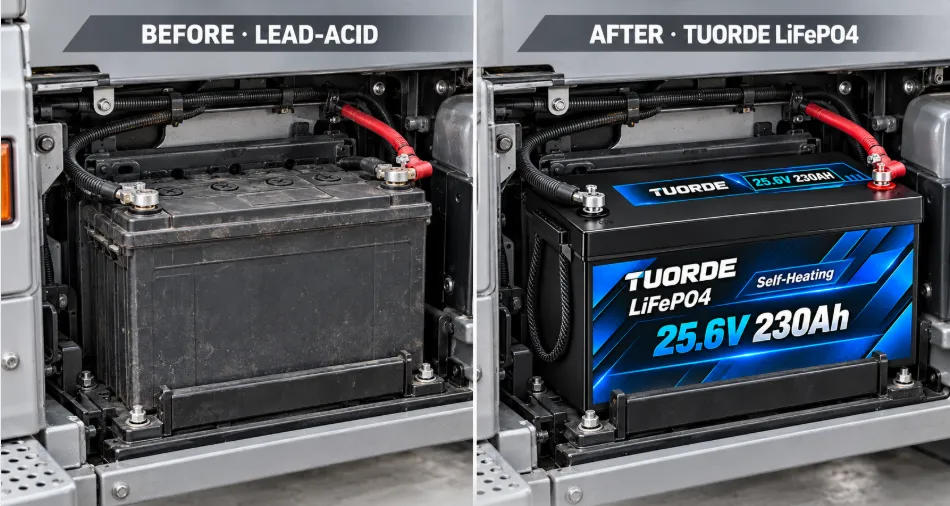
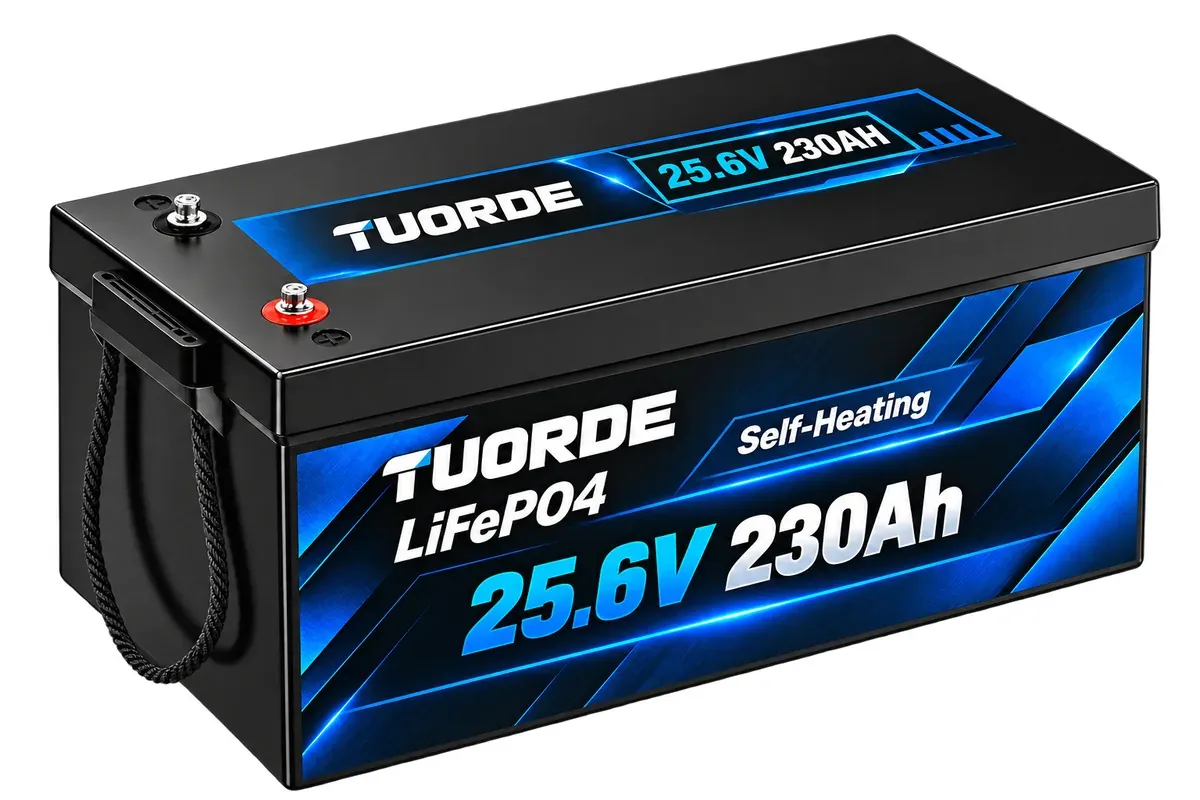
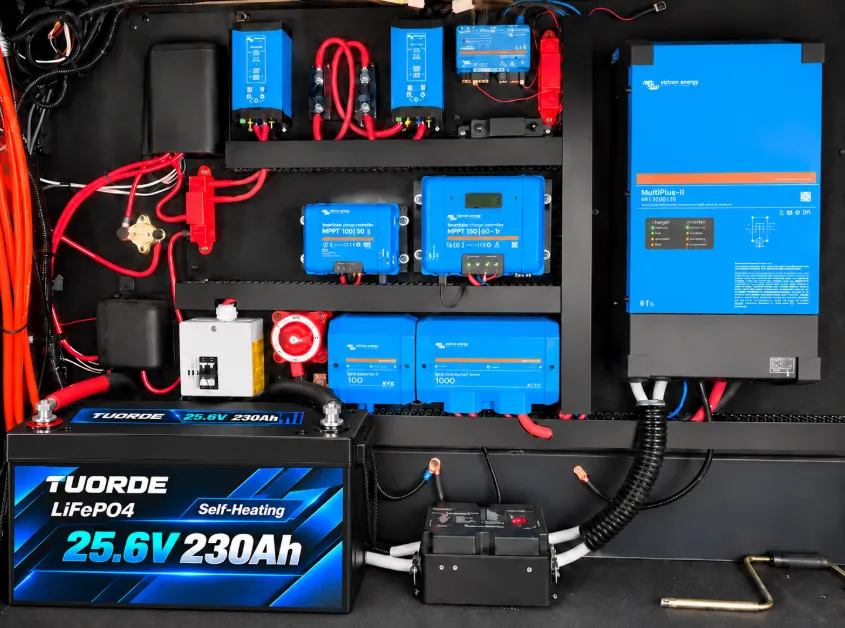
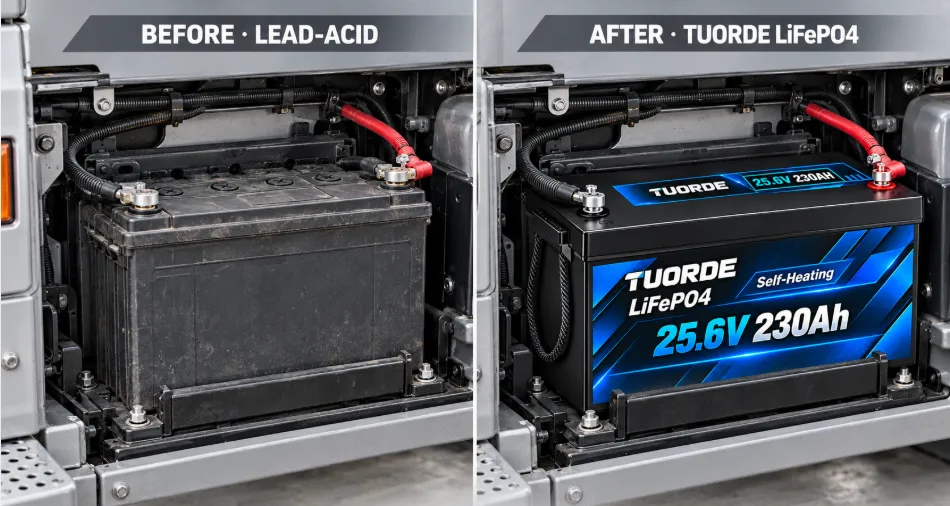
24V LEAD-ACID REPLACEMENT
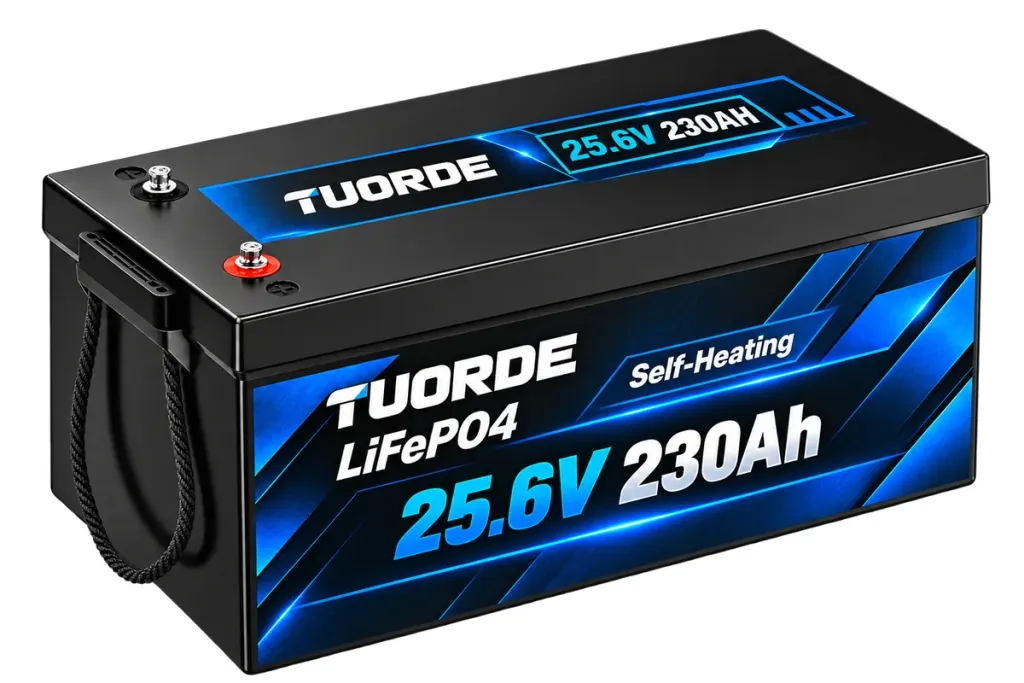
25.6VNominal voltage
230AhRated capacity
5.89kWhNominal energy
200ABMS rating
LiFePO4 · Bluetooth 5.0 · Dual-mode self-heating
A 24V-class lithium battery for lead-acid replacement projects. Evaluate the existing battery bank, power demand, charging equipment and installation space before specifying a replacement. This listing is for lead-acid system upgrades; engine-starting suitability requires separate, model-specific validation.
Electrical & BMS ratings
| Nominal voltage | 25.6V |
|---|
| Rated capacity | 230Ah |
|---|
| Nominal energy | 5,888Wh (5.89kWh, calculated) |
|---|
| BMS rating | 200A |
|---|
| Maximum continuous charge current | 200A |
|---|
| Maximum continuous discharge current | 200A |
|---|
| Peak discharge current | 1,000A for 1 second |
|---|
| Charge method / voltage | CC/CV · 28.8V ± 0.4V |
|---|
| Recommended charge current | 46A (0.2C) |
|---|
| Monitoring | Bluetooth 5.0 |
|---|
Peak discharge is a time-limited value, not a CCA rating or an engine-start compatibility claim. Nominal energy is not measured usable energy.
Temperature & self-heating
| Charging temperature | 0°C to 50°C (after any required preheating) |
|---|
| Discharging temperature | −20°C to 60°C |
|---|
| Storage temperature | −10°C to 50°C |
|---|
| Low-temperature charging protection | Charging stops below 0°C and resumes at 5°C or above |
|---|
| Self-heating temperature range | −20°C to 5°C |
|---|
| Charger-assisted heating input | At least 15A available from the charging source |
|---|
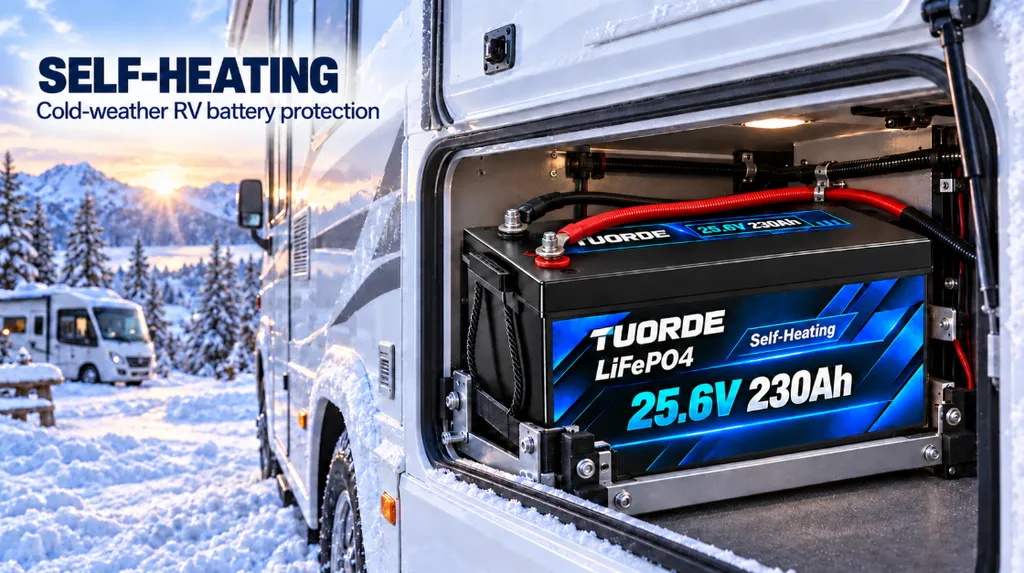
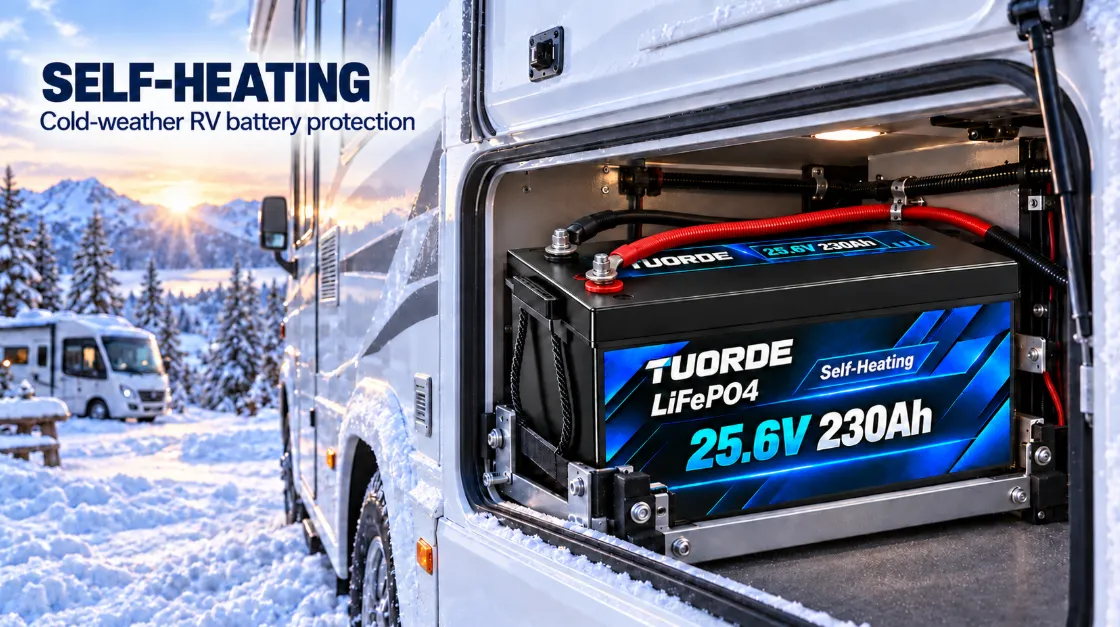
Self-heating has charger-assisted and battery-powered modes. Confirm the supplied TUORDE control interface and the required battery state of charge for battery-powered preheating. Heating must bring the cells into the permitted charging range before charging proceeds.
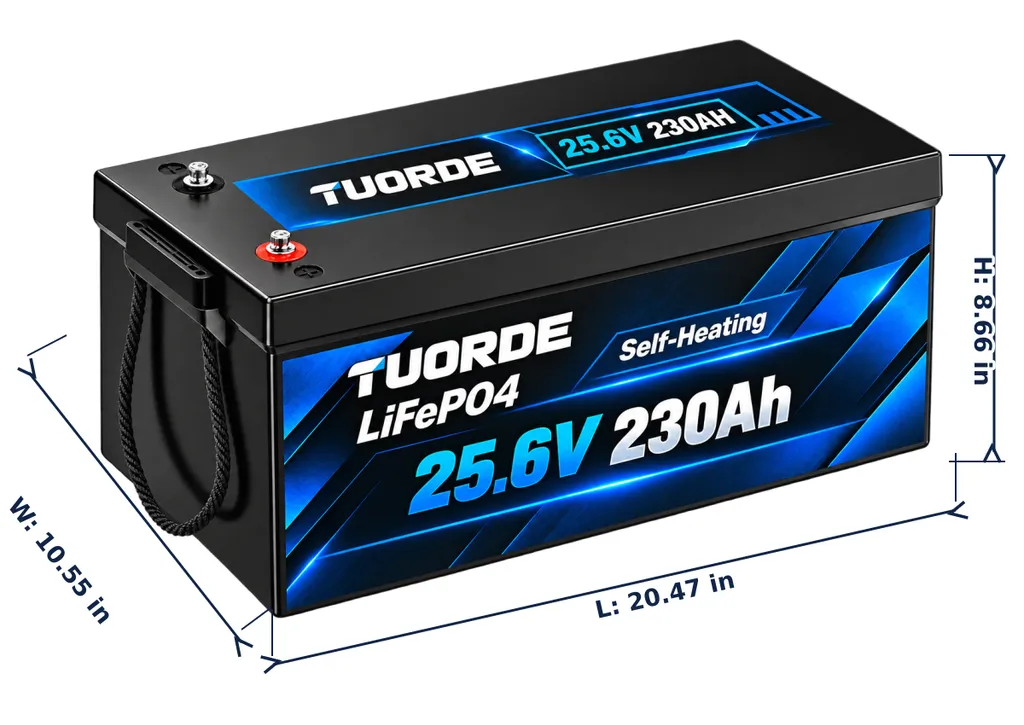
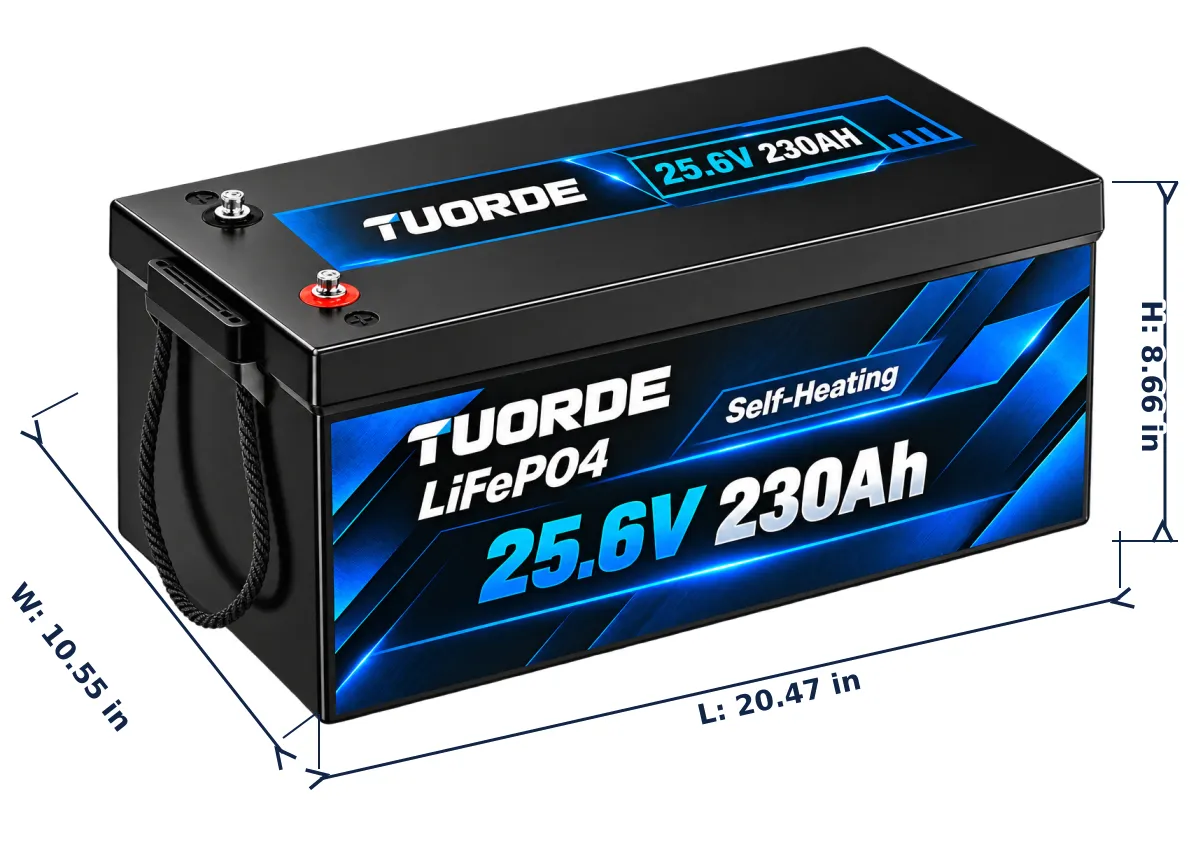
Request the current TUORDE datasheet and mechanical drawing for the exact configuration before ordering or installation. Enclosure dimensions, weight, terminals, validated bank arrangements and certification scope are not established by the ratings above.
Lead-acid upgrade checklist
- Identify the existing system voltage, battery-bank arrangement and application.
- Record daily energy use, continuous loads, surge demand and required operating time.
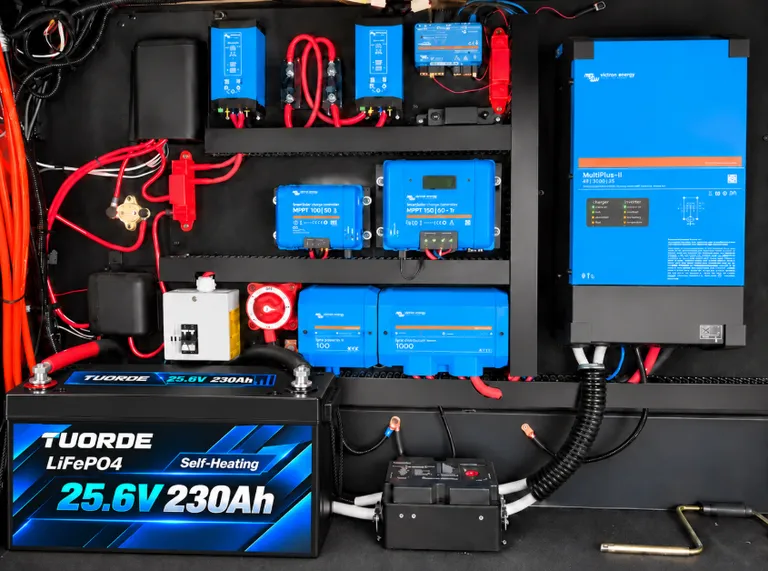
- Compare each charging path—charger, converter, alternator and solar controller—with the approved battery limits.
- Check compartment dimensions, mounting, cable routing, terminal clearance and system protection.
- Confirm cold-weather charging needs and the selected configuration's self-heating conditions.
Explore lead-acid replacement solutions →
Frequently asked questions
Can this battery start a truck engine?
This listing covers lead-acid energy-storage upgrades. The 1,000A for 1 second peak is not a CCA rating. Engine-start use requires separate validation for the exact vehicle and battery configuration.
Will my existing 24V charger work?
Check its charging profile and output against the selected battery specification. The stated CC/CV charge voltage is 28.8V ± 0.4V; also review current limits and every alternator, solar or converter charging path.
How does cold-weather charging work?
Charging is blocked below 0°C and resumes at 5°C or above. Charger-assisted heating needs at least 15A from the source. Confirm the control interface and state-of-charge conditions for battery-powered preheating.
Can I replace any lead-acid bank directly?
No universal fit is stated. Verify bank arrangement, enclosure and terminals, cable protection, loads and charging equipment against TUORDE documentation for the ordered configuration.
ENGINEERING & OEM INQUIRY
Plan your 24V lead-acid upgrade
Send your application, existing battery-bank arrangement, charger models, loads, compartment dimensions, target market and estimated volume. Request the controlled datasheet and drawing for the exact configuration.
Talk to Battery Engineers →