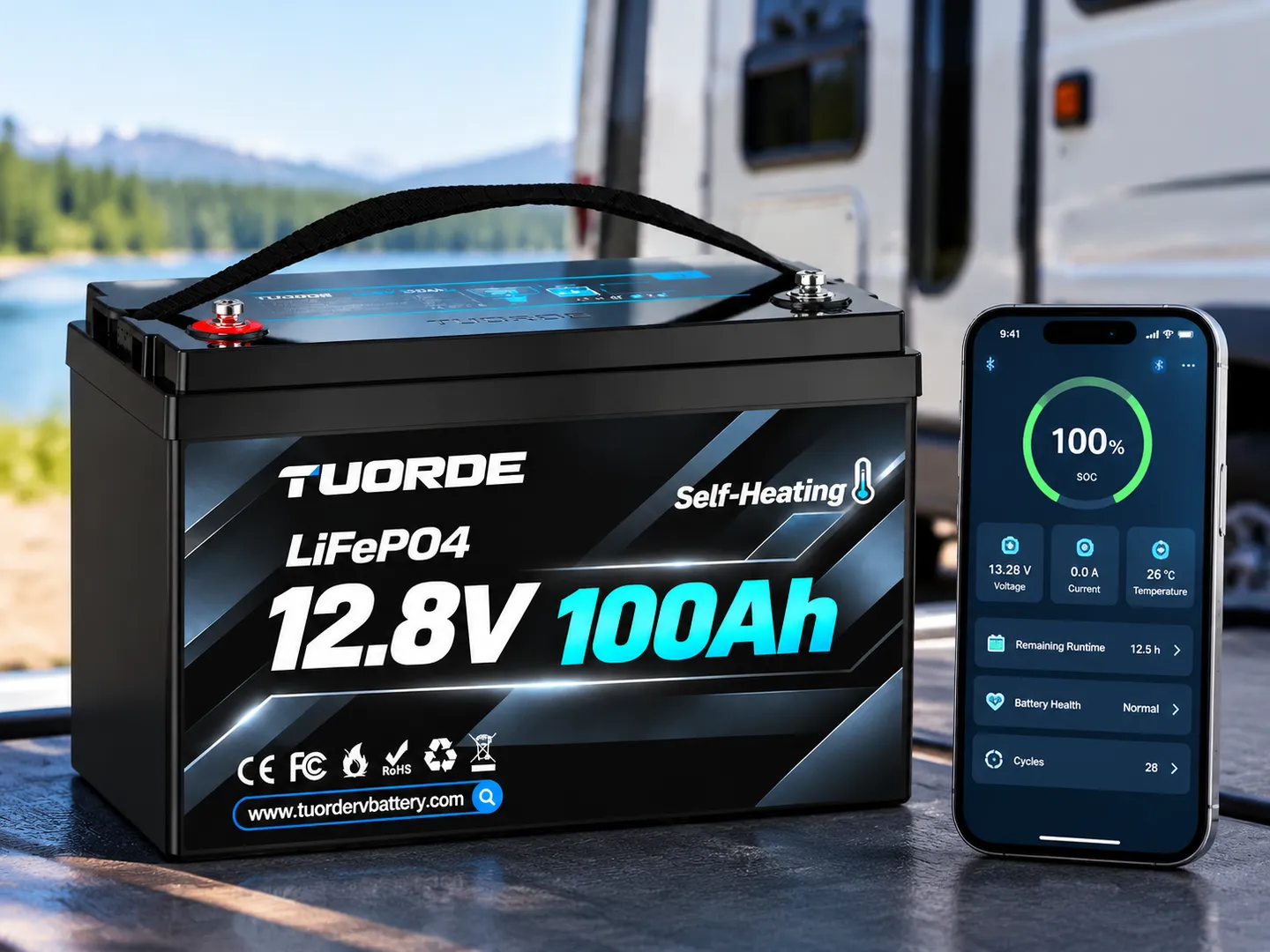
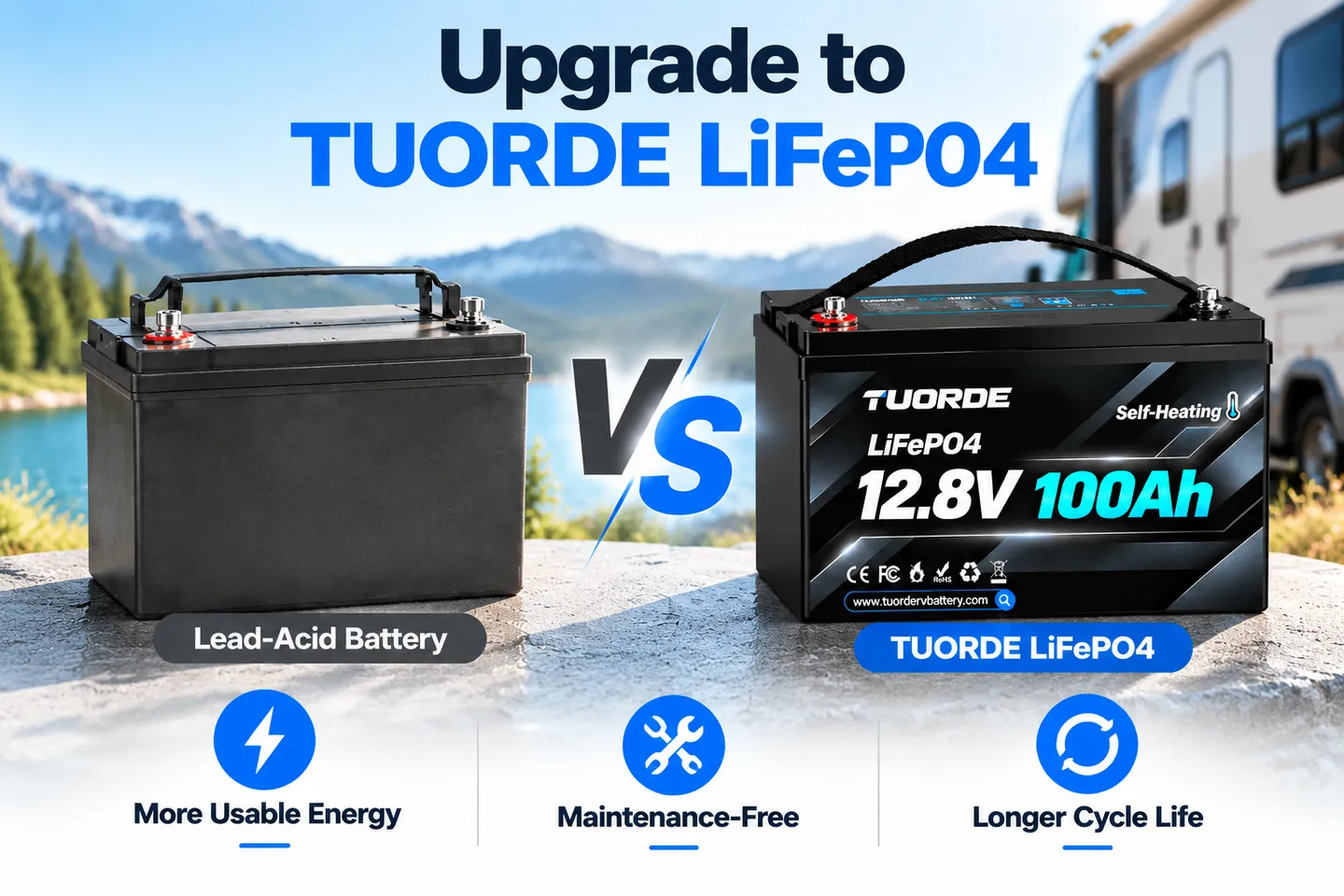
GROUP 24 · BLUETOOTH · DUAL-MODE SELF-HEATING
Prepare for Cold-Weather Charging Without Removing the Battery
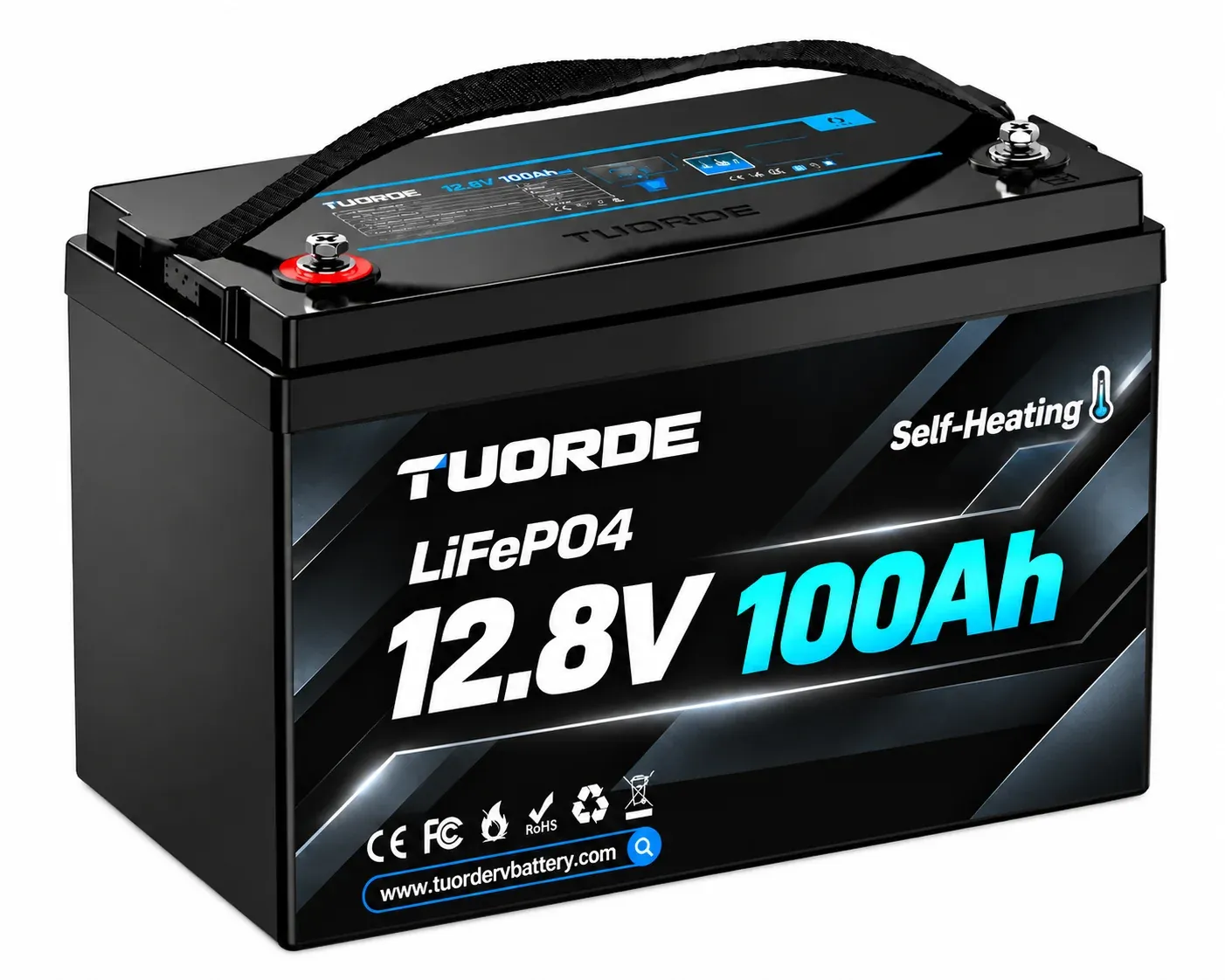
TUORDE’s 12V 100Ah Group 24 self-heating battery combines a compact enclosure with Bluetooth monitoring and an integrated heater. It is intended for compatible RV house-power, campervan, marine deep-cycle and off-grid installations where cold charging conditions need to be addressed.
For RV manufacturers, battery distributors and private-label brands: specify the battery, charger and heating configuration together rather than selecting by capacity alone.
Request a QuoteExplore Specifications ↓
Heating and Charging Are Two Different Steps
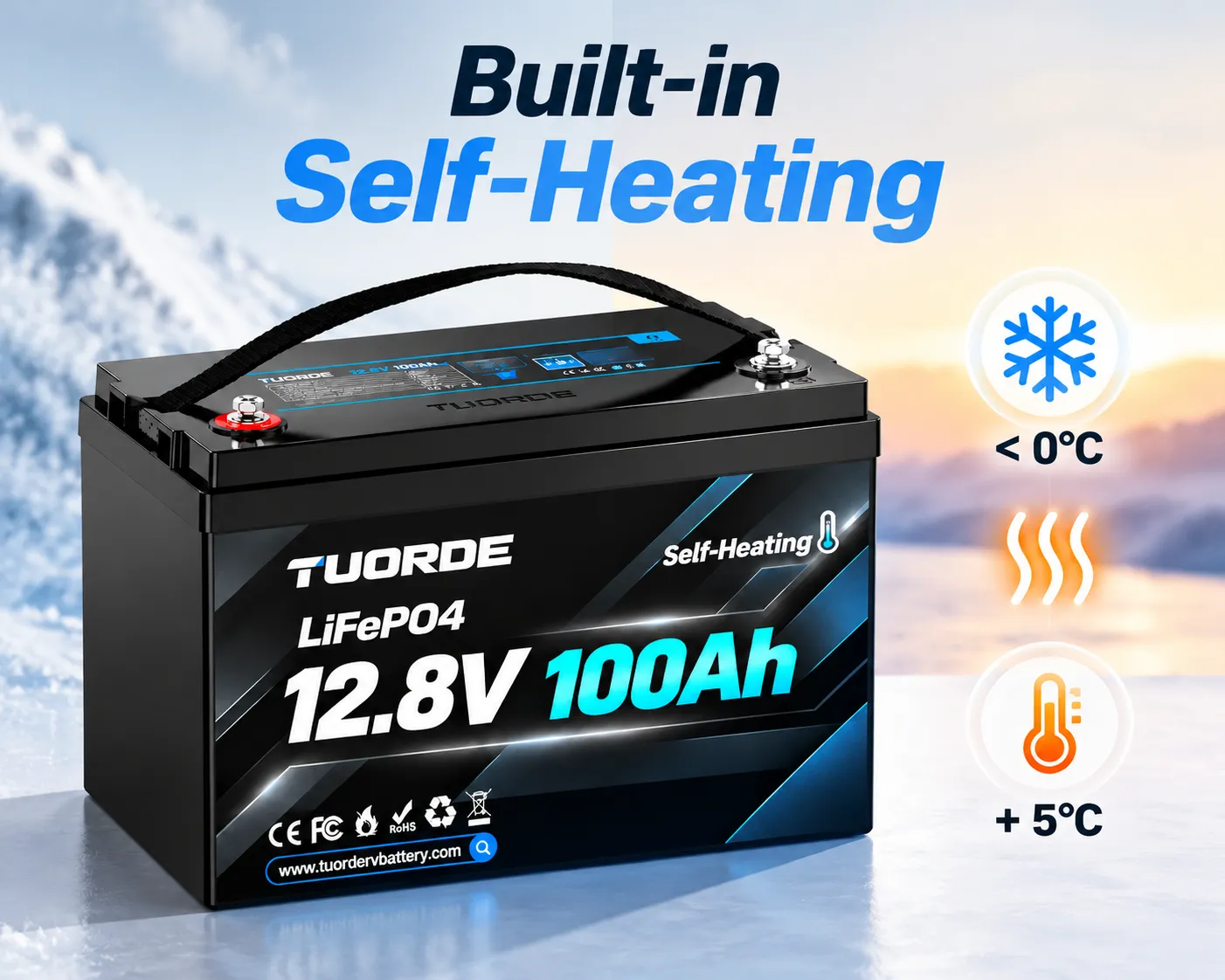
A cold battery must reach its permitted cell temperature before charging. The integrated heater warms the cells; low-temperature charge protection prevents charging while they remain too cold. Self-heating is not permission to charge frozen cells.
- Check the energy source. Regular mode uses a connected charger rated at least 10A. In the battery-assisted mode, a lower charger current can be supplemented by battery energy when SOC is above 20%; battery-only preheating also requires that reserve.
- Allow the warm-up sequence to finish. The heating activation and stop references are separate from the BMS charge-cutoff and recovery values. Confirm the final control thresholds and available app controls in the supplied firmware and manual.
- Begin charging under the approved profile. Warm-up consumes energy and adds time. Plan the charger, solar input or alternator interface around the whole heating-and-charge cycle.
100Ah Self-Heating Configuration & Installation Data
| Parameter | Configuration |
|---|
| Chemistry | LiFePO4 |
|---|
| Nominal voltage / capacity | 12.8V / 100Ah |
|---|
| Nominal energy | 1,280Wh (1.28kWh) |
|---|
| BMS / continuous discharge | 100A / 100A |
|---|
| Nominal continuous DC output | 1,280W at nominal voltage |
|---|
| Pulse discharge | 500A for 1 second; not an engine-starting rating |
|---|
| Maximum / recommended charging current | 100A / 20A |
|---|
| Charge method / voltage | CC/CV / 14.4V ± 0.2V |
|---|
| Bluetooth | 5.0; matched monitoring application |
|---|
| Self-heating | Regular charger-powered and battery-assisted modes |
|---|
| Regular-mode charger requirement | At least 10A |
|---|
| Battery-powered heating condition | SOC above 20%; subject to configured mode |
|---|
| Heating activation / stop reference | Activation between −20°C and 5°C; stop at 10°C |
|---|
| Approximate warm-up reference | 70–90 minutes from −10°C; 100–150 minutes from −20°C |
|---|
| Ambient charging range with heating | −20°C to 50°C; cells must warm before charging |
|---|
| Discharge / storage temperature | −20°C to 60°C / −10°C to 50°C |
|---|
| Low-temperature charge cutoff / recovery | Below 0°C / at or above 5°C |
|---|
| Low-temperature discharge cutoff | Below −20°C |
|---|
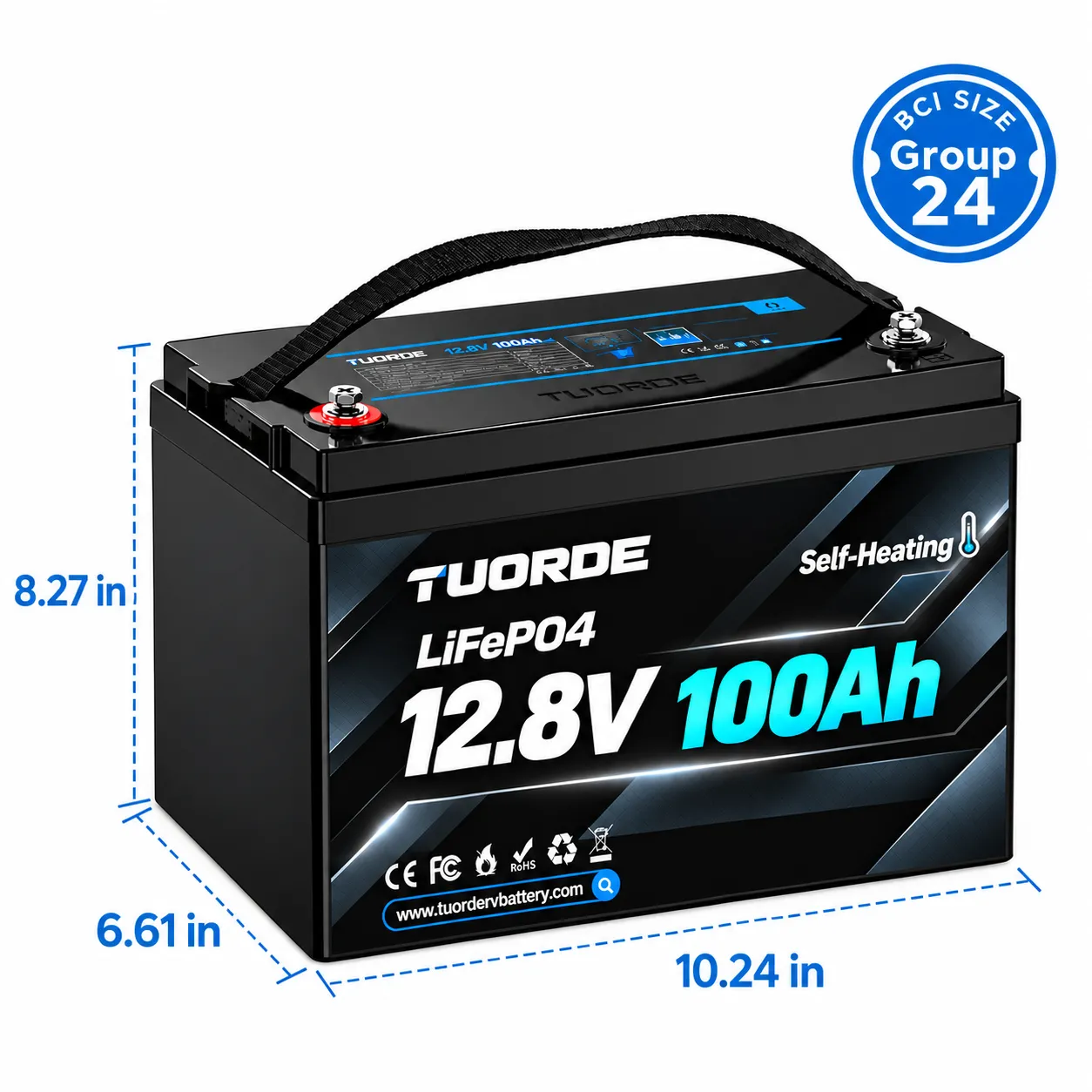
| Dimensions (L × W × H) | 10.24 × 6.61 × 8.27in; approximately 260 × 168 × 210mm |
|---|
| Case size reference | Group 24; verify full mechanical drawing and mounting |
|---|
| Approximate weight | 22.71lb / 10.30kg |
|---|
| Terminals / housing / protection | M8 bolts / ABS / IP65 |
|---|
| Internal resistance | ≤40mΩ |
|---|
| Expansion limit | Up to 4 in series and 4 in parallel with approved matched-bank design |
|---|
| Cycle reference | 4,000 at 100% DoD; 6,000 at 80%; 15,000 at 60%; confirm test conditions |
|---|
Use the final TUORDE datasheet, mechanical drawing and acceptance specifications for procurement. Warm-up time varies with ambient conditions and available power. Cycle figures are reference test values, not warranty terms. Nominal energy and power are calculations, not guaranteed usable energy or AC output.
Choose the Heating Version for the Installation Conditions
Compact RV house battery compartments
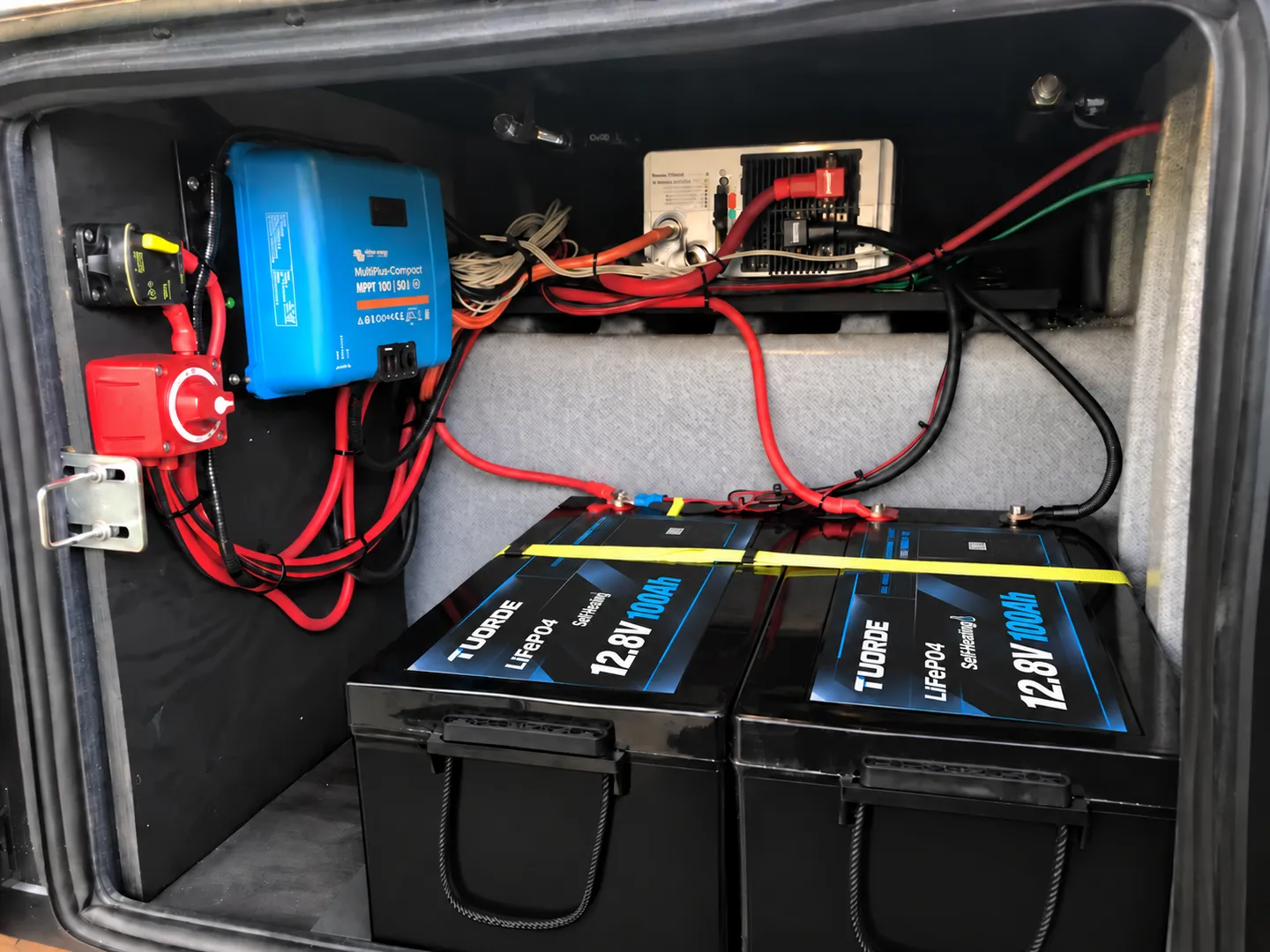
Check the complete case envelope, terminal covers, cable bends and retaining hardware. A Group 24 designation is a fit reference, not a universal drop-in guarantee. Include service access and the heater’s energy requirement in the installation review.
Bluetooth visibility at the vehicle
The matched app supports local battery monitoring. Confirm the displayed measurements, heating-mode selection and discharge controls with the supplied app and firmware. Bluetooth does not imply internet access, 4G remote preheating, CAN, RS485 or AI diagnostics.
Deep-cycle loads within the BMS envelope
Evaluate sustained current, inverter losses and surge duration together. This configuration is not specified for engine cranking; a one-second pulse limit does not establish CCA. Marine installations also require protected terminals and suitable mounting. IP65 does not permit submersion.
Use a compatible LiFePO4 charger; disable lead-acid equalization and desulfation. Review cable sizing, independent overcurrent protection, polarity and any DC-DC alternator charging interface. Series or parallel banks require matched batteries, suitable protection and an approved connection procedure.
Prepare your system review with the RV battery compatibility guide, or compare configurations in the 12V lead-acid replacement collection.
Specify Your Cold-Weather Battery Project
Send your minimum operating temperature, compartment dimensions, charger output, load profile, destination market and estimated quantity. Request confirmation of the heating controls, app support, branding, terminals and packaging for your order. Model-specific compliance documents, accessories, warranty and lead time must be confirmed in the quotation.
Request a Self-Heating Battery Quote
Explore OEM & Private Label options or the Smart RV battery range.
Self-Heating Battery Questions
Does low-temperature protection heat the battery?
No. Protection blocks charging when the cells are too cold. This model also includes a separate heating system to warm them before charging.
Can the heater use battery energy?
The battery-assisted mode can use stored energy when its reserve conditions are met. Confirm the selected mode and available controls before installation; heating reduces the energy available to other loads.
Will it replace any Group 24 lead-acid battery?
No. Verify mechanical fit, terminal positions, charger settings and electrical ratings for the actual system.
Is a charger included?
Confirm the scope of supply. A charger, app access, cables and communication accessories should not be assumed from the product image.