

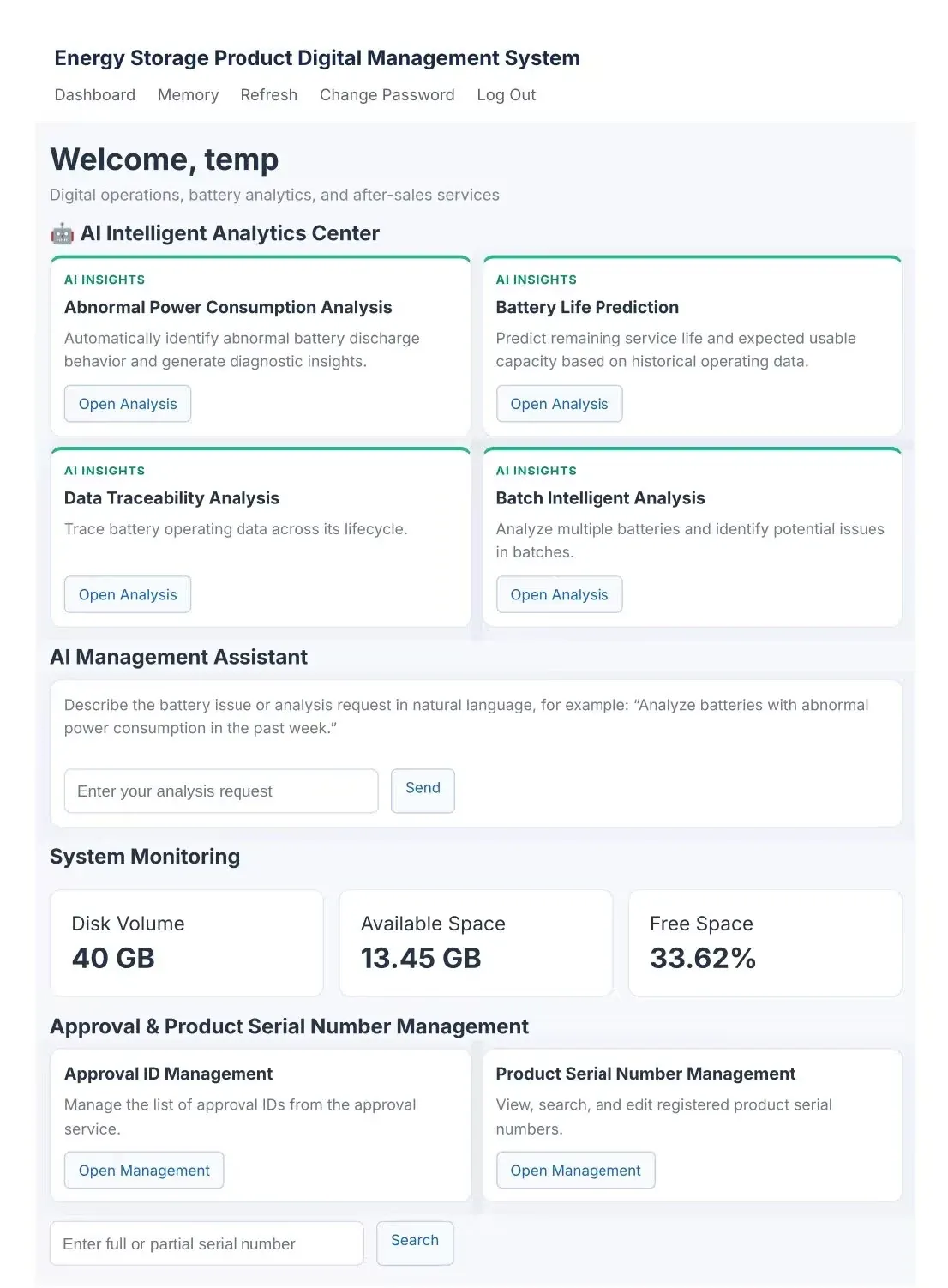
Runtime Prediction
Estimates remaining operating time from battery status, connected loads and current operating conditions.
Runtime changes as loads, temperature and reserve settings change.
SMART TRUCK BATTERY TECHNOLOGY
Protection at the battery. Insight across the duty cycle.
TUORDE’s 24V LiFePO4 truck batteries combine engine starting and deep-cycle parking power. Specify starting-energy reserve, monitoring, communication and remote preheating for the vehicle’s duty cycle and ordered configuration.
For vehicle manufacturers, fleet partners, battery brands and system integrators. Functions are specified by model and configuration.
01 / SYSTEM ARCHITECTURE
A smart truck battery system brings measurement, protection, data exchange and analysis together. Each layer has a distinct engineering role.
01 / MEASURE
Cell voltage, battery current, temperature and battery-state information provide the inputs for monitoring and control.
02 / PROTECT
Model-specific voltage, current and temperature limits define protection responses. Reserve and heating behavior require the appropriate configuration.
03 / CONNECT
Bluetooth, CAN, RS485 or a configured 4G connection provide the selected data paths between the battery, equipment and user interface.
04 / INTERPRET
Supported analytics turn operating data into runtime estimates, alerts, health information and diagnostic guidance.
Functional overview. Final signal paths, gateway requirements, offline behavior and available data depend on the selected hardware, firmware and software.
02 / MANAGE STARTING ENERGY
Selected truck configurations limit parking-load discharge at a configured SOC threshold to help retain energy for the next engine start. The reserve strategy must account for starting demand and operating conditions.
DEFINE
Agree the SOC threshold, expected starting duty, temperature conditions and intended behavior of the parking-load circuit.
MONITOR
Use the supported battery-state information to monitor energy use against the configured reserve threshold.
CONTROL
Review how the selected system limits parking discharge, reports status and returns to normal operation after charging.
Engineering check: confirm starting and auxiliary circuit arrangements, SOC accuracy, threshold behavior and restart conditions. Energy reserve does not replace starting-current validation or guarantee an engine start.
03 / PREPARE FOR COLD-WEATHER OPERATION
Selected configurations support remote battery heating commands before cold-weather operation. Define the command, heating conditions and status feedback together with the battery hardware and vehicle integration.
The supported app or connected service sends a heating request through the configured remote connection.
The selected control system determines whether heating is available under its documented battery and temperature conditions.
Confirm how command acknowledgement, heating activity, completion and faults are presented before planning vehicle operation.
Confirm heating hardware, activation and stop conditions, power source, connectivity coverage, service requirements and low-temperature charge protection. A remote request alone is not confirmation that heating has completed.
04 / UNDERSTAND BATTERY BEHAVIOR
Track remaining parking runtime, investigate unexpected drain and review battery condition through supported analytics. Function availability depends on the selected BMS, firmware and connected software.
Estimates remaining operating time from battery status, connected loads and current operating conditions.
Runtime changes as loads, temperature and reserve settings change.
Identifies unusual consumption patterns so the user can investigate unexpected parking-energy use.
Review the load baseline, alert settings and supported notification path.
Uses available operating history and diagnostic information to support battery-condition assessment.
Confirm which health indicators and history data the selected configuration provides.
Helps identify abnormal conditions and presents supported diagnostic guidance for investigation.
Guided diagnostics do not perform automatic battery repair or replace electrical inspection.
05 / SELECT THE DATA CONNECTION
AI describes the analysis function. Communication interfaces define how data and supported commands move through the system. Specify the combination needed for your application.
| Interface | Typical Role | Confirm for the Configuration |
|---|---|---|
| Bluetooth | Local battery monitoring through a compatible app. | Supported app, device compatibility, access and connection behavior. |
| 4G | Remote data access and supported remote commands. | Connectivity hardware, network coverage, service provisioning and command permissions. |
| CAN | Wired data exchange with compatible vehicle or energy equipment. | Protocol, message mapping, connector pinout, electrical interface and receiving equipment. |
| RS485 | Wired communication for compatible system architectures. | Protocol, address settings, data mapping, wiring and receiving equipment. |
Interfaces are configuration-dependent. Confirm the supported combination; an interface name alone does not establish equipment compatibility.
06 / DEFINE THE VALIDATION SCOPE
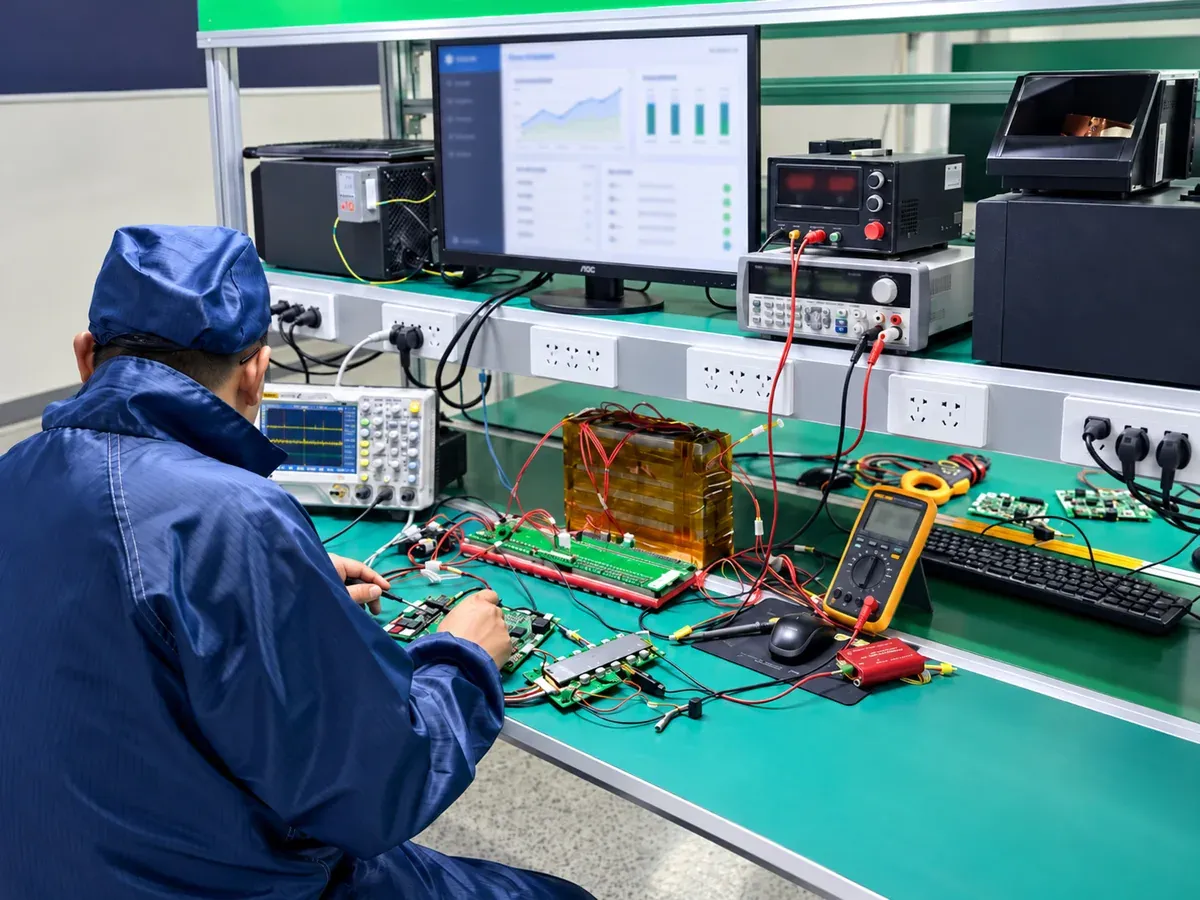
For OEM and fleet projects, document the required behavior before finalizing a battery configuration. Agree the available evidence, acceptance criteria and application checks with TUORDE engineers.
Required limits, parking-load response, reserve threshold and recovery behavior.
Operating conditions, power source, command handling and status feedback.
Signal list, protocol mapping, app functions, software versions and offline behavior.
Starting duty, parked loads, charging equipment, temperatures and installation requirements.
Compare stored energy, then check starting duty, installation, charging and the required feature configuration.
Nominal energy is not a parking-runtime guarantee. Capacity alone does not establish starting-current capability, physical fit or feature availability. Confirm model-specific specifications and the ordered configuration.
Request BMS & communication documents →
For branding, packaging and configuration support, review OEM & Private Label options.
07 / TECHNOLOGY QUESTIONS
Smart BMS protection monitors battery conditions and manages configured protection responses. AI battery intelligence analyzes operating data to provide insights such as remaining runtime, unusual consumption and battery health trends. Analytics and app alerts complement the battery protection functions.
Selected configurations limit parking-load discharge at a configured SOC threshold. The reserve strategy must be matched to the vehicle, starting requirements, temperature and circuit design. A reserve threshold helps manage available energy but does not guarantee engine starting in every condition.
Selected configurations allow a remote command to request battery heating before cold-weather operation. Heating availability and completion depend on the fitted hardware, battery conditions, firmware, connectivity and integration. Battery preheating is a thermal-management function; engine starting is a separate vehicle function.
The required connection depends on the selected system architecture. Bluetooth provides a local wireless connection, while 4G supports remote connectivity when configured. Confirm which analytics functions run on the battery, app or connected service, and what remains available without a connection.
Selected configurations support CAN or RS485 integration. Confirm the electrical interface, connector pinout, protocol, message mapping, firmware and receiving equipment for the application. The presence of an interface alone does not establish compatibility.
TUORDE supports configuration discussions covering BMS settings, communication, app functions, branding and intelligent monitoring. Available reserve and heating functions depend on the battery platform and integration. Agree the supported functions, limits and validation scope before finalizing an OEM configuration.
PLAN YOUR SMART TRUCK BATTERY
Tell us your vehicle application, starting and parking requirements, required monitoring functions and communication interfaces. Our team can help define the appropriate technology configuration.
Talk to Battery Engineers