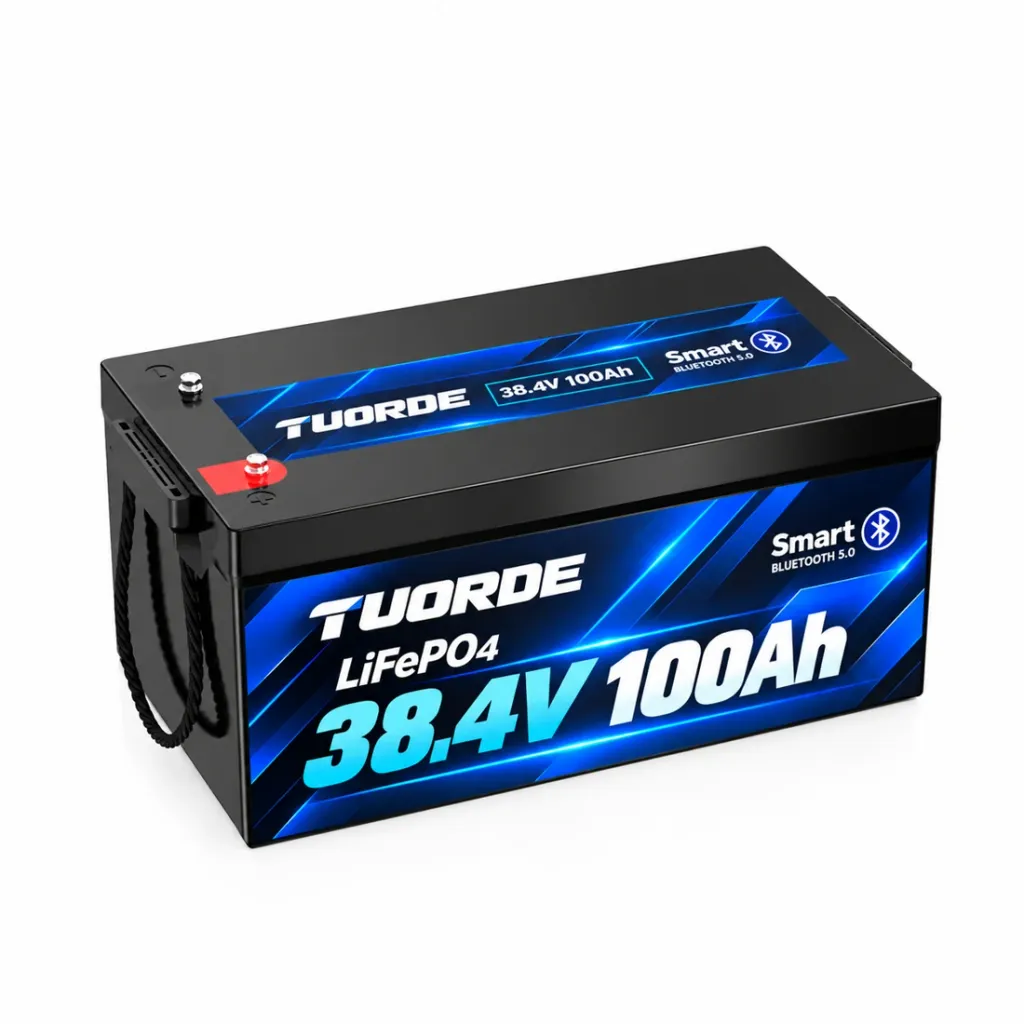
36V 100Ah Low-Profile Bluetooth LiFePO4 Outboard Battery
About this product
LOW-PROFILE ENCLOSURE · ELECTRIC OUTBOARD POWER
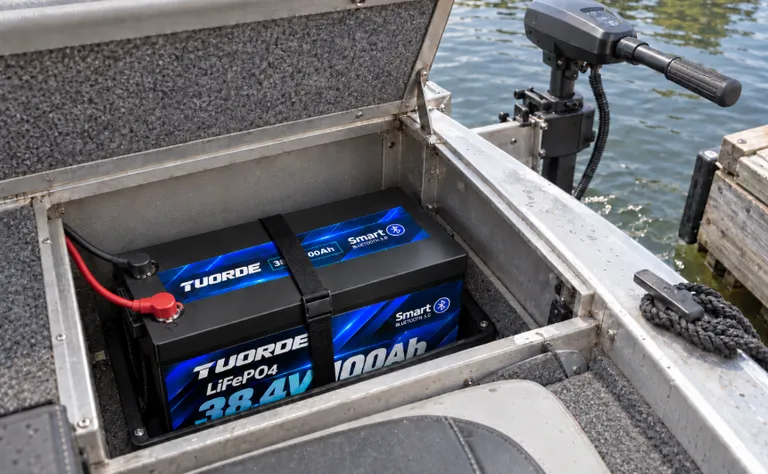
Fit the battery bay. Build your 36V marine system.
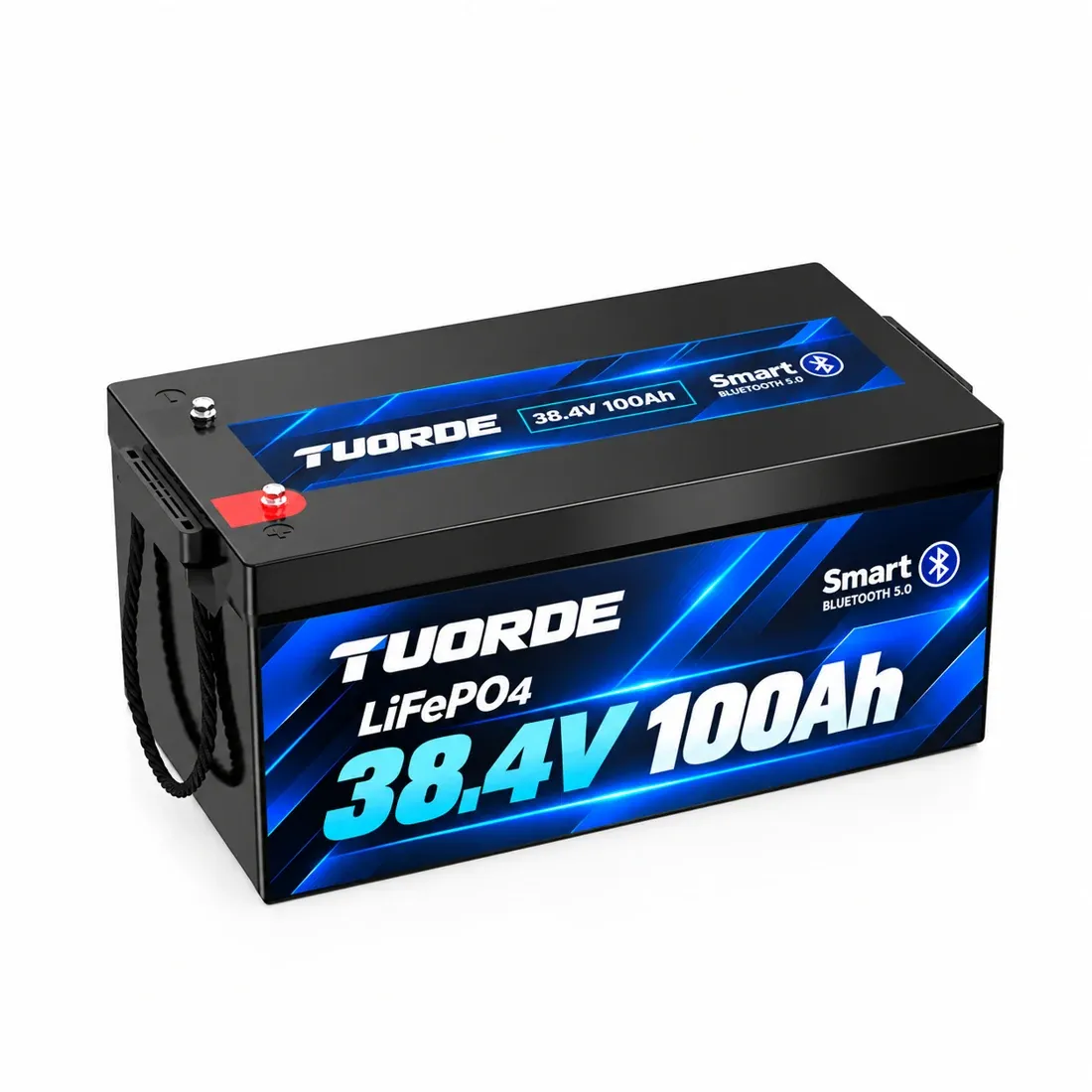
This TUORDE 36V 100Ah LiFePO4 battery puts 3.84kWh of nominal energy in a 220mm-high enclosure, with Bluetooth 5.0 monitoring and a 100A BMS. Its wider footprint gives boat builders and marine integrators a different installation option from our taller 36V 100Ah enclosure.
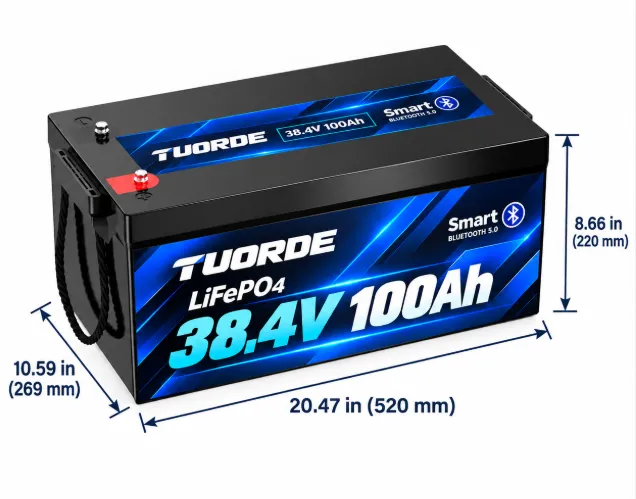
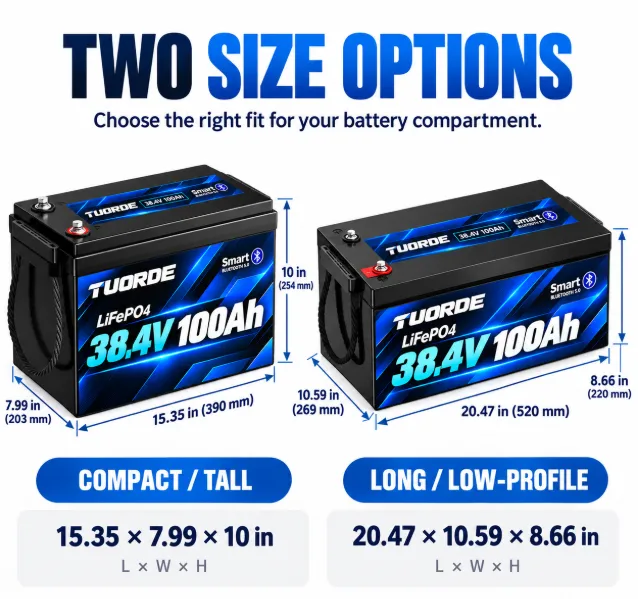
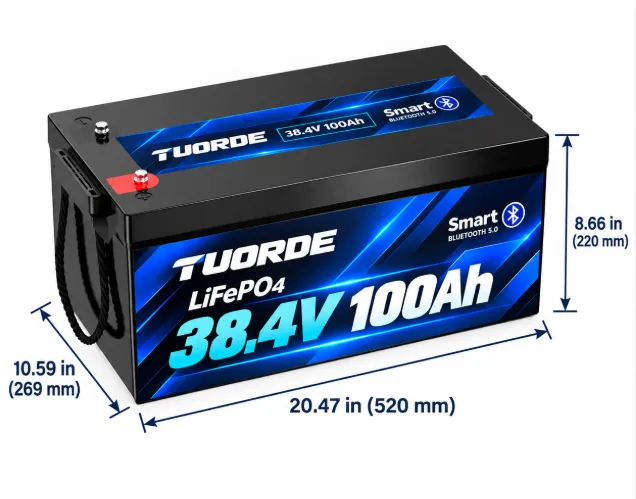
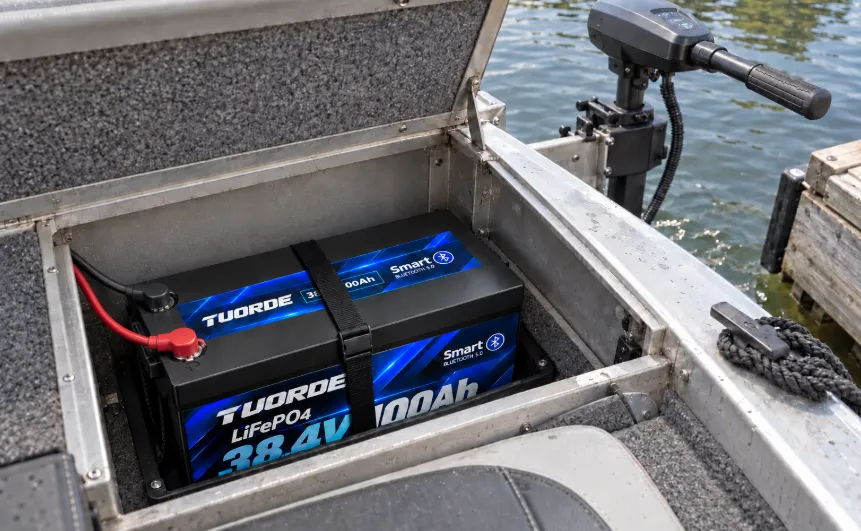
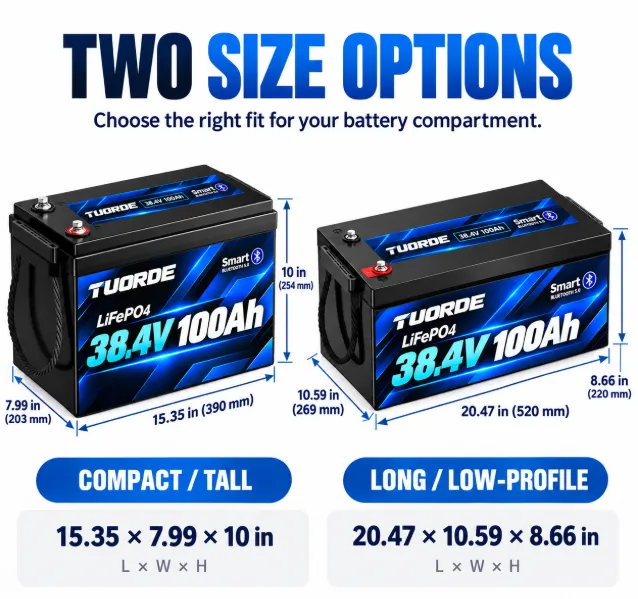
Measure length, width and overhead clearance before choosing the battery. This enclosure is approximately 520mm long and 269mm wide; leave room above the lid for terminal hardware, cable routing and maintenance.
Dimensions describe the battery enclosure. Confirm the complete installed envelope and terminal layout against the current mechanical drawing. IP65 protection does not allow submersion.
Electrical Ratings & Charging
Parameter
Specification
Chemistry
LiFePO4
Nominal voltage / capacity
38.4V (36V system class) / 100Ah
Nominal energy
3,840Wh / 3.84kWh
BMS rating
100A
Maximum continuous charge / discharge
100A / 100A
Output at nominal voltage
3,840W (38.4V × 100A)
Time-limited discharge
500A for 1 second
Charging method / voltage
CC/CV / 43.2V ± 0.6V
Recommended charge current
20A
Charge / discharge temperature
0°C to 50°C / −20°C to 60°C
Storage temperature
−10°C to 50°C
Cold-charge protection
Charging stops below 0°C; resumes at 5°C or above
Cold-discharge protection
Discharging stops below −20°C
Maximum connection arrangement
4P2S: up to four in parallel and two in series, with identical compatible batteries
3.84kWh is nominal energy calculated from 38.4V × 100Ah; it is not measured usable energy. The 3,840W calculation uses nominal voltage. Actual voltage, operating limits and losses affect delivered power and runtime. The 500A rating is limited to one second and is not a CCA rating.
Match the outboard controller
Use the motor controller’s full voltage range and electrical input demand to select the battery. Check continuous loads, short transients and protection coordination. Horsepower or thrust alone does not establish compatibility.
Make monitoring part of the handover
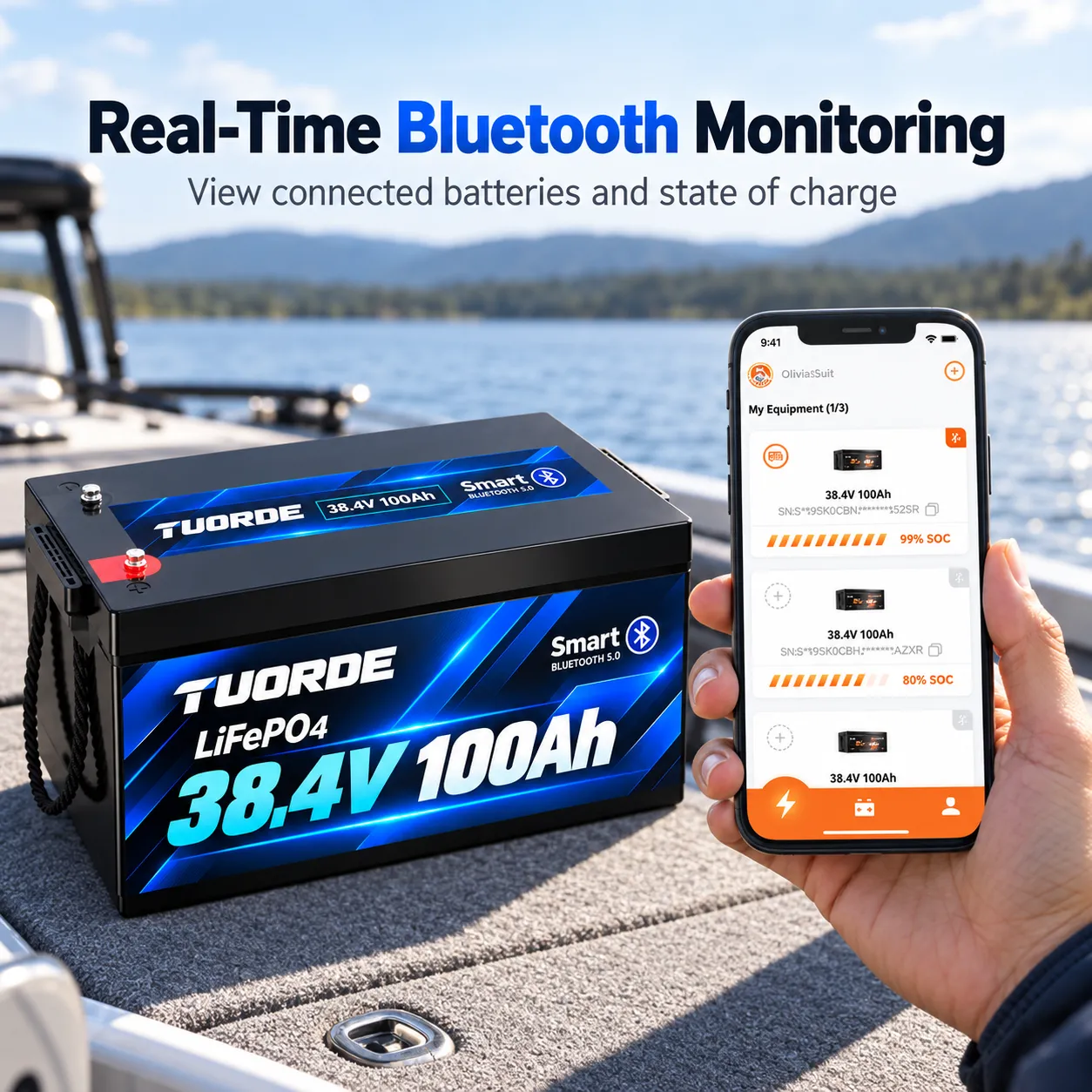
Bluetooth 5.0 supports local battery monitoring through the compatible app. Confirm the app, supported readings and phone requirements for the supplied configuration. BMS protection and external circuit protection remain essential.
A practical checklist for a 36V conversion
Record the existing bank: voltage, battery arrangement, available compartment and all connected loads.
Check each charging path: shore charger, solar controller and any other source must meet the battery’s charge profile and temperature limits.
Review the installation: secure mounting, cable size, routing, terminal protection, disconnects and fuses need to suit the complete system.
Define expansion before wiring: follow model-specific instructions for up to 4P2S. Higher-voltage banks need compatible equipment; do not assume currents add without system validation.
Plan commissioning: check polarity, protective devices, charging behavior and the monitoring connection before operating the motor.
Questions from boat builders & installers
What clearance does the 8.66-inch height require?
The stated 8.66in (approximately 220mm) is the enclosure height. Allow additional space for terminal connections, protective covers, cable bends, restraint and access. A tray with the same footprint does not establish a safe installation. Request the mechanical drawing and compare the complete installed envelope.
How is this version different from the other 36V 100Ah battery?
This version uses a wider, lower-height enclosure: approximately 520 × 269 × 220mm, with IP65 protection. The alternative TUORDE 36V 100Ah enclosure is approximately 390 × 203 × 254mm and rated IP67. Both list 38.4V and 100Ah; choose against your available space and environment, then review the exact configuration.
Can IP65 protection handle a wet battery compartment?
IP65 does not permit immersion. Mount the battery in a suitable dry, drained location and protect exposed terminals, connections and cables. Review splash exposure and condensation as part of the boat installation. Enclosure ingress protection alone does not establish saltwater corrosion resistance.
Can I design the motor supply around 500A?
The 500A rating lasts one second. Use the 100A continuous discharge rating for sustained demand and evaluate transient events separately. Check the motor controller, cables, terminals, fuses and disconnects together. This is a propulsion battery; no combustion-engine cranking or CCA rating is claimed.
Which charging system and cold-weather provisions are needed?
Use a compatible 36V-class LiFePO4 charging system matched to CC/CV 43.2V ± 0.6V and the battery’s current limits; the recommended charge current is 20A. Review every charging path separately. Charging stops below 0°C and resumes at 5°C or above. This version has no self-heater.
What should an OEM buyer provide for a quotation?
Send the motor and controller model, voltage range, continuous and transient current demand, compartment drawing, charging equipment, monitoring needs, target market and estimated quantity. Include branding and packaging requirements. Request the applicable datasheet, mechanical drawing, installation instructions and configuration-specific compliance documents.
MARINE OEM / PRIVATE LABEL
Send the bay drawing and motor requirements
Tell us you are reviewing the low-profile 36V 100Ah outboard battery. Include your installation drawing, controller model, load requirements, charging equipment, target market and estimated quantity. TUORDE can review the configuration, technical documents, branding and packaging requirements with your team.