36V MARINE PROPULSION · BLUETOOTH 5.0
One 36V pack.
3.84kWh for your marine power project.
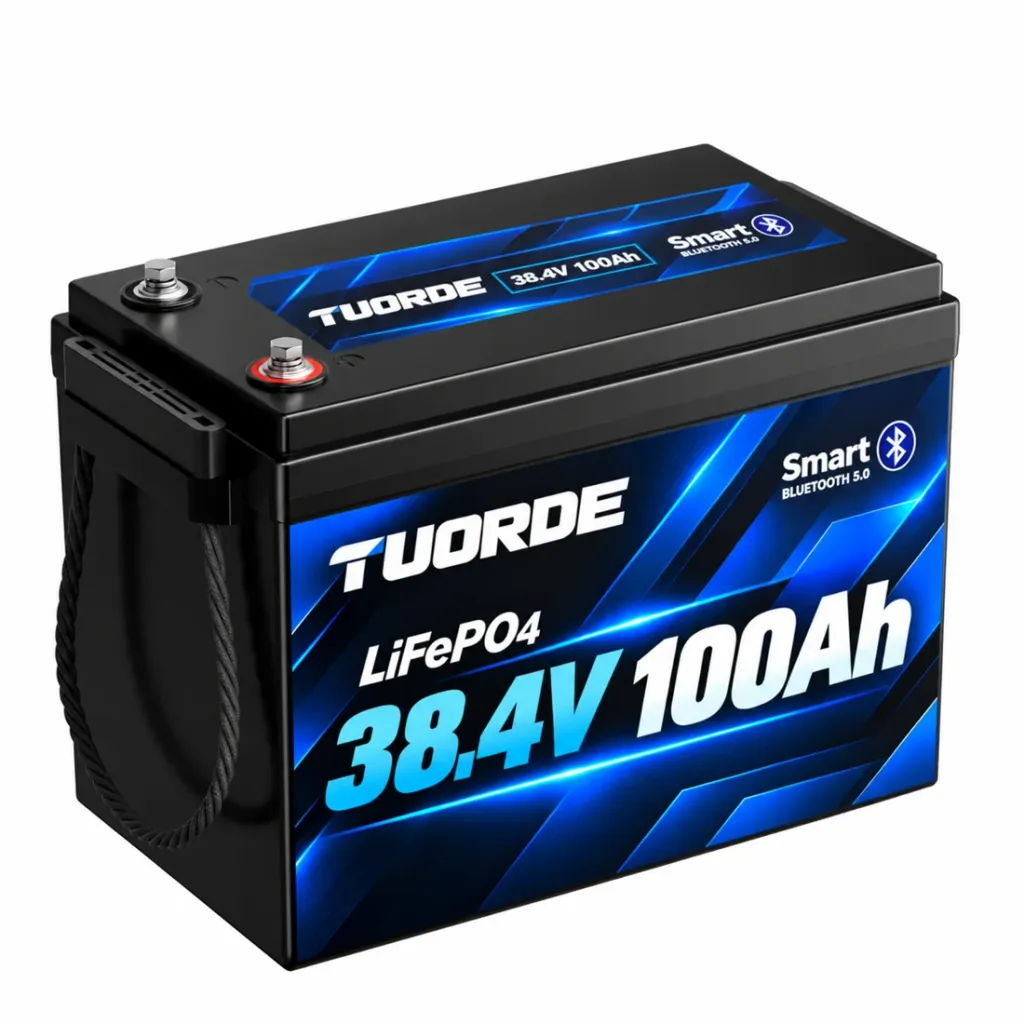
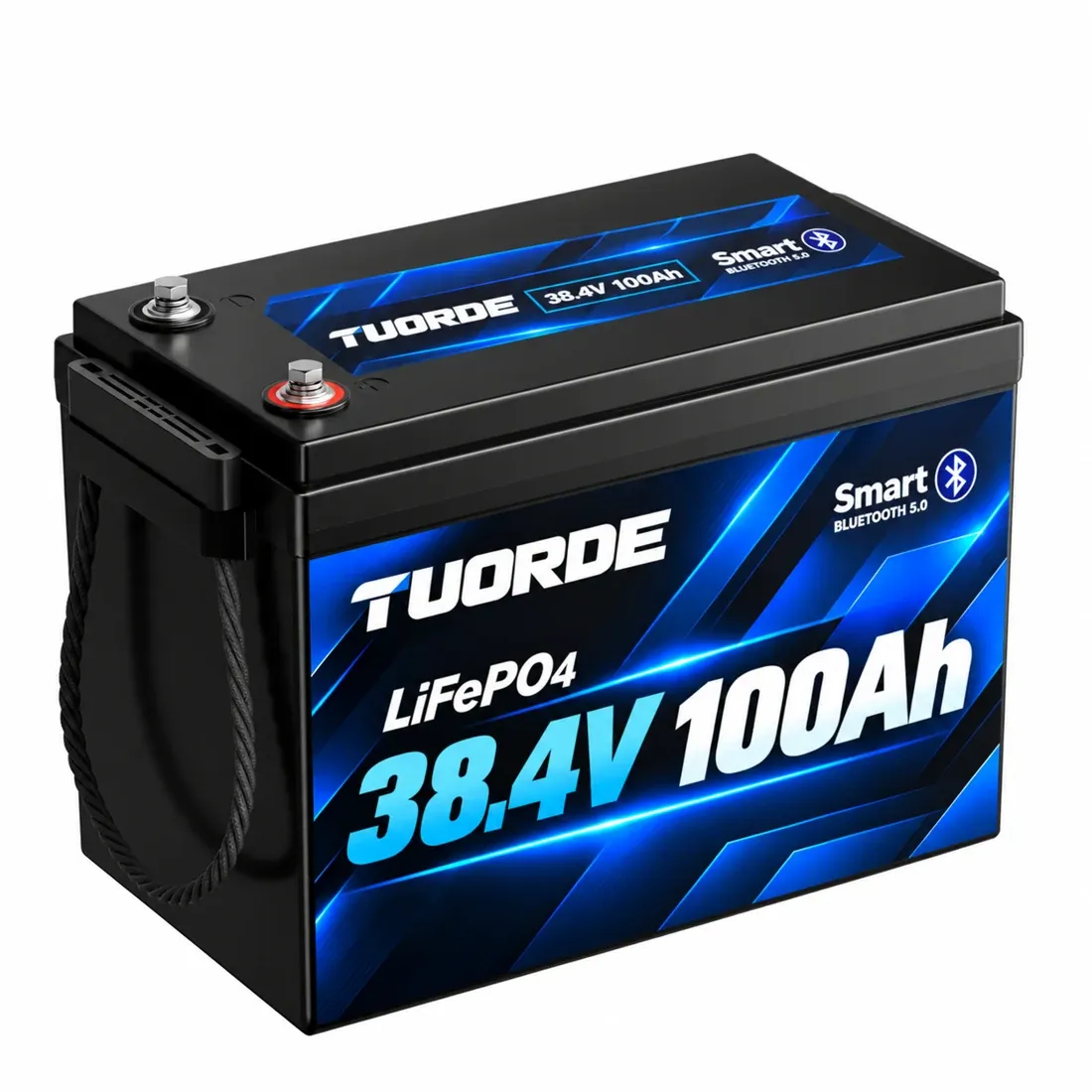
TUORDE’s 36V 100Ah Bluetooth LiFePO4 battery combines 38.4V nominal voltage, a 100A BMS and phone-based monitoring in a single enclosure. Specify it for compatible electric outboards and trolling motors by matching the motor’s voltage range, current demand and installation requirements.
3.84kWh
38.4V · 100Ah nominal energy
100A continuous
Separate time-limited surge ratings
Bluetooth 5.0
Monitoring for your battery program
Specify propulsion power, not just battery capacity
A single 36V-class pack simplifies the battery-bank layout compared with three 12V batteries in series. The next decision is electrical fit: review the controller’s accepted voltage range, maximum continuous input current and transient demand. Do not infer compatibility from motor horsepower or thrust alone.
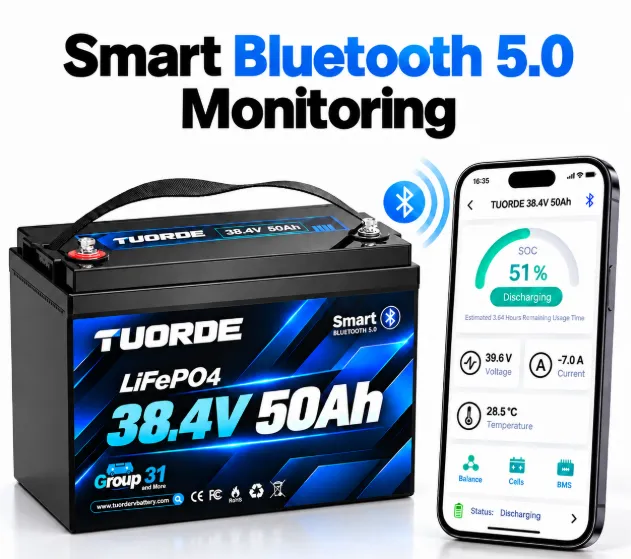
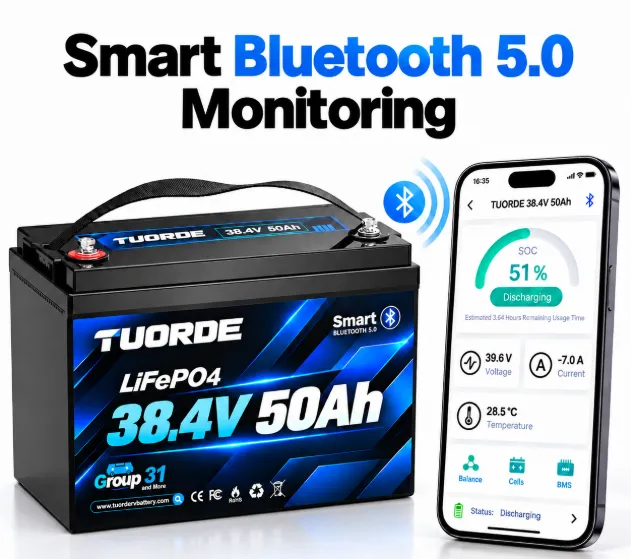
Bluetooth monitoring brings battery information within reach during commissioning and use. Confirm the compatible TUORDE app, supported readings and phone requirements for the ordered configuration. Bluetooth does not imply CAN, RS485 or a motor-controller communication interface.
Electrical & Mechanical Specifications
| Parameter | Specification |
|---|
| Chemistry | LiFePO4 |
|---|
| Nominal voltage / rated capacity | 38.4V (36V system class) / 100Ah |
|---|
| Nominal energy | 3,840Wh / 3.84kWh |
|---|
| BMS / continuous discharge current | 100A / 100A |
|---|
| Maximum continuous charge current | 100A |
|---|
| Output at nominal voltage | 3,840W (38.4V × 100A) |
|---|
| Time-limited discharge | 120A for 60 seconds; 300A for 15 seconds; 500A for 1 second |
|---|
| Charging method / voltage | CC/CV / 43.2V ± 0.6V |
|---|
| Recommended charge current | 20A |
|---|
| Bluetooth / heating | Bluetooth 5.0 / No self-heating |
|---|
| Charge / discharge temperature | 0°C to 50°C / −20°C to 60°C |
|---|
| Storage temperature | −10°C to 50°C |
|---|
| Low-temperature charge protection | Charging stops below 0°C; resumes at 5°C or above |
|---|
| Low-temperature discharge protection | Discharging stops below −20°C |
|---|
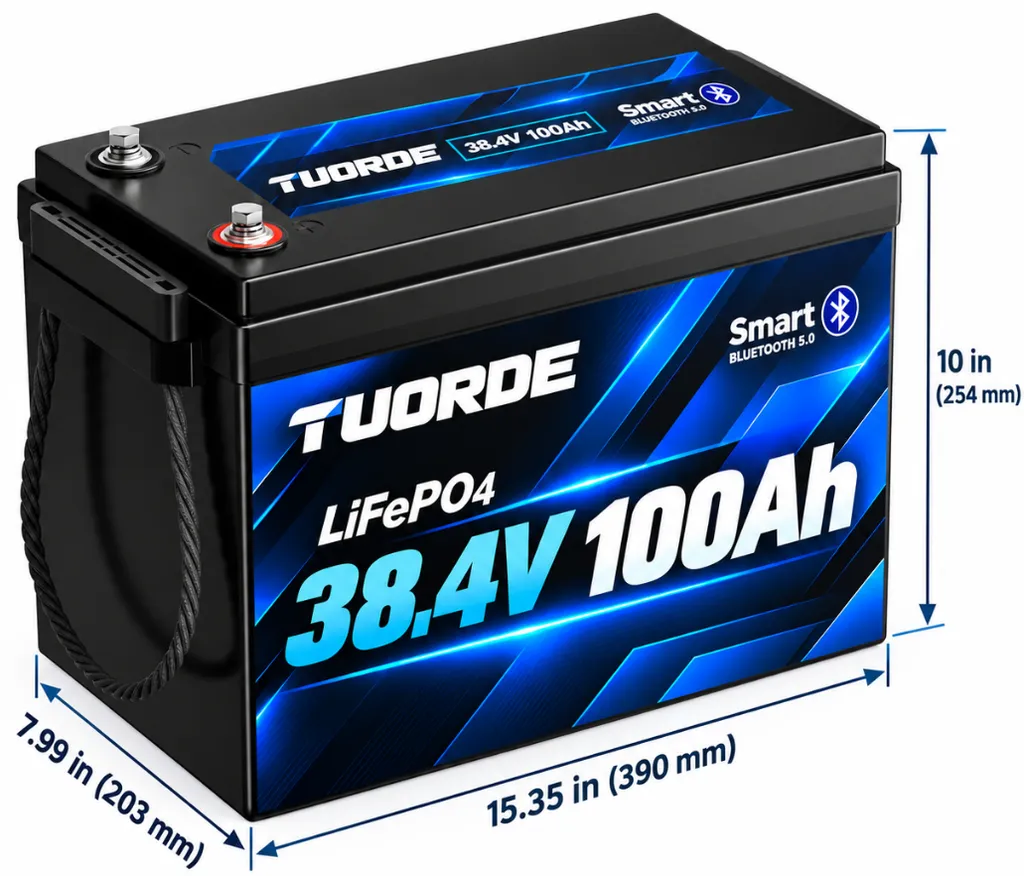
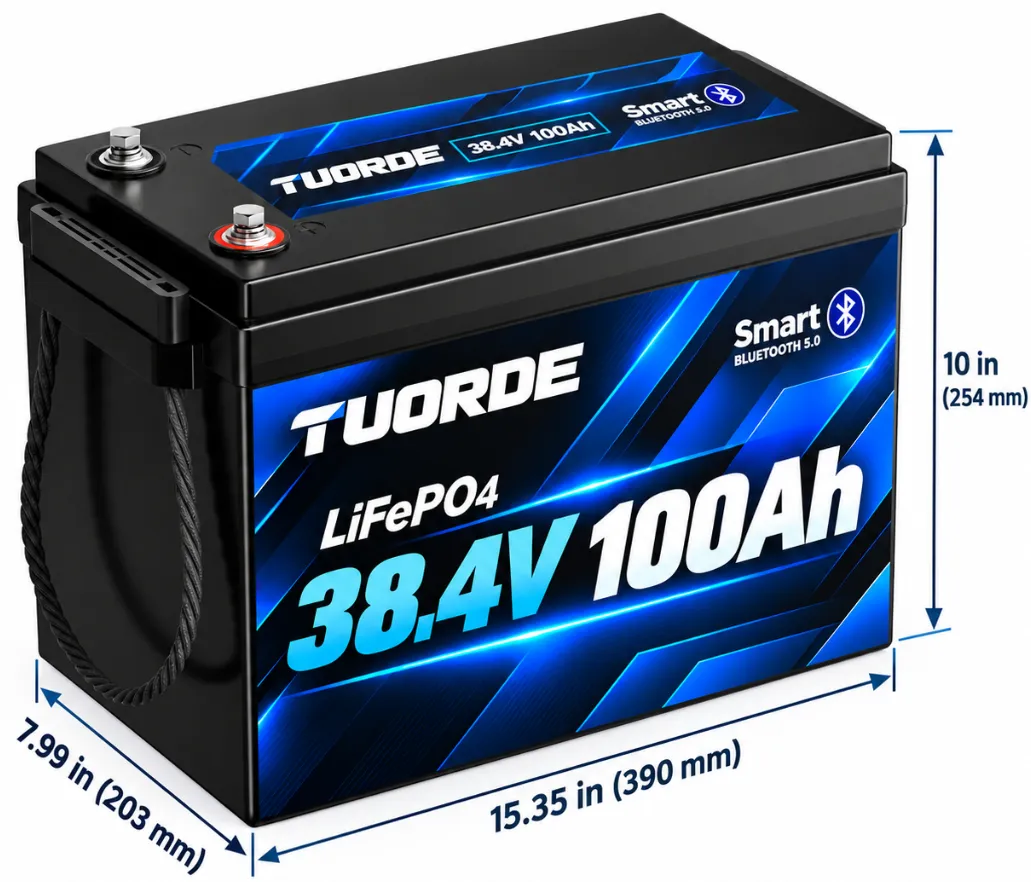
| Dimensions, L × W × H | 15.35 × 7.99 × 10 in / approximately 390 × 203 × 254mm |
|---|
| Approximate weight | 67.46lb / 30.6kg |
|---|
| Terminals | M8 × 16mm |
|---|
| Housing / ingress protection | ABS / IP67 |
|---|
| Maximum expansion | 4P2S: up to four in parallel and two in series, using identical compatible batteries |
|---|
| Maximum bank nominal energy | 30.72kWh with eight batteries (76.8V, 400Ah) |
|---|
Nominal energy is calculated from 38.4V × 100Ah; usable energy varies with load, temperature and operating limits. The 3,840W figure uses nominal voltage and is not a constant-power guarantee across the discharge range. Surge ratings are time-limited, are not CCA ratings and must not be used as continuous design values. Confirm terminal clearance and cable bend space against the mechanical drawing.
Plan the installation before replacing the bank
- Motor and controller: provide the exact models, operating voltage range, sustained current and transient load profile.
- Charging: match every charging source to the specified LiFePO4 profile. Use suitable regulated charging equipment for shore, solar or generator-fed installations.
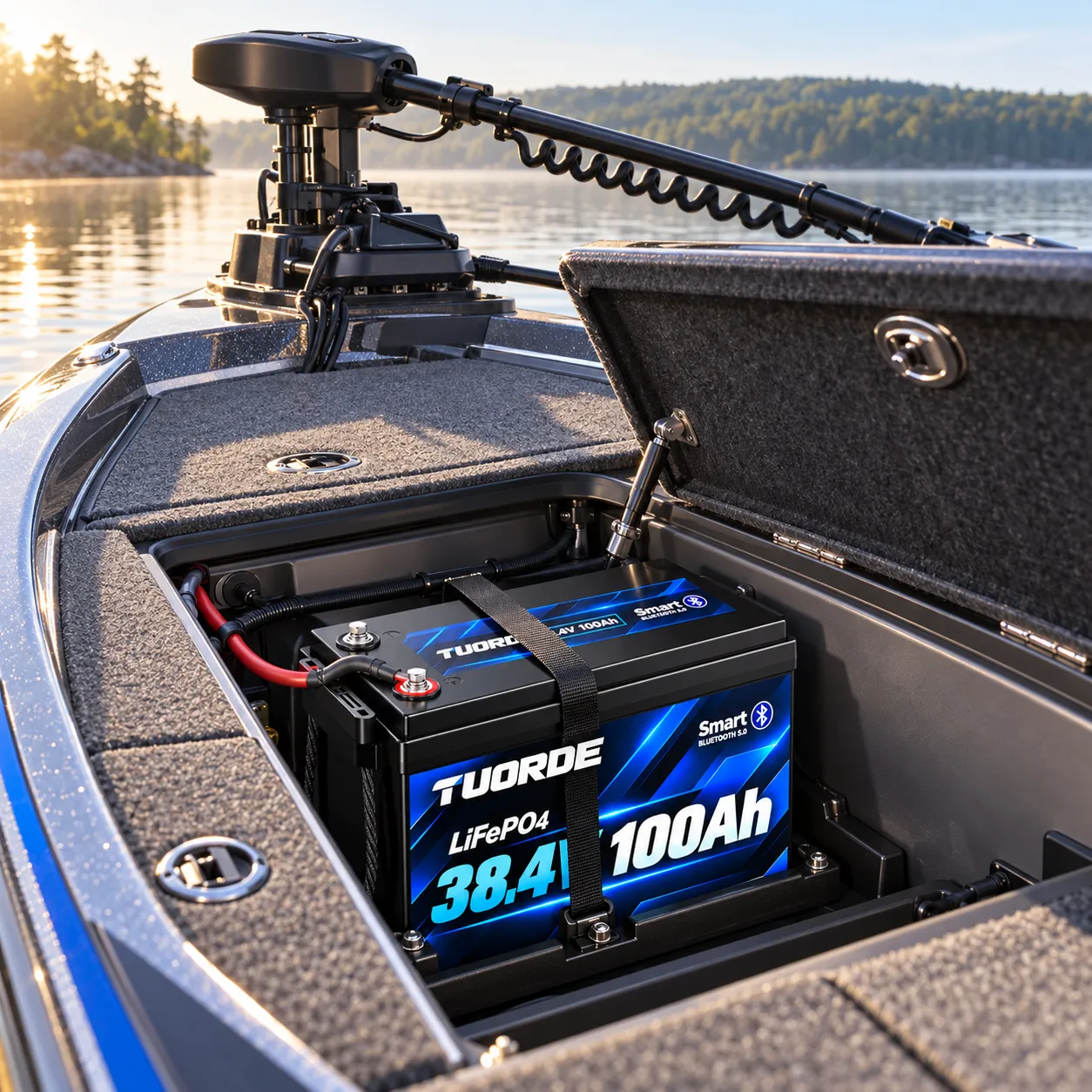
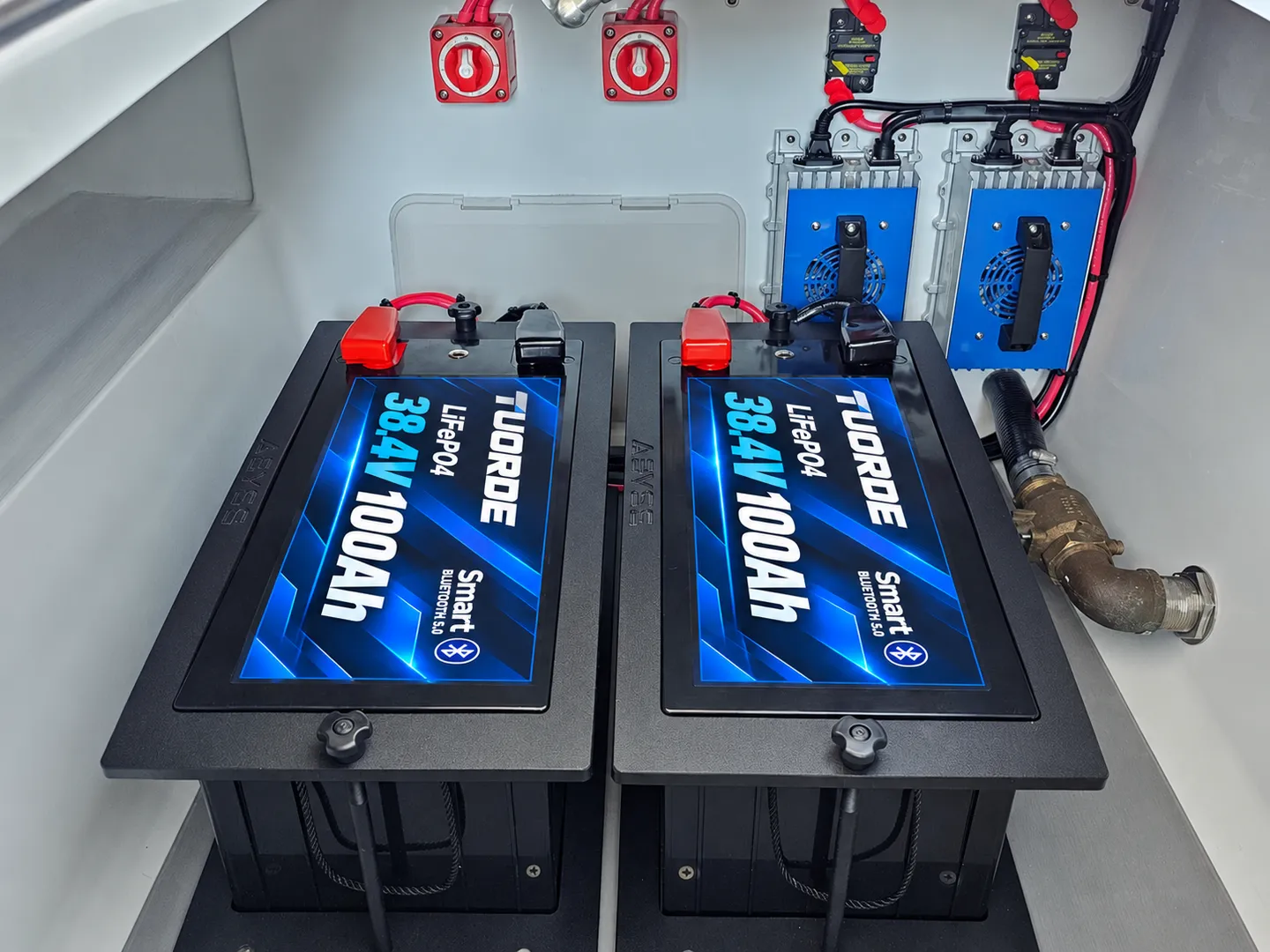
- Physical installation: check the enclosure, terminal orientation, restraint, ventilation requirements of surrounding equipment and service access.
- Marine protection: IP67 is an enclosure rating, not a promise of indefinite submersion or universal saltwater corrosion resistance. Protect terminals and connections.
- Cold-weather use: this battery has low-temperature protection, not a heater. Keep charging within the stated limits.
- System expansion: request the approved wiring and protection guidance before building a multi-battery bank.
Frequently Asked Questions
Is this battery for trolling motors or electric outboards?
Both applications can be considered when the motor controller accepts the battery’s full operating voltage range and its continuous and transient demand stays within the stated limits. Send the motor and controller model for review. A “36V” label or thrust rating alone does not establish compatibility.
Can one battery replace three 12V batteries?
One native 36V-class pack can replace the bank arrangement in a compatible system, reducing inter-battery series connections. Confirm the charger, motor controller, battery compartment, cable routing, fuses and disconnects before conversion. Existing 12V equipment needs an appropriate separate supply or DC–DC converter.
How long will a 3.84kWh battery run my motor?
Runtime depends on actual electrical demand, speed, conditions, temperature and usable energy. For illustration, 3.84kWh ÷ 1kW is 3.84 hours before operating limits and losses. This is a nominal-energy calculation, not a tested runtime or range promise. Use measured consumption and an operating reserve for trip planning.
Does low-temperature protection mean the battery heats itself?
No. This configuration has low-temperature protection and no self-heating. Charging stops below 0°C and resumes at 5°C or above. Plan storage and charging conditions accordingly; the protection does not make charging below the permitted temperature acceptable.
Can batteries be connected in series or parallel?
The specified maximum is 4P2S using identical compatible batteries. Any higher-voltage system requires a matching motor controller, charger, insulation, protection and installation design. Follow model-specific connection instructions. Do not assume current capability simply multiplies with battery count.
Can it start a combustion engine, and what documents should we request?
This product is for deep-cycle marine propulsion power, not combustion-engine cranking. Request the current electrical datasheet, mechanical drawing, charging instructions, connection guidance and applicable compliance documents for the exact supplied configuration.
Build your marine battery specification
For marine distributors, boat builders and system integrators: share your motor and controller models, installation dimensions, continuous and peak loads, charging equipment, monitoring needs, target market and estimated quantity. Discuss configuration, branding, packaging and model-specific technical documents with TUORDE.
Request Specifications & OEM Quote →