

Load and energy budget
List each appliance, its power, hours of use and startup demand. Establish the energy needed between realistic charging opportunities.
RV APPLICATION SOLUTION · ENGINEERING EXAMPLE
Plan house-battery storage, charging pathways and power distribution as one system. TUORDE’s company profile describes RV PDU and battery integration; this page explains the engineering considerations for a project-specific configuration.
This is an engineering example, rather than a documented customer deployment.
Discuss Your RV Integration Project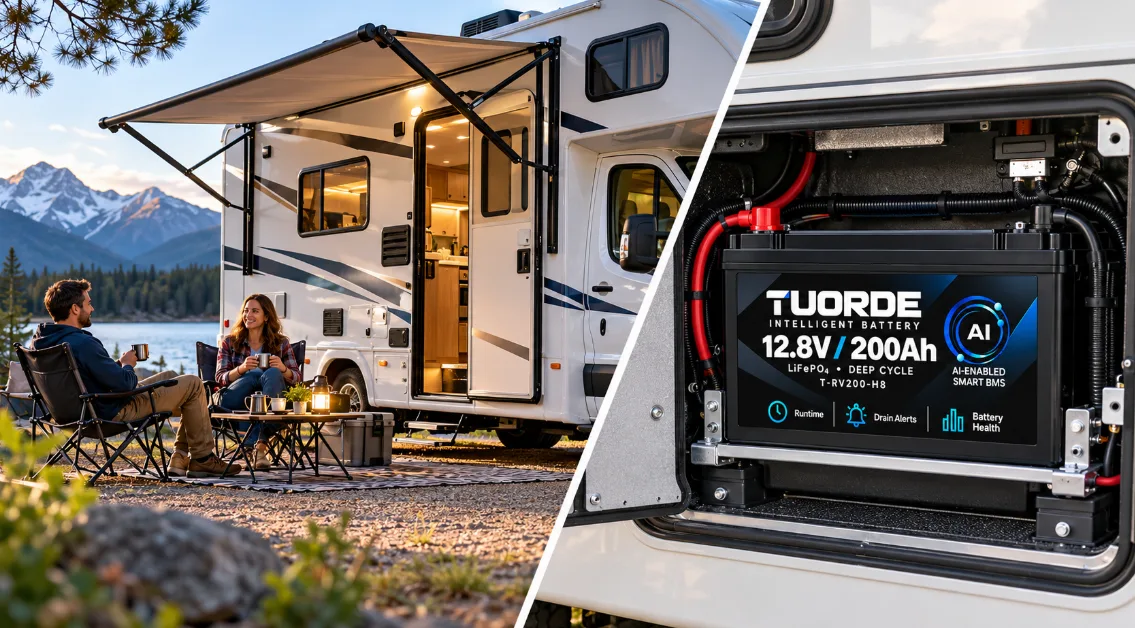
An RV power-system project connects the battery to charging equipment, power conversion, protected distribution and onboard loads. A suitable battery model alone does not establish compatibility with every charger, PDU, inverter or vehicle.
The company profile’s RV PDU and battery content, pages 18–19, is the source for this integration example. Its reference equipment ratings are not presented as a released universal PDU specification.
List each appliance, its power, hours of use and startup demand. Establish the energy needed between realistic charging opportunities.
Record the compartment, mounting points, access, ventilation requirements and complete equipment inventory.
Share ambient temperatures, target market, required outputs, expected quantity and the stage of your vehicle or conversion program.
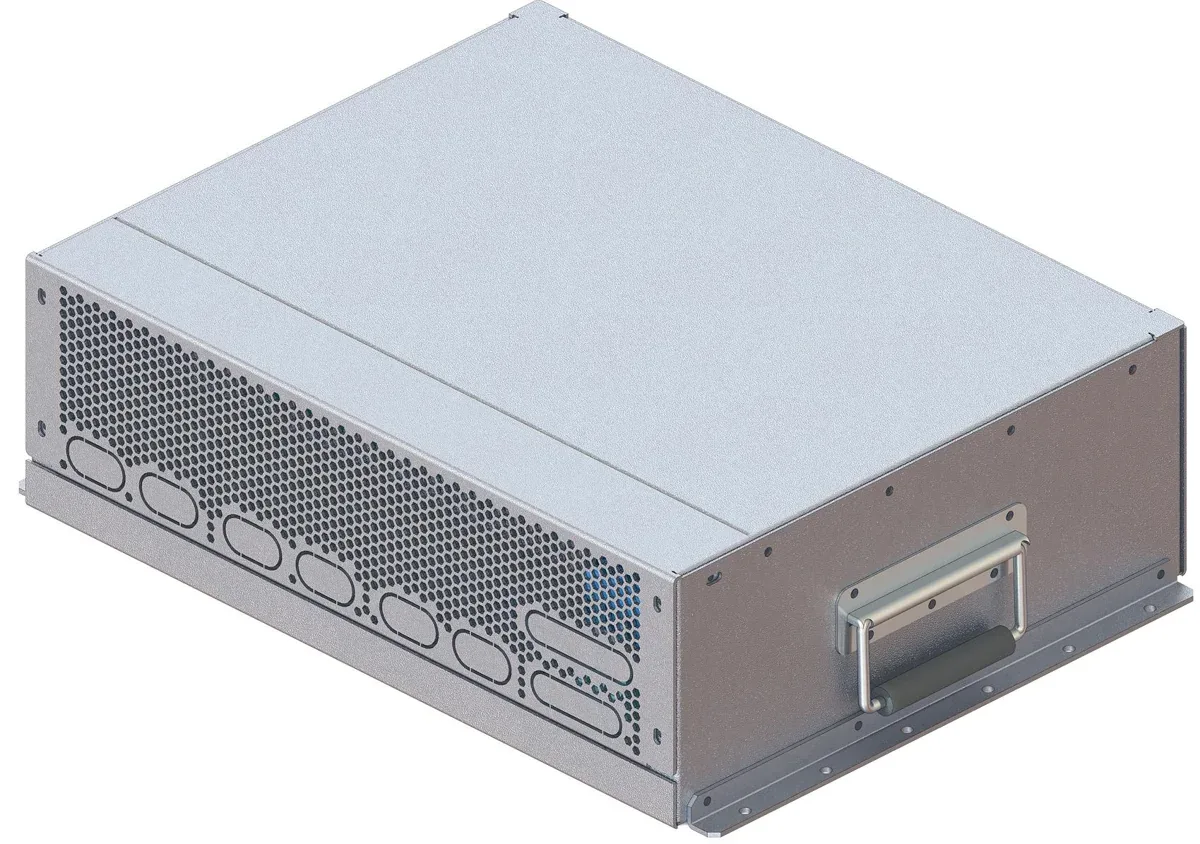
The profile illustrates a power unit and an intelligent control box for RV integration. Battery selection, charging inputs, distribution outputs and control interfaces must be reviewed together.
Specify the battery-side voltage, required AC and DC outputs, connected loads, charging equipment and control responsibilities. Confirm the exact architecture and applicable drawings with the engineering team.
The standard RV battery platforms linked below are selection references. No direct compatibility with the profile’s PDU example is implied.
Review the selected equipment’s AC input requirements and compatible battery charging profile.
Match the array and controller operating limits with the selected battery and distribution architecture.
Review vehicle charging control and the required charging interface for the battery system.
Define the required AC and DC outputs, protection, cable routes and distribution hardware for the loads.
Select energy and power around the application, then check the BMS limits, physical fit and charging instructions. Use the exact model revision for engineering decisions.
A compact reference platform for an RV house-power review. Confirm current, dimensions and charging requirements.
View platform information →Review the platform’s available energy, enclosure and configuration with the project load and fit requirements.
View platform information →Consider a higher-capacity reference platform when energy demand and installation space support it.
View platform information →Confirm full battery and terminal clearance, mounting method, access and cable-routing space.
Review continuous and startup currents, protection, charging profiles and interfaces with the equipment suppliers.
Specify the measurements and control functions needed. Confirm supported App, CAN or RS485 interfaces for the selected hardware and firmware.
Discuss housing, capacity, BMS settings, connectors, communication, branding and documentation as a controlled project scope. Agree the drawings, integration review, sample evaluation and acceptance criteria before final configuration release.
Explore OEM / ODM Capabilities →Share your application, voltage, capacity, operating environment, mechanical constraints and project stage with our engineering team.
Case reference: rv-integration. Include this reference and your own operating requirements in the inquiry.