48V MARINE POWER · RS485 + BLUETOOTH 5.0
Power the outboard.
Connect the battery data.
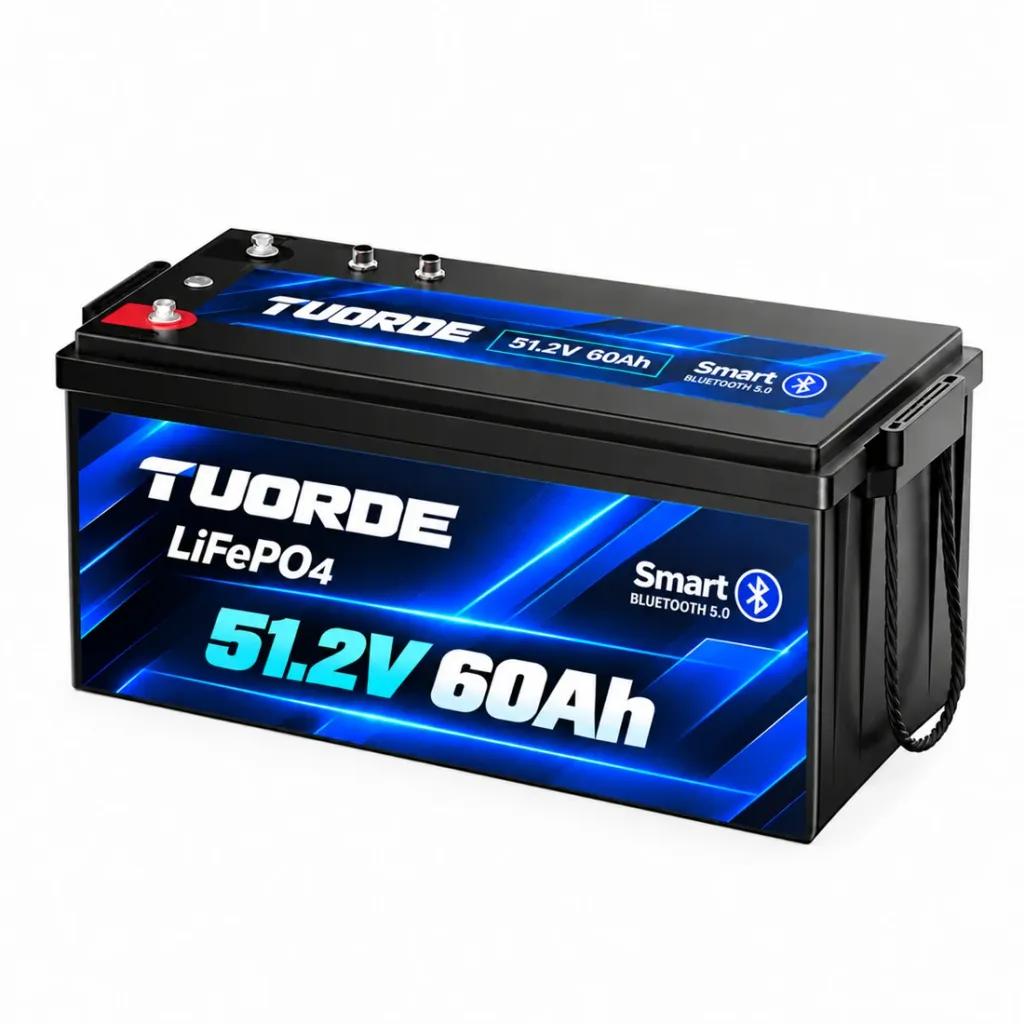
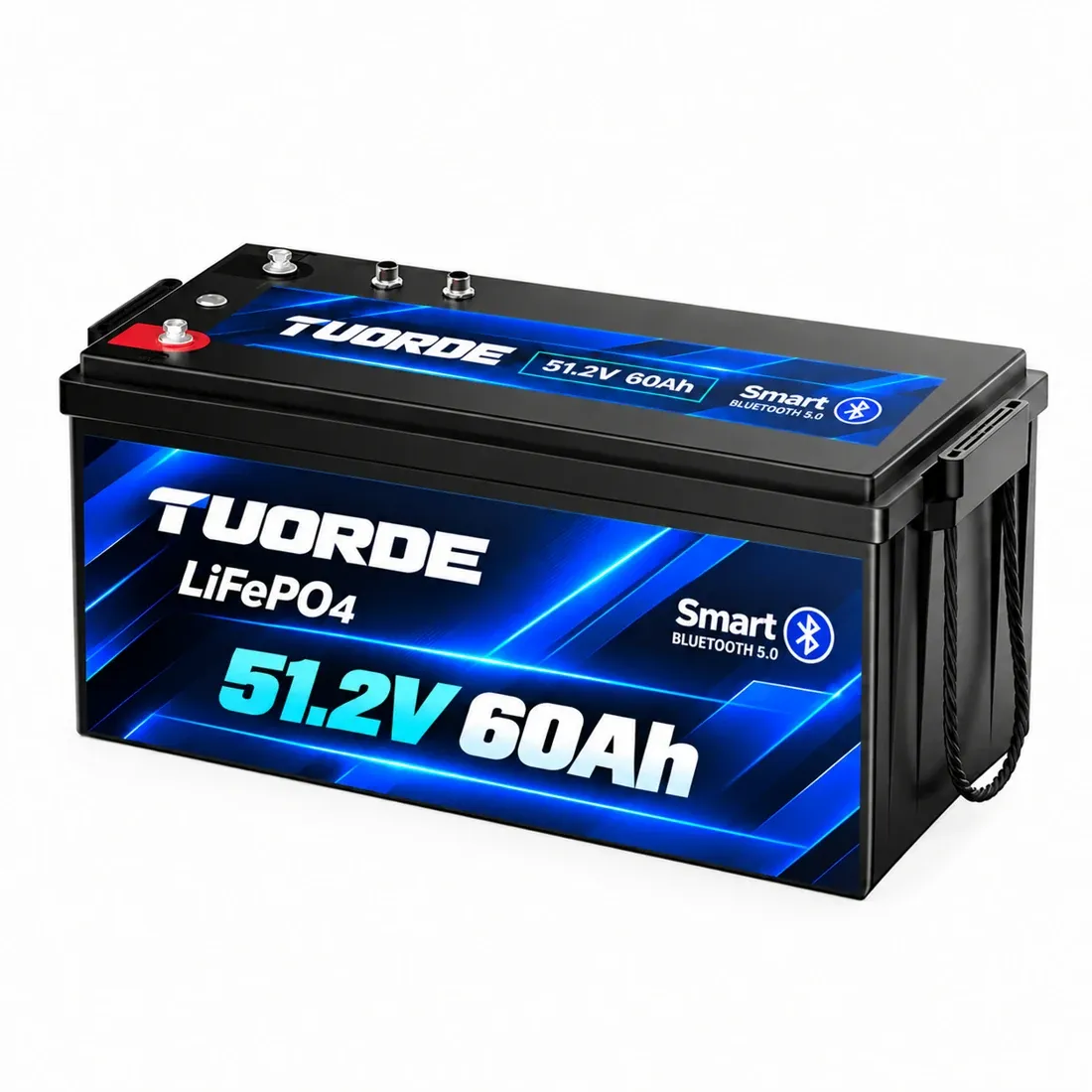
TUORDE’s 48V 60Ah marine LiFePO4 battery combines 3.072kWh nominal energy with a 120A BMS, RS485 communication and Bluetooth 5.0 monitoring. Specify the power circuit and the monitoring interface together for a compatible electric-outboard installation.
51.2V nominal · 60Ah · 3.072kWh
120A discharge
Maximum continuous output current
60A charge limit
12A recommended charge current
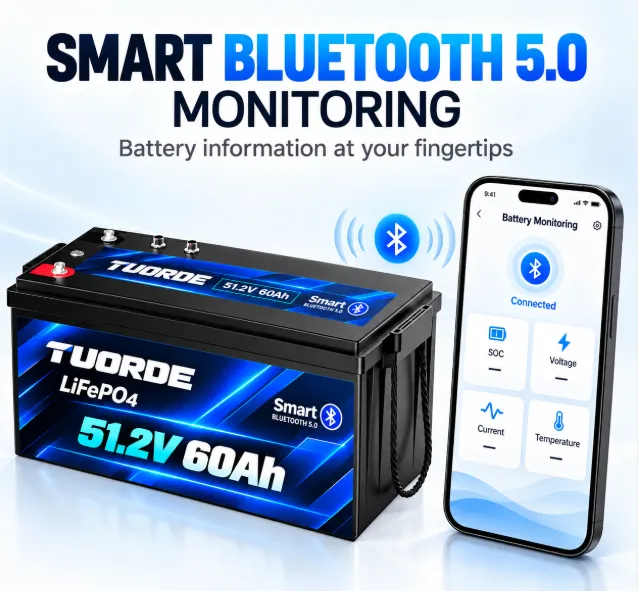
RS485 + Bluetooth
Review the selected monitoring setup
Plan onboard monitoring before installation
RS485 provides an interface for compatible monitoring equipment. It does not make every marine display or motor controller plug-and-play. Agree the equipment and communication details during system design, then verify them during commissioning.
What to check for an RS485 connection
- Display, gateway or controller model and required battery data.
- Connector type, pinout, cable and interface reference requirements.
- Protocol, baud rate, addressing, messages and firmware versions.
- Model-specific wiring, termination and commissioning instructions.
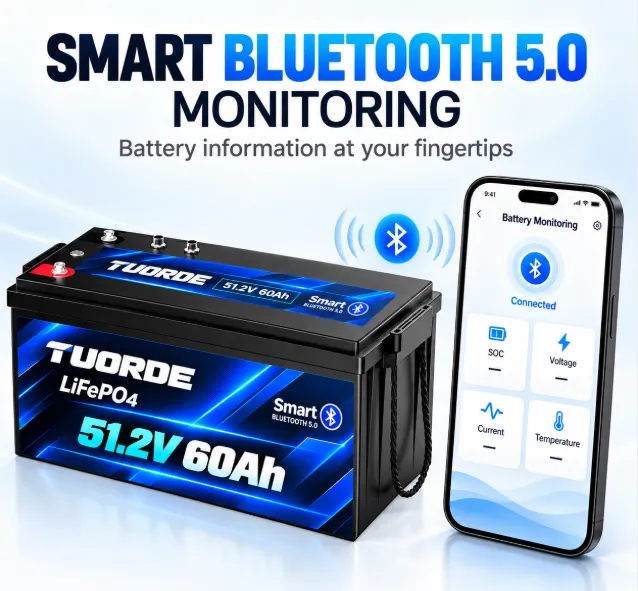
Bluetooth 5.0 offers local monitoring through the compatible app. Confirm the app, supported readings and phone requirements for the ordered configuration.
Power, Charging & Installation Specifications
| Parameter | Specification |
|---|
| Chemistry | LiFePO4 |
|---|
| Nominal voltage | 51.2V (48V system class) |
|---|
| Rated capacity | 60Ah |
|---|
| Nominal energy | 3,072Wh / 3.072kWh |
|---|
| BMS rating | 120A |
|---|
| Maximum continuous discharge | 120A |
|---|
| Maximum continuous charge | 60A |
|---|
| Output at nominal voltage | 6,144W (51.2V × 120A) |
|---|
| Time-limited discharge | 600A for 1 second |
|---|
| Charging method / voltage | CC/CV / 57.6V ± 0.8V |
|---|
| Recommended charge current | 12A |
|---|
| Monitoring interfaces | RS485 and Bluetooth 5.0; equipment and protocol matching required |
|---|
| Charge temperature | 0°C to 50°C |
|---|
| Discharge temperature | −20°C to 60°C |
|---|
| Storage temperature | −10°C to 50°C |
|---|
| Low-temperature charge protection | Charging stops below 0°C; resumes at 5°C or above |
|---|
| Low-temperature discharge protection | Discharging stops below −20°C |
|---|
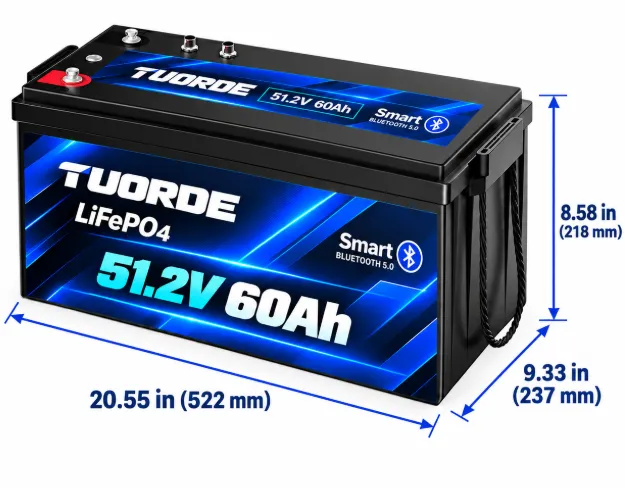
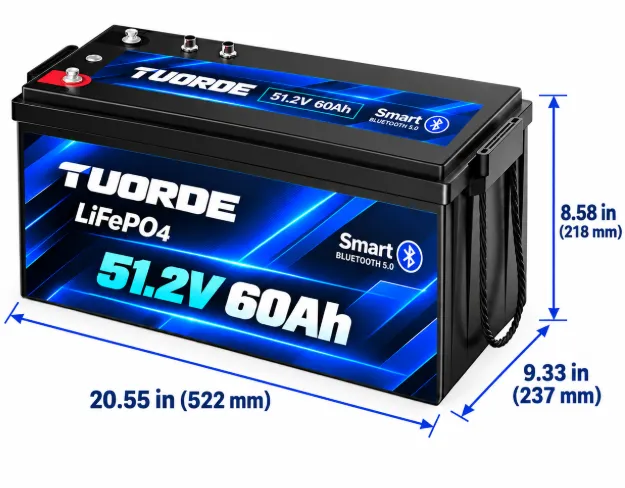
| Dimensions, L × W × H | 20.55 × 9.33 × 8.58 in / approximately 522 × 237 × 218mm |
|---|
| Approximate weight | 56.09lb / 25.4kg |
|---|
| Terminal hardware | M8 × 16mm |
|---|
| Housing / ingress protection | ABS / IP65 |
|---|
| Maximum battery arrangement | 8P1S: up to eight identical compatible batteries in parallel; no series connection |
|---|
| Maximum parallel-bank nominal energy | 24.576kWh with eight batteries (51.2V, 480Ah) |
|---|
Nominal energy is calculated from 51.2V × 60Ah. Usable energy and runtime depend on load, temperature, operating limits and losses. The 6,144W figure uses nominal voltage and is not a constant-power guarantee across the discharge range. The 600A rating is limited to one second and is not a CCA rating.
Match the whole 48V marine system
- Motor and controller: check the full voltage range, sustained battery-side current and transient demand.
- Charging sources: review each shore charger, solar controller or other regulated source against the specified charge profile and current limit.
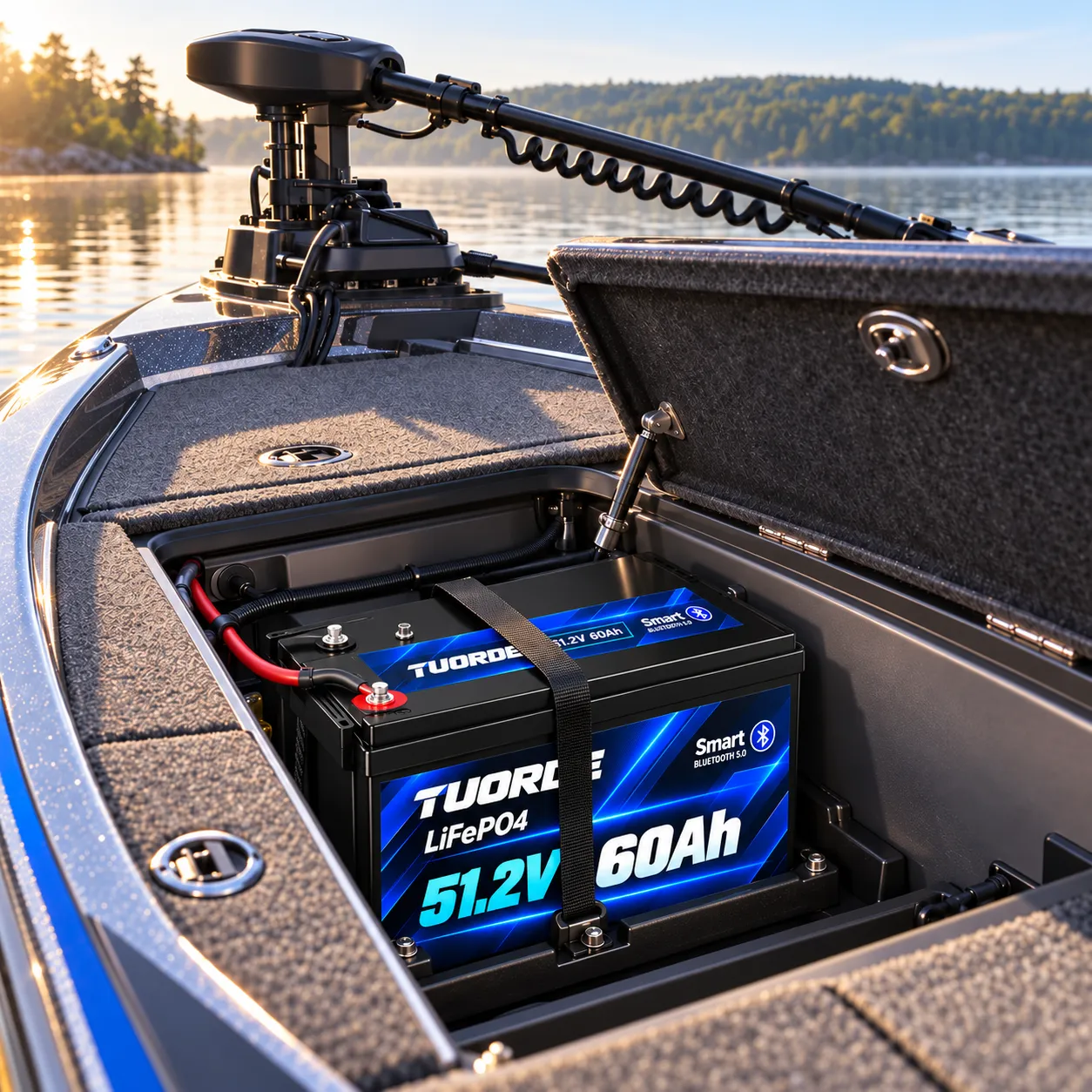
- Mechanical fit: verify the approximately 522 × 237 × 218mm enclosure, terminal direction, restraint, cable clearance and service access.
- Installation environment: keep the battery secure in a suitable dry location. Protect terminals and connections; IP65 does not establish immersion or saltwater-corrosion suitability.
- Commissioning: check the electrical installation and monitor connection against the model documents before operating the motor.
Marine Integration FAQ
Why is a 48V battery listed as 51.2V?
48V describes the system class; 51.2V is this LiFePO4 pack’s nominal voltage. Compatibility depends on the motor controller’s complete accepted voltage range, including the charging voltage, rather than the system-class name alone.
Will RS485 work with any marine display or controller?
No universal compatibility is claimed. RS485 describes an electrical interface, not a common battery-data protocol. Confirm the connector pinout, protocol, baud rate, addressing, supported messages, firmware and equipment model. Request the matching communication documents before specifying a display or gateway; Bluetooth support does not establish RS485 compatibility.
Does the 120A BMS allow 120A charging?
No. This configuration specifies 120A maximum continuous discharge and 60A maximum continuous charge, with a recommended charge current of 12A. The 600A discharge figure is limited to one second. Size the charging system and load circuit against their respective limits.
Can I connect batteries in series or parallel?
This configuration supports up to eight identical compatible batteries in parallel and does not support series connection. Follow the model-specific instructions for connection, balancing, cabling and protection. An eight-battery bank stores 24.576kWh nominally; do not assume its usable energy or current capability without system review.
What happens when the battery is too cold to charge?
Charging stops below 0°C and resumes at 5°C or above; discharge cut-off is below −20°C. Keep each charging source within the allowed limits and include cold-weather requirements in your RFQ. Low-temperature protection is not a heating function.
Can it replace a lead-acid bank or start an engine?
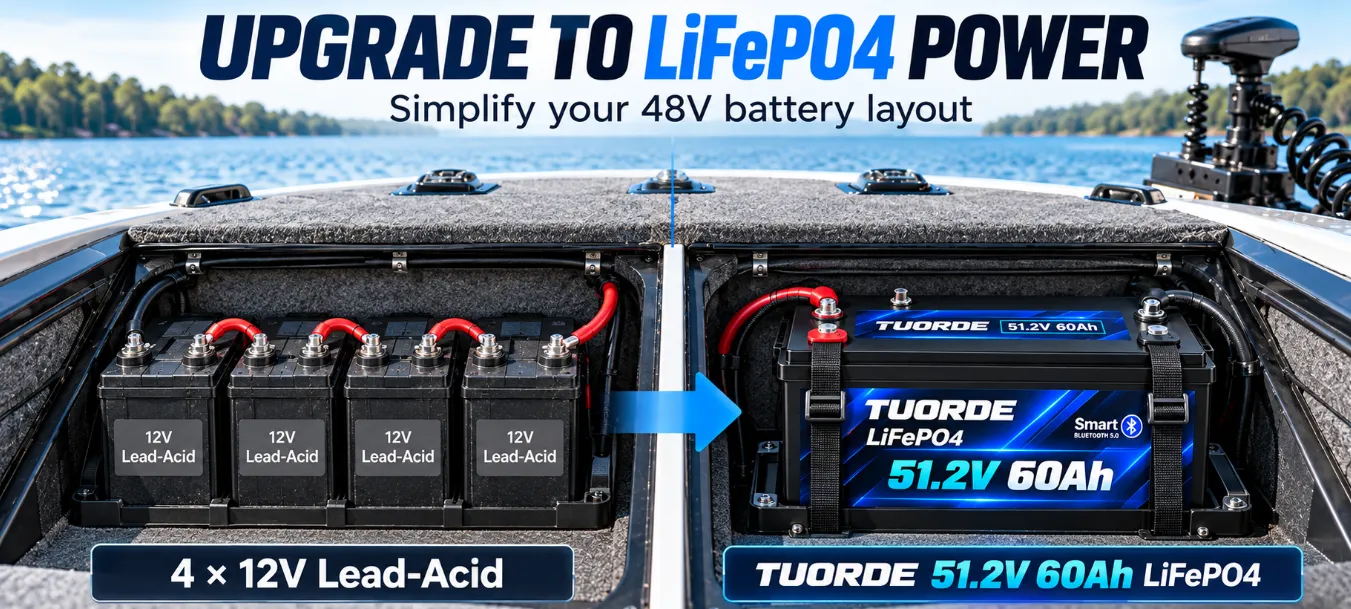
It can be evaluated for compatible 48V marine lead-acid replacement projects after checking the motor controller, chargers, installation space and protection. This listing is for deep-cycle marine propulsion power and does not state a combustion-engine starting or CCA rating. IP65 protection does not permit submersion.
Specify your 48V marine battery program
For boat builders, marine distributors and system integrators: mention the 48V 60Ah RS485 battery and share your motor/controller model, battery-bay drawing, charging equipment, monitoring protocol, target market and estimated quantity. Discuss configuration, labels and packaging, and request the electrical datasheet, mechanical drawing and communication documents for engineering review.
Request Specifications & OEM Quote →