200Ah XTRA MINI · 200A BMS · BLUETOOTH
Plan 2.56kWh Around Your RV Battery Bay
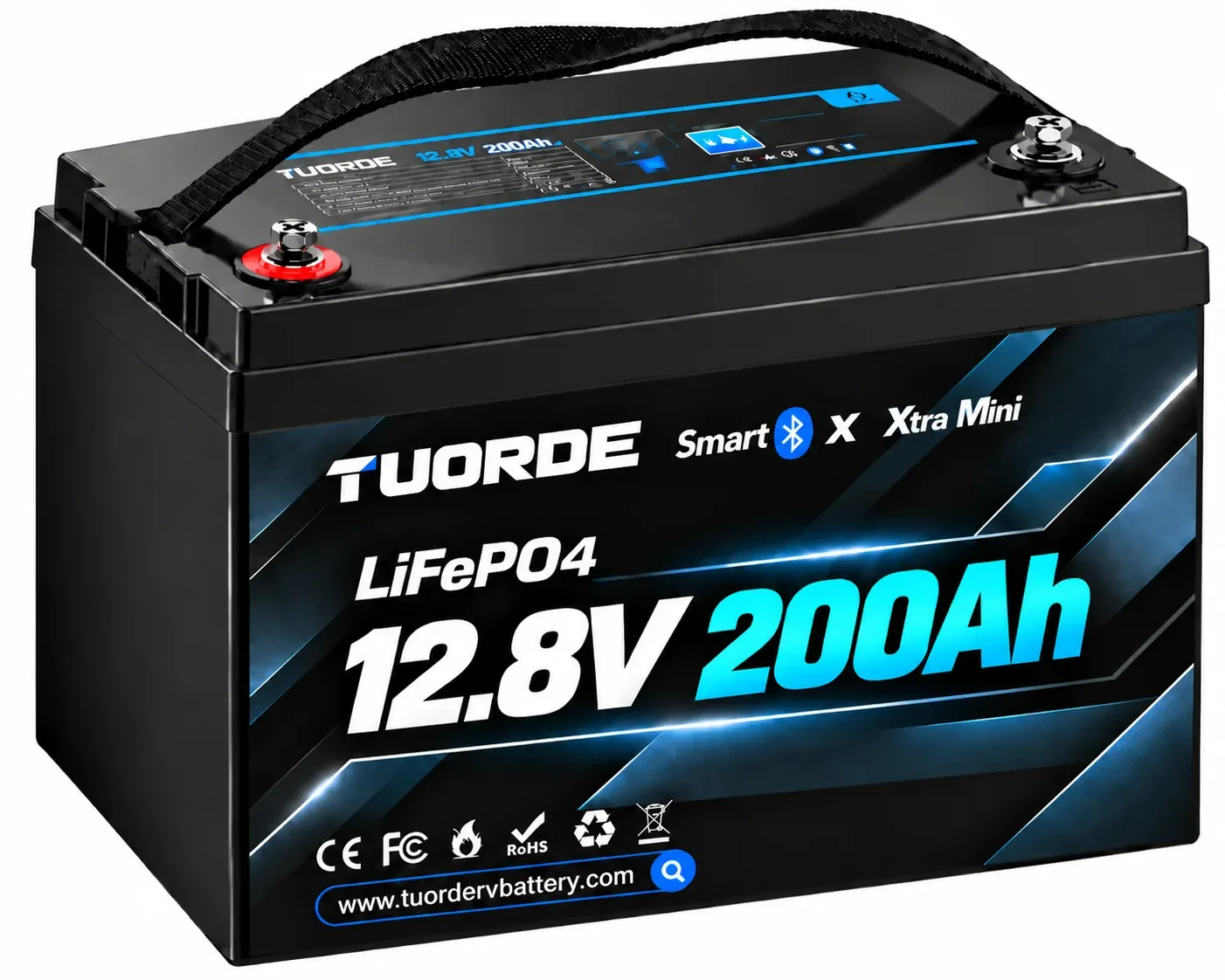
TUORDE’s 12V 200Ah Xtra Mini combines deep-cycle energy, a 200A continuous BMS and local Bluetooth monitoring in a compact LiFePO4 enclosure. It is a practical configuration to evaluate when your RV needs both energy storage and substantial DC current, while battery-space limits still matter.
For RV manufacturers, installers, battery distributors and private-label brands. Select by the complete enclosure drawing, load profile and charging system—not the Mini name alone.
Request a QuoteCheck Dimensions & Specifications ↓
Fit, Load, Recharge: Three Checks for a 200Ah Upgrade
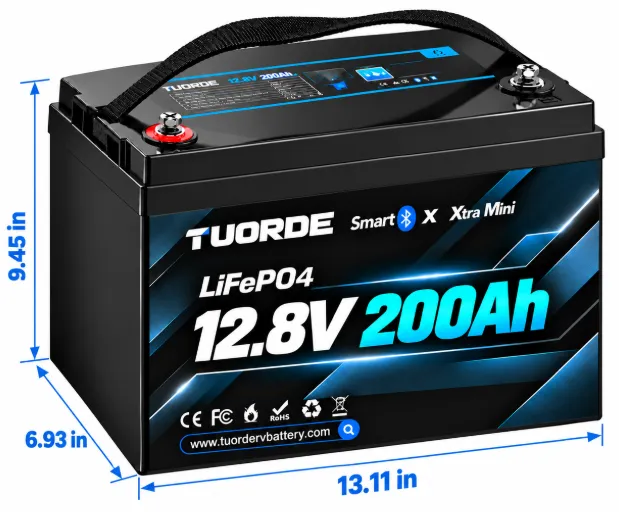
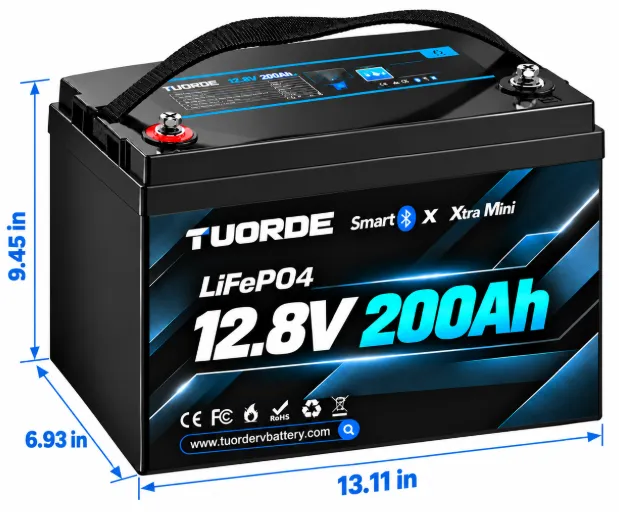
- Fit the complete installation. Allow approximately 333 × 176 × 240mm for the case, then add terminal protection, cable bends, retaining hardware and lid clearance. The Group 31-size reference does not mean it shares every dimension with another Group 31 battery.
- Check sustained and short-duration demand separately. Add all simultaneous DC loads and inverter input current, including losses. The one-second pulse limit is not a continuous allowance and does not establish engine-starting suitability.
- Match recharging to the available supply. Review charger output, daily solar yield and driving time against the actual energy consumed. A maximum charging-current limit is not a recommended setting for every installation.
200Ah Xtra Mini Technical Specifications
| Parameter | Configuration |
|---|
| Cell chemistry | LiFePO4 |
|---|
| Nominal voltage / rated capacity | 12.8V / 200Ah |
|---|
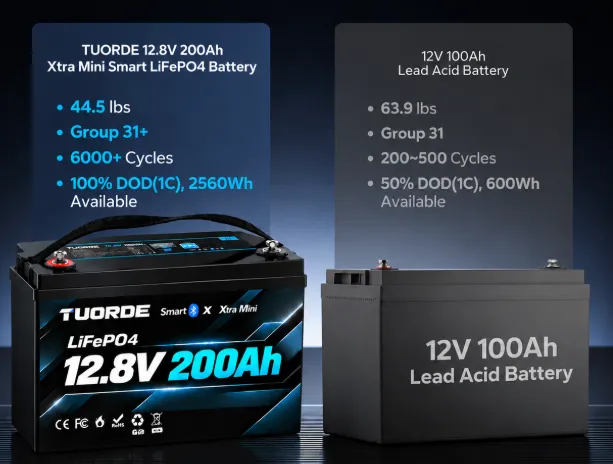
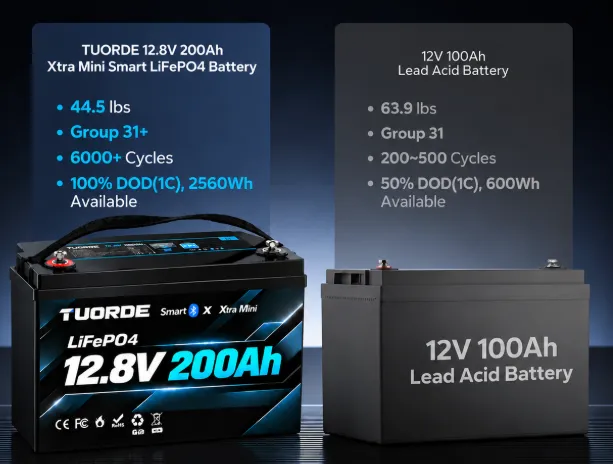
| Nominal energy | 2,560Wh (2.56kWh) |
|---|
| BMS rating | 200A |
|---|
| Maximum continuous charge / discharge | 200A (1C) / 200A (1C) |
|---|
| Nominal continuous DC output | 2,560W at nominal voltage |
|---|
| One-second discharge limit | 1,000A (5C) for 1 second; not a cranking or CCA rating |
|---|
| Charge method / voltage | CC/CV / 14.4V ± 0.2V |
|---|
| Recommended charge current | 40A (0.2C) |
|---|
| Charging temperature | 0°C to 50°C |
|---|
| Discharging temperature | −20°C to 60°C |
|---|
| Storage temperature | −10°C to 50°C |
|---|
| Low-temperature charge cutoff / recovery | 0°C / 5°C; confirm final firmware thresholds |
|---|
| Low-temperature discharge cutoff | −20°C |
|---|
| Bluetooth monitoring | Bluetooth 5.0 with a matched monitoring app |
|---|
| Self-heating | Not included |
|---|
| Dimensions (L × W × H) | 13.11 × 6.93 × 9.45in; approximately 333 × 176 × 240mm |
|---|
| Case format reference | Group 31-size reference; verify complete drawing and clearance |
|---|
| Approximate weight | 44.5lb / 20.18kg |
|---|
| Terminals | M8 × 16mm |
|---|
| Housing / ingress protection | ABS / IP65 |
|---|
| Internal resistance | ≤40mΩ |
|---|
| Maximum series / parallel arrangement | Up to 4 in series and 4 in parallel; matched-bank approval required |
|---|
| Reference cycle specification | 6,000+ cycles at 100% DoD; confirm test conditions and acceptance criteria |
|---|
Use the final TUORDE datasheet, mechanical drawing and acceptance specification for procurement. Nominal energy and power are voltage-based calculations, not guaranteed usable energy, runtime or AC inverter output. Reference cycle figures require confirmed test conditions and are not warranty terms.
See Battery Status Without Opening the Compartment
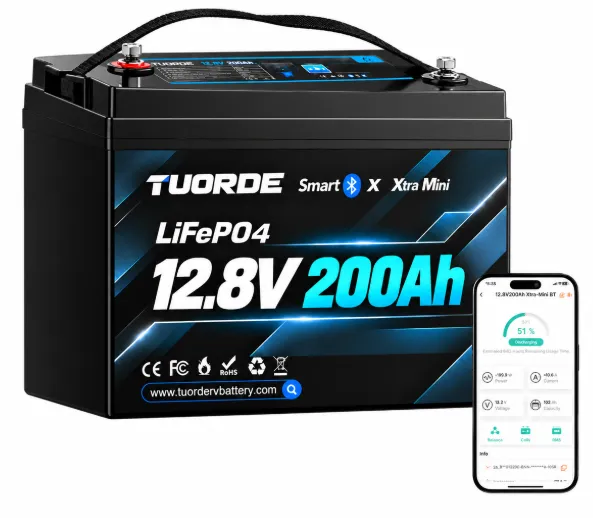
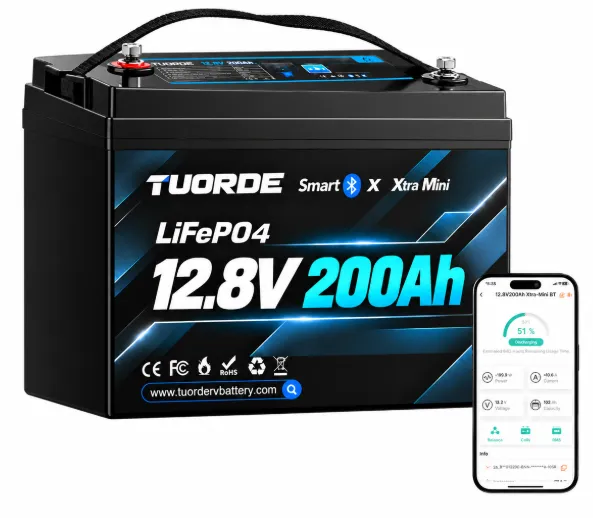
Bluetooth monitoring provides local access to supported battery information such as SOC, voltage and cycle count through a matched application. Confirm the actual measurements, controls and firmware supplied for your order. Bluetooth does not imply 4G remote access, AI diagnostics, CAN or RS485 integration.
Cold-charge protection, without a heater
This version blocks charging in cold conditions but does not warm its cells. If the battery is below its permitted charging temperature, let it warm before charging. Projects requiring winter charging should evaluate a separately specified self-heating configuration.
For wider integration requirements, review Smart BMS & AI RV battery technology; features described there must be confirmed for the selected model and are not automatically included here.
Build the House-Power System Around Its Real Limits
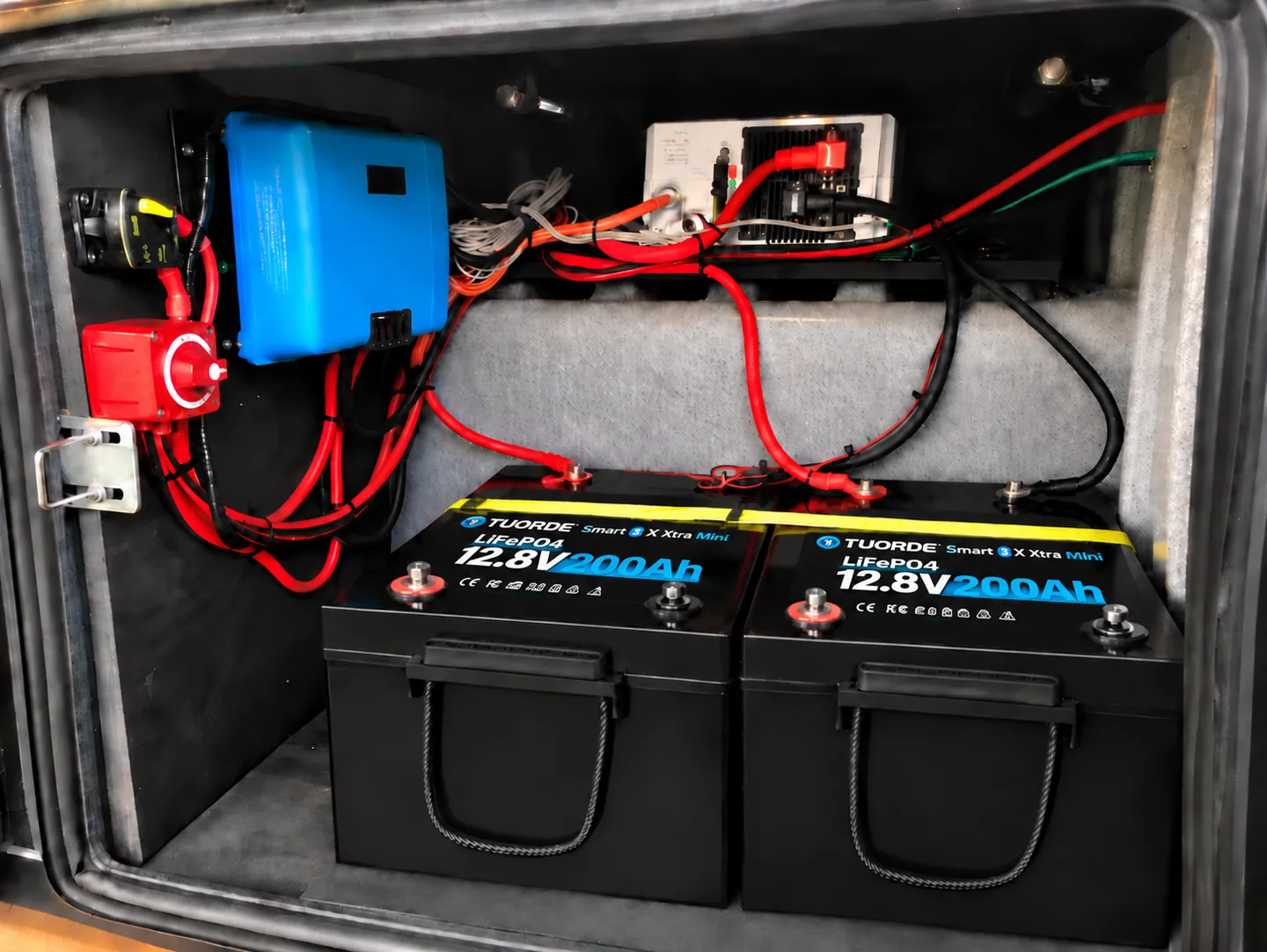
Evaluate this battery for compatible motorhome, travel-trailer, campervan and off-grid deep-cycle installations. It is not specified as an engine-starting battery. For marine auxiliary loads, confirm controller current, protection and mounting; IP65 is not a submersion rating.
Use a compatible LiFePO4 charger and disable lead-acid equalization or desulfation. Solar charging needs a suitable controller; alternator charging needs a reviewed DC-DC interface where required. Size cables and independent overcurrent protection for the system, protect terminal polarity and approve any series or parallel bank before connection.
Use the RV installation compatibility guide for the system check. Compare other enclosures in the 12V lead-acid replacement battery collection.
Discuss Your Compact 200Ah Battery Project
Send your compartment drawing, continuous and surge load requirements, charging equipment, minimum operating temperature, destination market and estimated quantity. Request confirmation of app support, terminals, branding, labels and packaging. Model-specific compliance documents, warranty, lead time and accessories must be confirmed in the quotation.
Request a 200Ah Battery Quote
Explore OEM & Private Label options or the Smart RV battery range.
Xtra Mini 200Ah Selection Questions
Is this the same case as the 200Ah H8 battery?
No. They are separate enclosure platforms. Compare the drawings, mounting and terminal clearance rather than assuming equal capacity means equal fit.
Does the 2,560W figure mean I can run any 2,560W AC appliance?
No. AC output depends on inverter efficiency, battery voltage, wiring and surge demand. Calculate battery-side current and leave appropriate operating margin.
Can it charge below freezing?
This configuration has low-temperature charge protection and no self-heating. The cells must reach the permitted charging range before charging resumes.
Can I add batteries later?
Expansion requires approval of the matched models, condition, state of charge, wiring and protection. Do not mix arbitrary batteries or bypass BMS protections.