165Ah · DUAL-MODE HEATING · BLUETOOTH
Plan for Cold Mornings. Carry More House Energy.
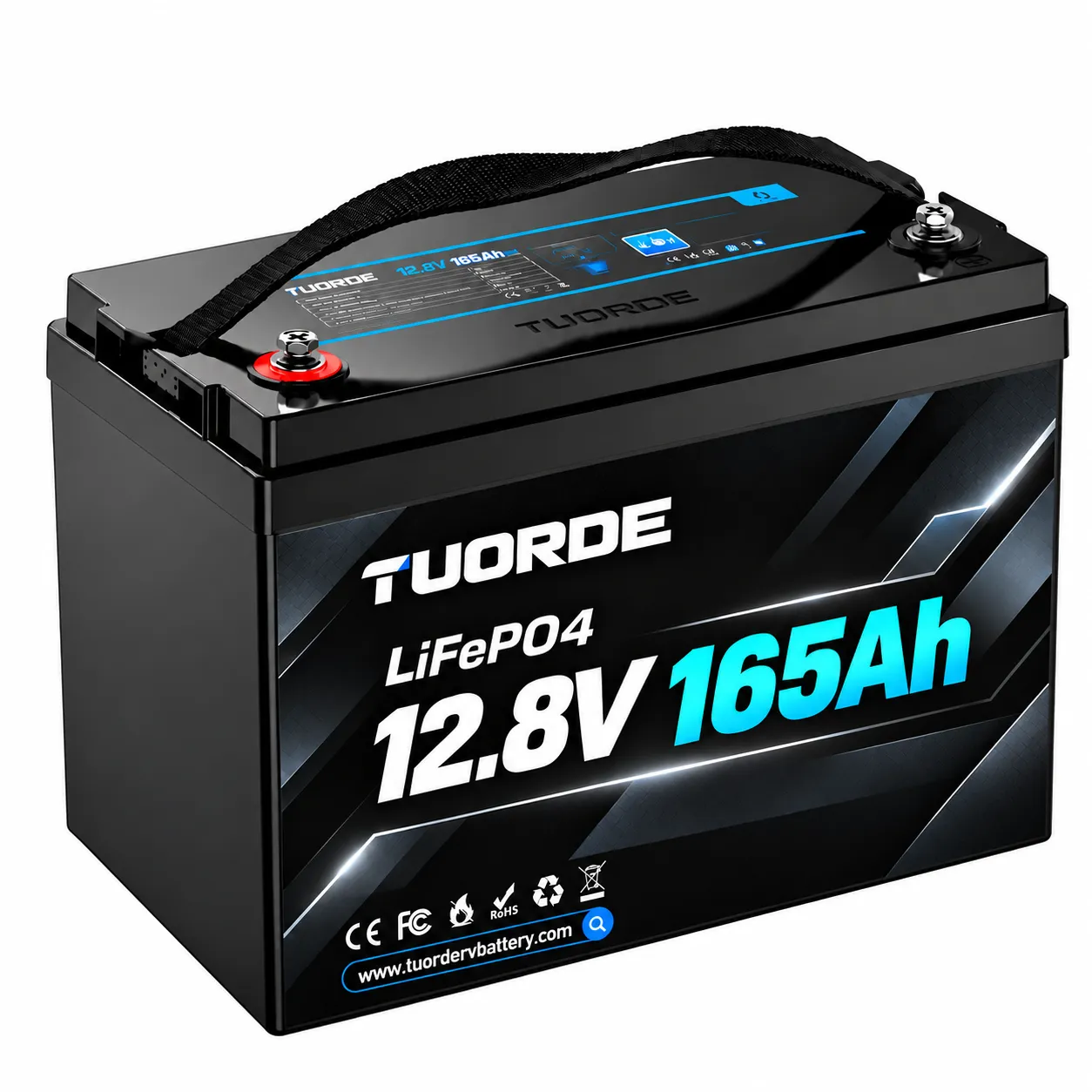
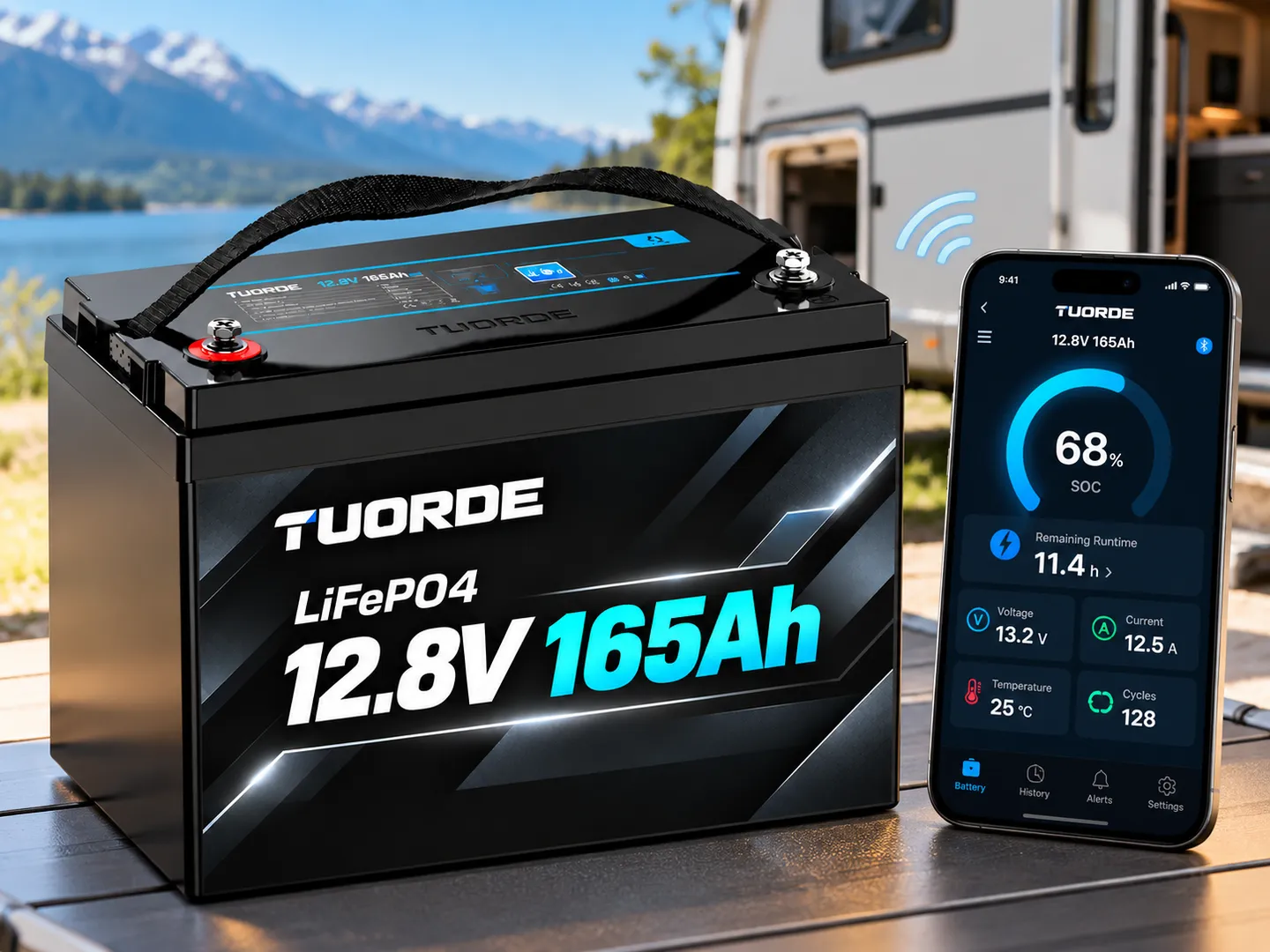
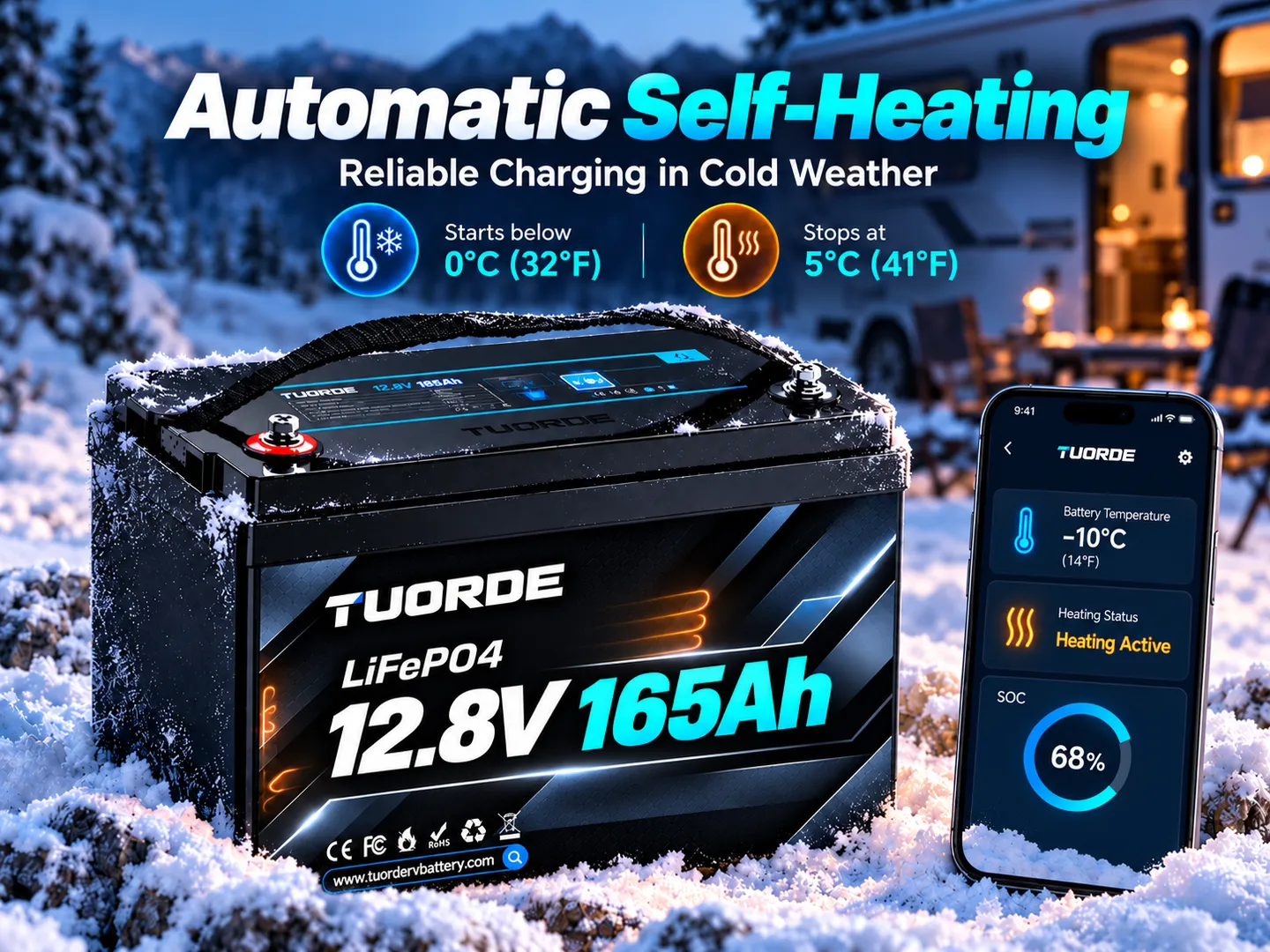
TUORDE’s 12V 165Ah Smart Self-Heating LiFePO4 battery combines 2.112kWh of nominal energy, a 165A BMS and two ways to warm the cells before charging. Bluetooth monitoring helps operators check battery conditions as part of their RV or off-grid power routine.
For RV manufacturers, installers, battery distributors and private-label brands evaluating cold-weather house power.
Two Heating Paths for Different Charging Situations
When a charger is available
External-charger heating warms the battery before normal charging. The heating function requires at least 15A of charger current. Confirm the charger profile and the complete control sequence for the ordered configuration.
Before connecting a charger
The app-controlled preheating mode uses stored battery energy. Account for that energy in your trip plan, and follow the configured temperature and state-of-charge requirements.
The cells must reach their permitted charging temperature before charging proceeds. Self-heating does not mean the cells can be charged directly below freezing, and Bluetooth control does not imply 4G remote access.
165Ah Capacity, with Current Capability to Match
At 12.8V, 165Ah equals 2,112Wh of nominal energy—65% more than a 12.8V 100Ah battery. This is an energy calculation, not a guarantee of 65% longer runtime under every operating condition.
Size the system around sustained current, inverter efficiency and appliance surge demand. The 825A figure is a one-second pulse limit; it is not continuous output, a CCA value or evidence of engine-starting compatibility.
165Ah Electrical, Heating & Mechanical Specifications
| Parameter | Specified Configuration |
|---|
| Chemistry | LiFePO4 |
|---|
| Nominal voltage / capacity | 12.8V / 165Ah |
|---|
| Nominal energy | 2,112Wh (2.112kWh) |
|---|
| Continuous charge / discharge current | 165A / 165A |
|---|
| Continuous DC output | 2,112W at nominal voltage |
|---|
| Short-duration discharge | 825A for 1 second; not an engine-starting rating |
|---|
| Charge profile / voltage | CC/CV / 14.4V ± 0.2V |
|---|
| Recommended charge current | 33A |
|---|
| Heating modes | External-charger heating; app-initiated battery-powered preheating |
|---|
| Heating temperature range | −20°C to +5°C |
|---|
| Minimum charger current for external heating | 15A |
|---|
| Cell charging / discharging temperature | 0°C to 50°C / −20°C to 60°C |
|---|
| Storage temperature | −10°C to 50°C |
|---|
| Cold protection / charging recovery | Charge cutoff below 0°C; discharge cutoff below −20°C; charging recovery ≥5°C |
|---|
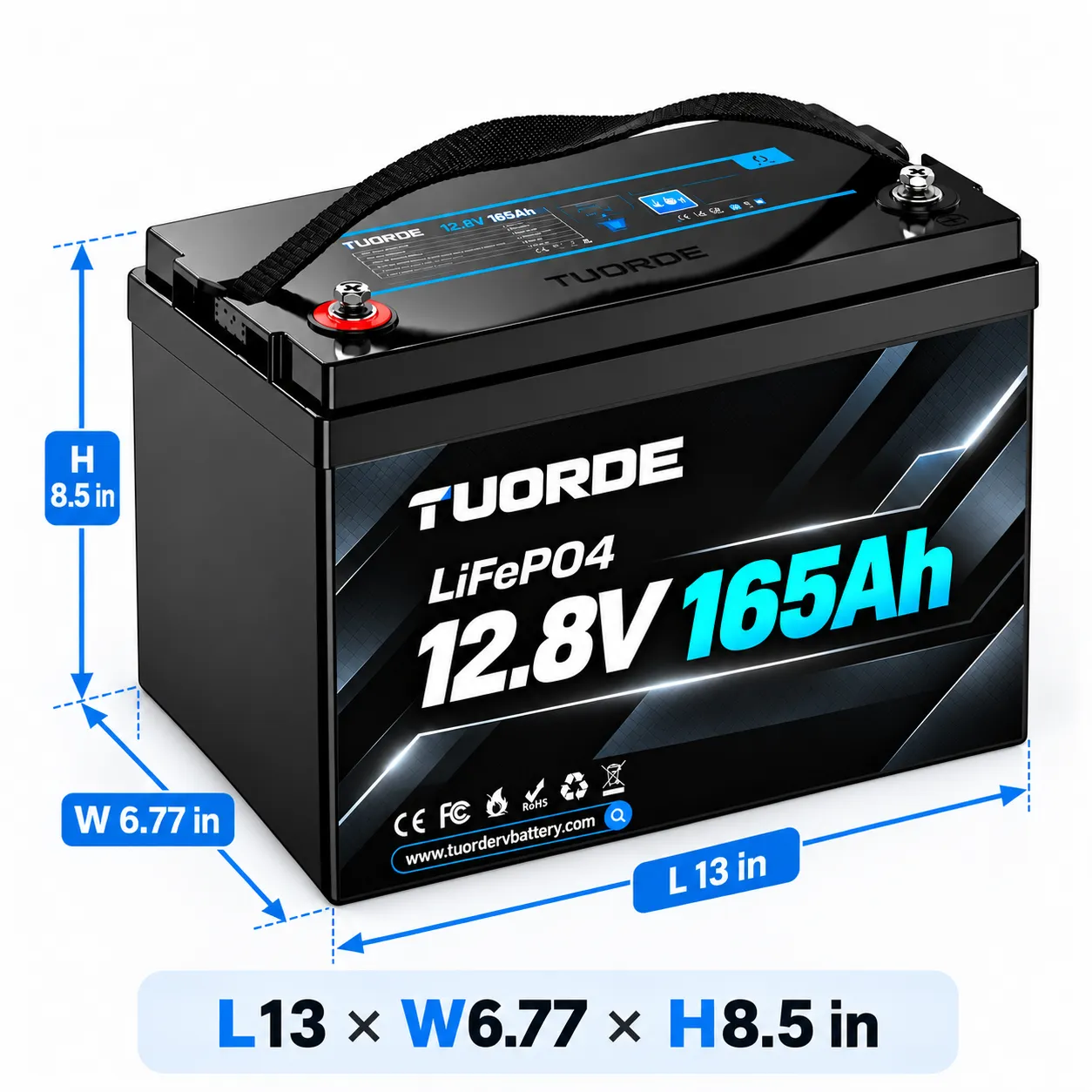
| Enclosure dimensions (L × W × H) | 13 × 6.77 × 8.5 inches (Group 31 reference); verify mechanical drawing |
|---|
| Approximate weight | 33.49lb (approximately 15.19kg) |
|---|
| Housing / protection | ABS / IP65 |
|---|
| Terminals | M8 × 16mm bolts |
|---|
| Monitoring | Bluetooth with compatible monitoring app |
|---|
| Internal resistance | ≤40mΩ |
|---|
| Bank expansion | Up to 4 series × 4 parallel, subject to approved bank design |
|---|
| Reference cycle specification | 4,000 at 100% DoD; 6,000 at 80% DoD; 15,000 at 60% DoD; confirm test conditions and acceptance criteria |
|---|
Confirm the final TUORDE datasheet, mechanical drawing, firmware and acceptance conditions in the quotation. Cycle specifications are not a warranty term; actual service life depends on operating conditions.
Check the Battery Tray and the Whole Charging System
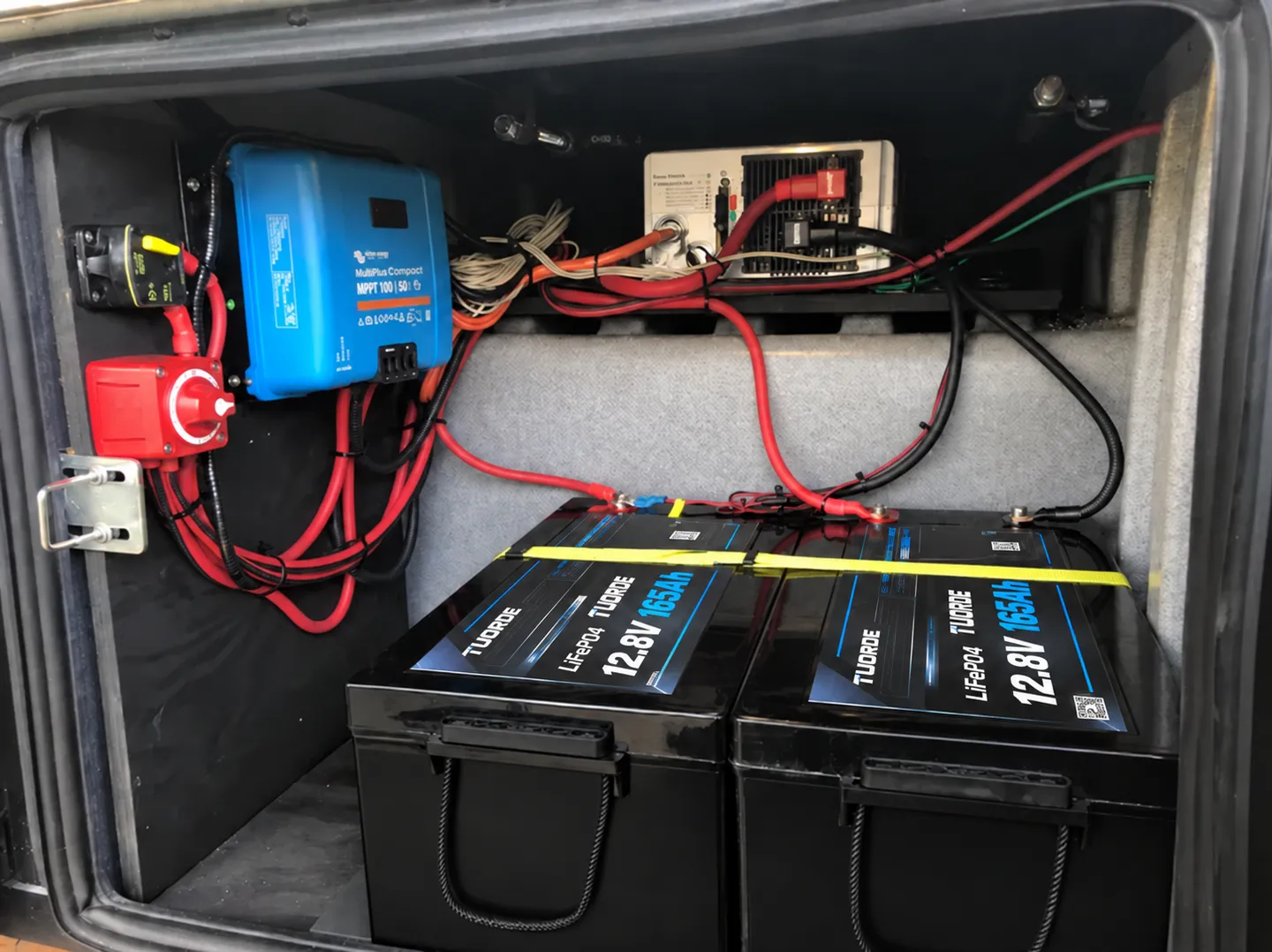
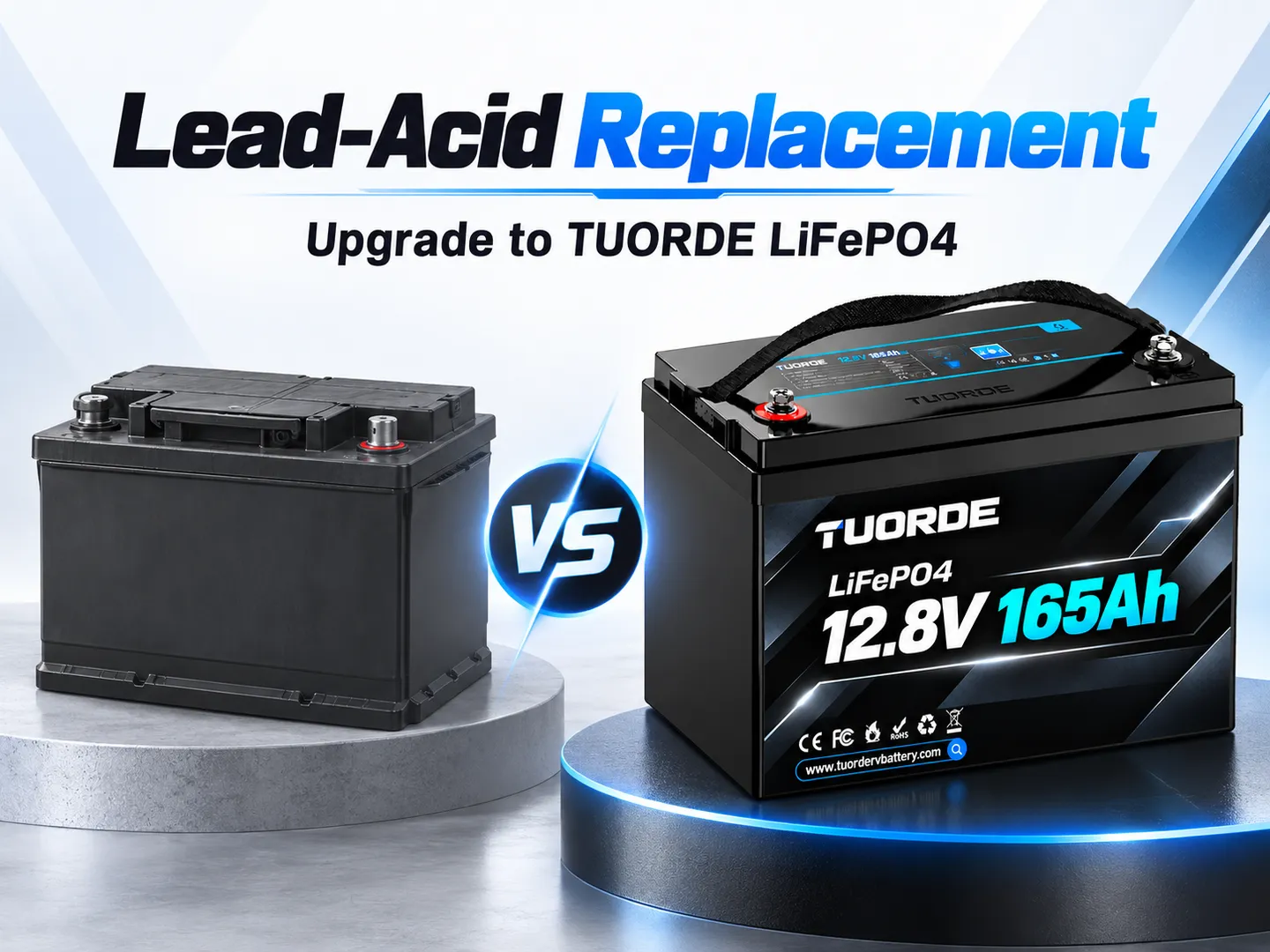
A Group 31 size reference does not establish a universal drop-in fit. Measure terminal height, cable bend space, retaining hardware and service clearance against the complete drawing. Use the RV lithium battery compatibility guide to prepare your installation review.
Use a compatible LiFePO4 charger, correctly rated cables and independent overcurrent protection. Disable lead-acid equalization and desulfation functions. Review alternator charging through a suitable controlled charging interface. IP65 does not permit submersion.
Series/parallel banks require matched batteries, balancing procedures and approved protection design. Do not combine different capacities, firmware versions or aged and new batteries without an engineering review.
Bluetooth monitoring is part of this configuration. CAN, RS485, AI insights and other communication features require a separately confirmed configuration; they are not assumed standard. See TUORDE Smart BMS technology options.
Build Your 165Ah Cold-Weather Battery Program
Share your installation drawing, inverter and charger details, target market and annual volume. Request confirmation of heating controls, app support, branding, labels and packaging for your project. Model-specific compliance documents, sample availability, lead time and warranty terms are confirmed with the quotation.
Discuss Your 165Ah Battery Project →
Explore OEM & Private Label options or compare the Smart RV battery range.
165Ah Self-Heating Battery FAQ
Does heating use charger power or battery energy?
The two modes serve different situations: external-charger heating uses an appropriate connected charger, while app-initiated preheating uses stored energy. Follow the supplied control instructions.
Can this battery replace an engine-starting battery?
This listing is for house and deep-cycle power. Engine-starting compatibility is not established by the one-second pulse specification.
Will it run a 2,000W inverter continuously?
Do not select an inverter from nominal DC watts alone. DC current increases as voltage falls, and conversion losses and surge loads must be included. Obtain a system-level load review.
Is a charger included?
Confirm the scope of supply in your quotation. A charger, installation cables and accessories are not automatically included.