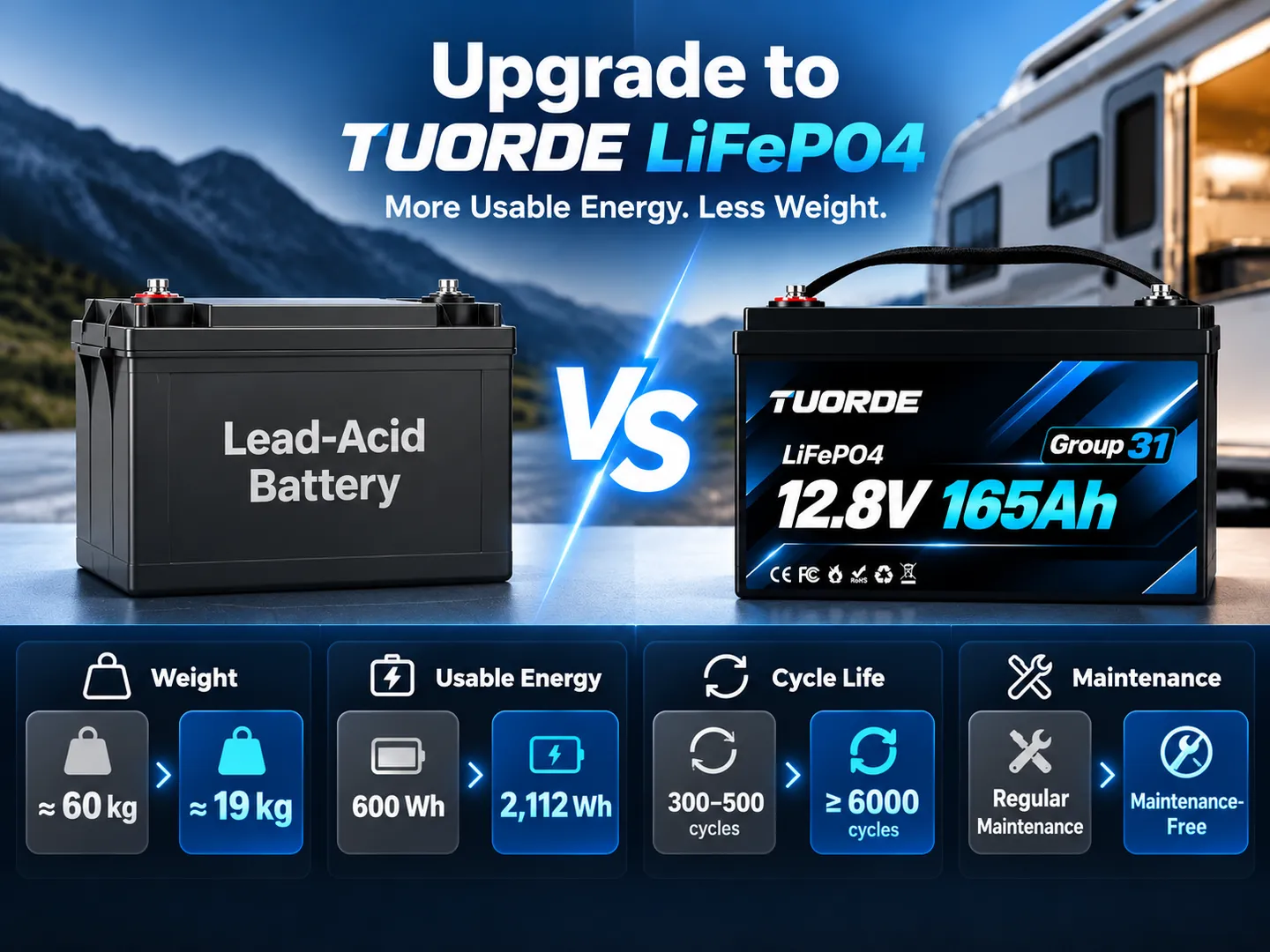
GROUP 31 · 165Ah · BLUETOOTH HOUSE POWER
More Energy in Your Group 31 Battery Plan
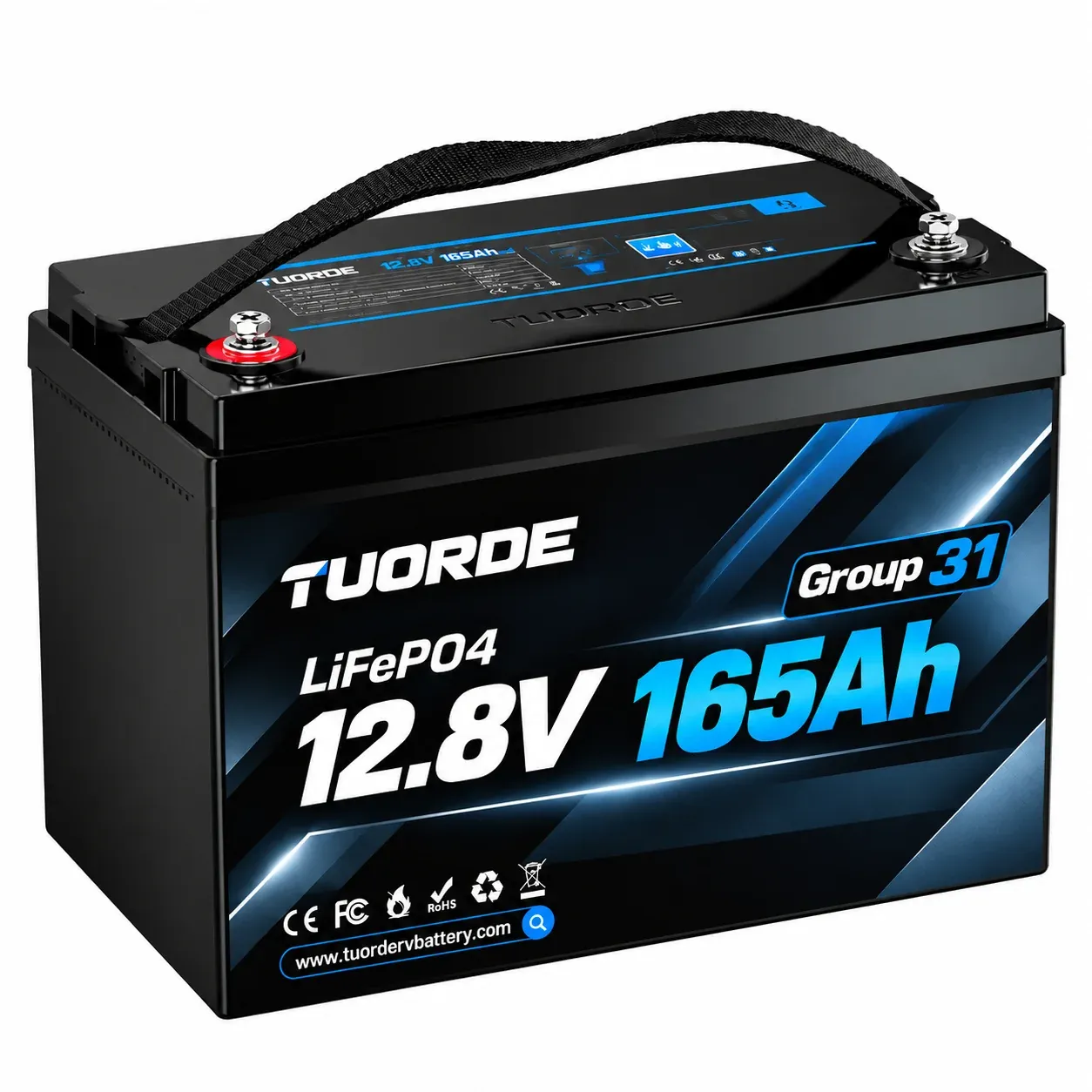
TUORDE’s 12V 165Ah Group 31 Smart LiFePO4 RV battery brings 2.112kWh of nominal energy, a 165A BMS and Bluetooth monitoring to compatible RV house and off-grid systems. Evaluate a larger energy reserve without selecting a battery on capacity alone: check the enclosure, electrical loads and charging equipment together.
For RV manufacturers, installers, battery distributors and private-label brands. This is the Bluetooth version without self-heating.
Where the 165Ah Configuration Makes Sense
Energy for house loads
Plan lighting, refrigeration, pumps and other compatible loads from a 2,112Wh nominal energy budget. That is 65% more nominal energy than a 12.8V 100Ah battery, not a guaranteed runtime increase.
Local battery visibility
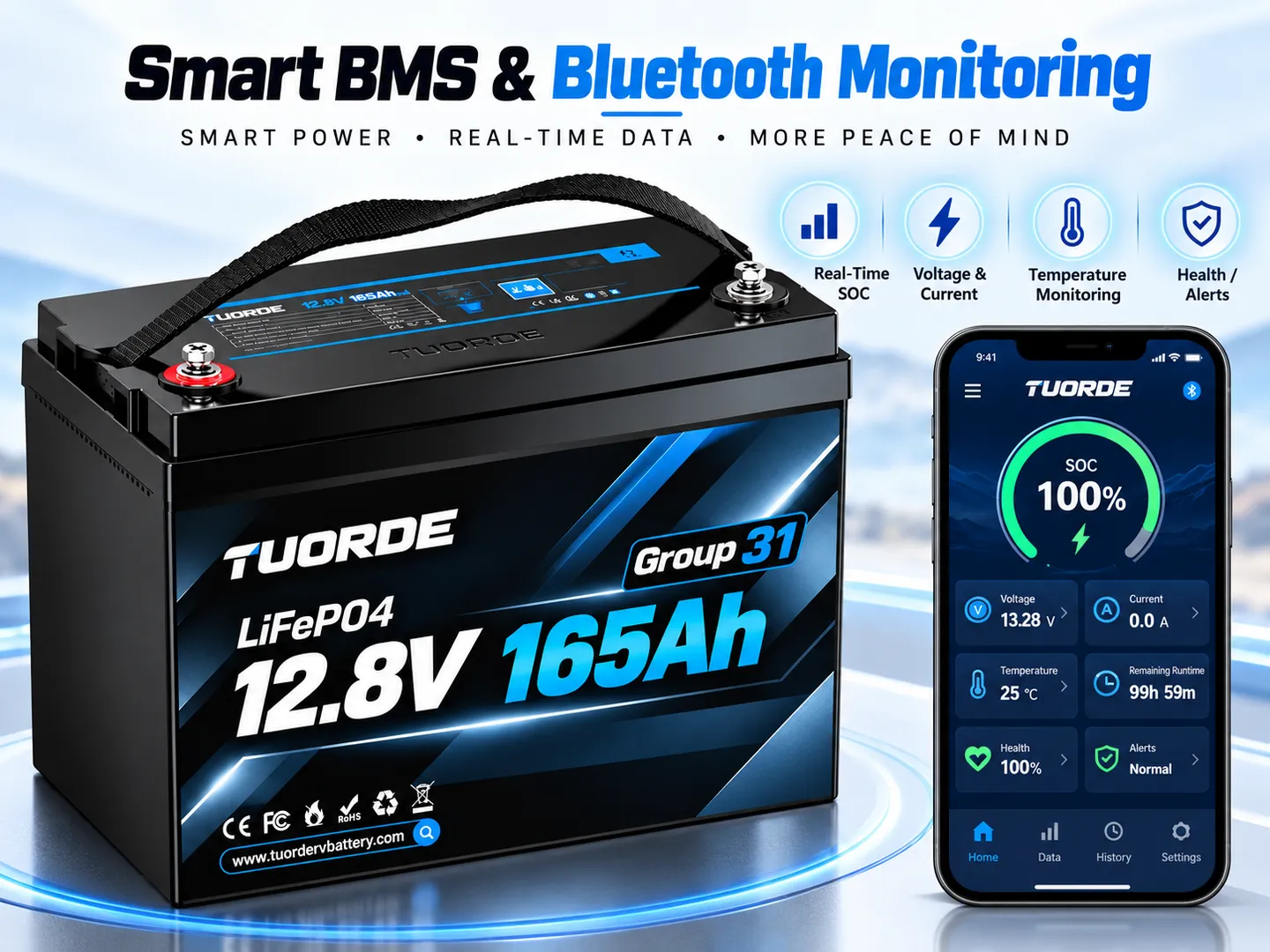
Check supported operating data through the matched Bluetooth application. Confirm displayed measurements and available controls with the supplied firmware and app.
A clear installation reference
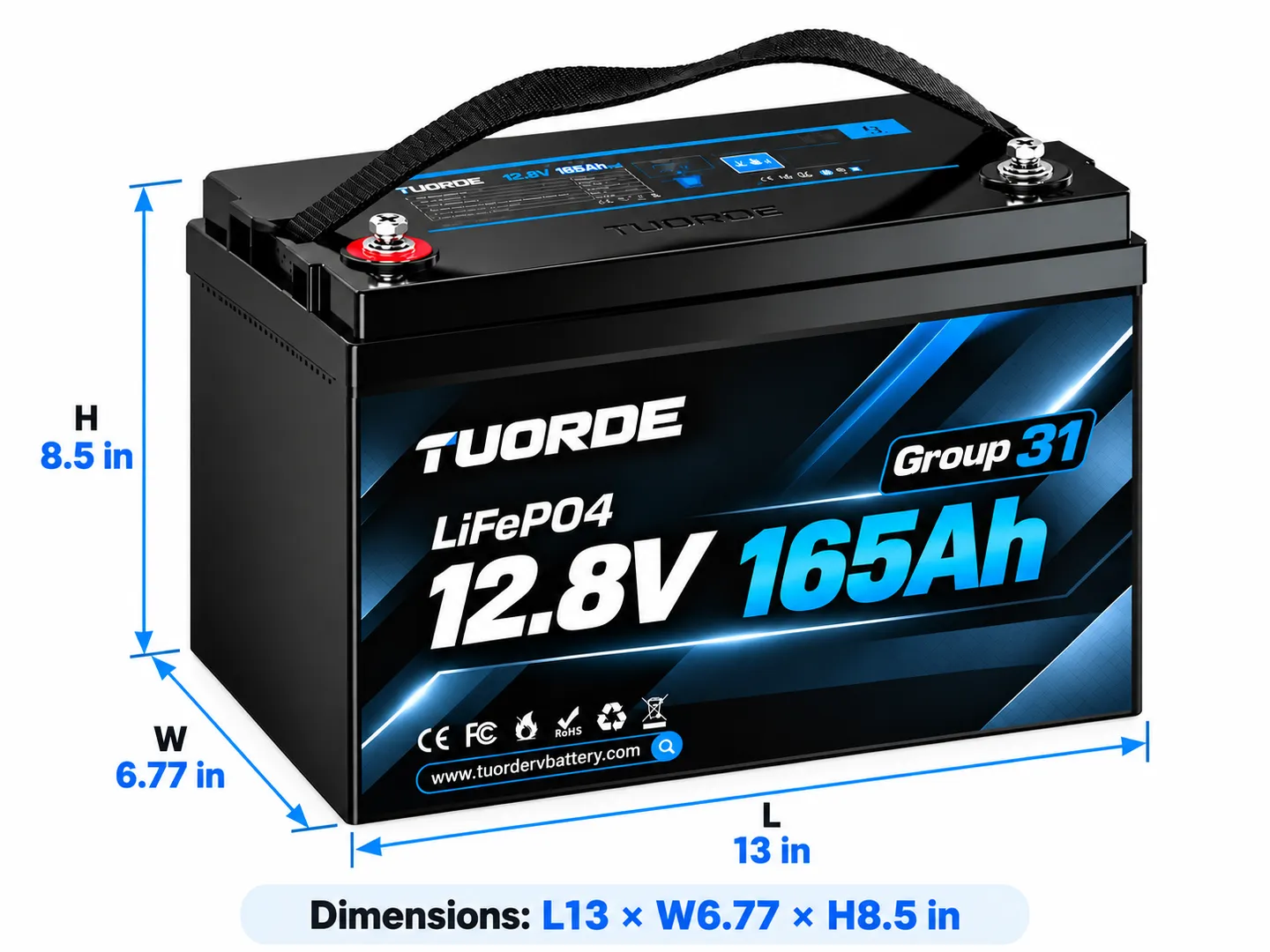
Use the Group 31 enclosure reference to begin a fit assessment. Terminal orientation, cable bends, hold-downs and lid clearance still require a drawing check.
165Ah Bluetooth Battery Specifications
| Parameter | Configuration |
|---|
| Battery chemistry | LiFePO4 |
|---|
| Nominal voltage / rated capacity | 12.8V / 165Ah |
|---|
| Nominal energy | 2,112Wh (2.112kWh) |
|---|
| BMS / continuous charge / continuous discharge | 165A / 165A / 165A |
|---|
| Nominal continuous DC output | 2,112W at nominal voltage |
|---|
| One-second discharge limit | 825A for 1 second; not a CCA or engine-starting rating |
|---|
| Charging method / voltage | CC/CV / 14.4V ± 0.2V |
|---|
| Recommended charging current | 33A |
|---|
| Charging temperature | 0°C to 50°C (32°F to 122°F) |
|---|
| Discharging temperature | −20°C to 60°C (−4°F to 140°F) |
|---|
| Storage temperature | −10°C to 50°C (14°F to 122°F) |
|---|
| Low-temperature charging cutoff / recovery | Below 0°C / at or above 5°C |
|---|
| Low-temperature discharge cutoff | Below −20°C |
|---|
| Self-heating | Not included in this Bluetooth configuration |
|---|
| Monitoring | Bluetooth 5.0 with a matched application |
|---|
| Dimensions (L × W × H) | 13 × 6.77 × 8.5 in (approximately 330.2 × 172.0 × 215.9mm) |
|---|
| Battery size reference | Group 31; verify tray, terminal and mounting clearance |
|---|
| Approximate weight | 32.15lb (approximately 14.58kg) |
|---|
| Terminals / housing | M8 bolts / ABS |
|---|
| Enclosure protection | IP65; not designed for submersion |
|---|
| Internal resistance | ≤40mΩ |
|---|
| Maximum bank configuration | Up to 4 in series and 4 in parallel, subject to matched batteries and approved installation |
|---|
| Reference cycle specification | 4,000 cycles at 100% DoD; 6,000 at 80%; 15,000 at 60%. Confirm test conditions and acceptance criteria. |
|---|
| Compliance documentation | Request model-specific documentation for your destination market; scope confirmed with quotation |
|---|
| Warranty / accessories | Confirm TUORDE quotation and scope of supply; no charger assumed included |
|---|
Confirm the final supplied configuration and mechanical drawing in the quotation. Nominal energy and DC power are voltage-based calculations; usable energy and output depend on operating voltage, load, temperature and protection settings. Cycle figures are reference specifications, not a warranty.
Cold Protection Is Different from Self-Heating
This version blocks charging below its permitted temperature; it does not heat the cells. Allow the battery to reach the charging recovery temperature before charging. Choose a separately specified heating configuration if your operating environment requires active preheating.
Bluetooth is a local connection. It does not establish 4G access, CAN, RS485, runtime prediction or AI diagnostics as standard features. Review Smart BMS and monitoring configuration options for an OEM project.
Select the System, Not Just the Ah Rating
Check current at the lowest operating voltage
Include inverter losses, sustained loads and surge duration. A 2,112W nominal DC figure is not a blanket approval for a 2,000W AC inverter. The 825A one-second figure does not establish engine-starting capability; this listing is for house and deep-cycle use.
Review charging and physical fit
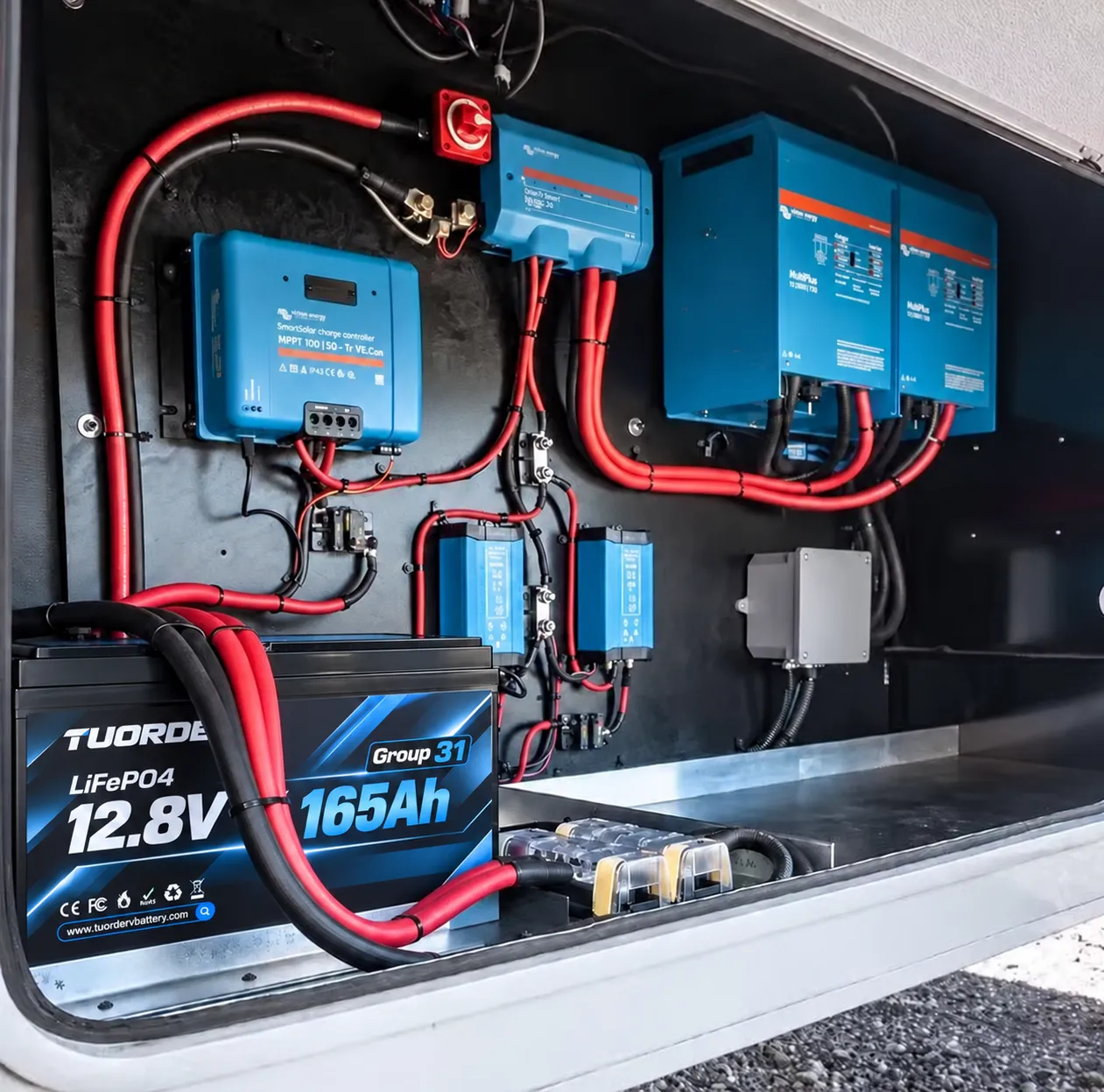
Use a compatible LiFePO4 charging profile and disable lead-acid equalization or desulfation. Review alternator charging through an appropriately controlled interface. Check cable size, independent overcurrent protection, polarity, secure mounting and service access. IP65 does not permit immersion.
Use the RV battery compatibility checklist before replacement. Series or parallel banks require matched batteries and approved wiring, balancing and protection procedures.
165Ah Group 31 Battery Questions
Does this version have self-heating?
No. It includes low-temperature charging protection, which is different from an active heater.
Will it fit every Group 31 battery tray?
No. Compare the complete mechanical drawing with your compartment, mounting hardware, terminals and cable clearance.
How do I estimate runtime?
Divide usable battery energy in Wh by the average load in W, allowing for inverter losses, temperature and reserve requirements. The 2,112Wh nominal rating is not measured usable energy.
Can I use it as an engine-starting battery?
This configuration is listed for deep-cycle house power. Do not treat its one-second discharge limit as a starting or CCA rating.